
Alaska mammals

Long-legged Myotis in Alaska

Myotis volans

Native to Alaska S3 Vulnerable in Alaska

Not listed as nonindigenous in Alaska by USGS NAS; native to its Alaska range.

IUCN Red List status

  1. LC
  2. NT
  3. VU
  4. EN
  5. CR
  6. EW
  7. EX

LC – Least Concern

Widespread and abundant; not at risk.

Long-legged Myotis in Alaska, by the numbers

Rare in Alaska 90th most recorded of 108 mammals logged in Alaska

11 occurrence records

Records from 2000–2026.

When to look for the Long-legged Myotis in Alaska

Most sightings fall in July.

11 Alaska occurrence records (iNaturalist and GBIF) by month of year, 2000–2026. Shows when the species is recorded, not a guarantee of presence. Based on a small number of dated records; the seasonal pattern may not be representative.

Monthly Alaska records (table)
MonthRecords
January0
February0
March0
April0
May1
June3
July7
August0
September0
October0
November0
December0

Monthly long-legged myotis occurrence records (iNaturalist and GBIF) in Alaska, 2000–2026.

Seasonality

Sparse observation record in Alaska; presence confirmed but timing of activity not well documented.

Occurrence map

Where Long-legged Myotis has been recorded in Alaska

11 records mapped · zoom and drag to explore

11 Alaska records mapped

Notable places to look

Park, forest, or monumentiNaturalist records
Haines State Forest Resource Management Area 1
Tongass National Forest 1

Protected places with the most long-legged myotis sightings, from the USGS Protected Areas Database plus named mountain ranges, good spots to look, not a full breakdown, so they don't sum to the total.

Where it's recorded in Alaska

CountyRecords
Wrangell County 4
Ketchikan Gateway County 2
Prince of Wales-Hyder County 2
Haines County 1
Skagway County 1
Hoonah-Angoon County 1

The complete county distribution, spread across 6 Alaska counties. Every occurrence record falls in one county, so these sum to the total. Counties from GBIF and US Census boundaries.

Long-legged myotis records in Alaska are sparse and scattered, with plausible habitat reaching into Denali National Park and Preserve, the boreal forest near Fairbanks, and the Yukon River valley. This bat’s broader range runs up from the mountain West into Alaska, and it favors conifer forest wherever it settles.

It’s a fast, direct flier that keeps hunting moths and other insects on cold nights long after many bats have quit, slipping into torpor to coast through the coldest stretches without burning fat reserves. In summer it roosts under loose bark on standing dead trees, shifting between several roosts through the season instead of settling on one.

The handful of Alaska records recorded so far cluster from May through July, when insects are most active during the long northern daylight. A thin record count here likely reflects how few people are out surveying bats in Interior Alaska, not a truly rare population.
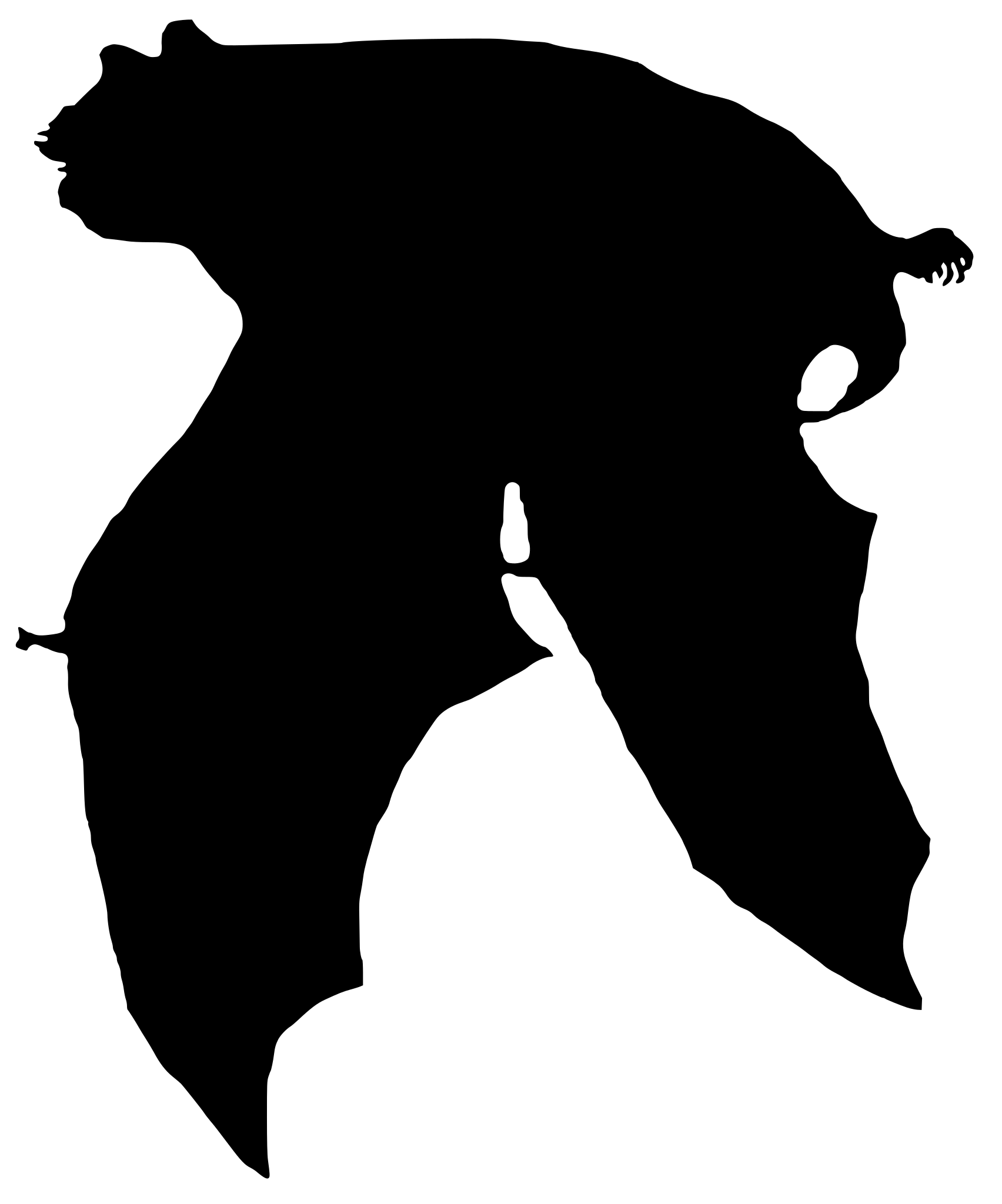
Occurrence data from iNaturalist and GBIF.

More mammals in Alaska in the atlas

Data & sources

The data and visualizations on this page draw on these open sources:

  • GBIFCC-BY 4.0occurrence records behind the range map, elevation, and record counts
  • iNaturalistCC0 / CC-BY / CC-BY-SAobservations, photos, and audio recordings
  • NatureServe ExplorerCC-BYthe state conservation rank
  • IUCN Red Listattributed factthe global conservation status
  • USGS NASpublic domainnative / introduced status
  • Natural Earthpublic domainthe relief basemap
  • USFSpublic domainnational-forest boundaries
  • USGS Protected Areas Databasepublic domainthe named parks, forests, and refuges behind "notable places to look"




