


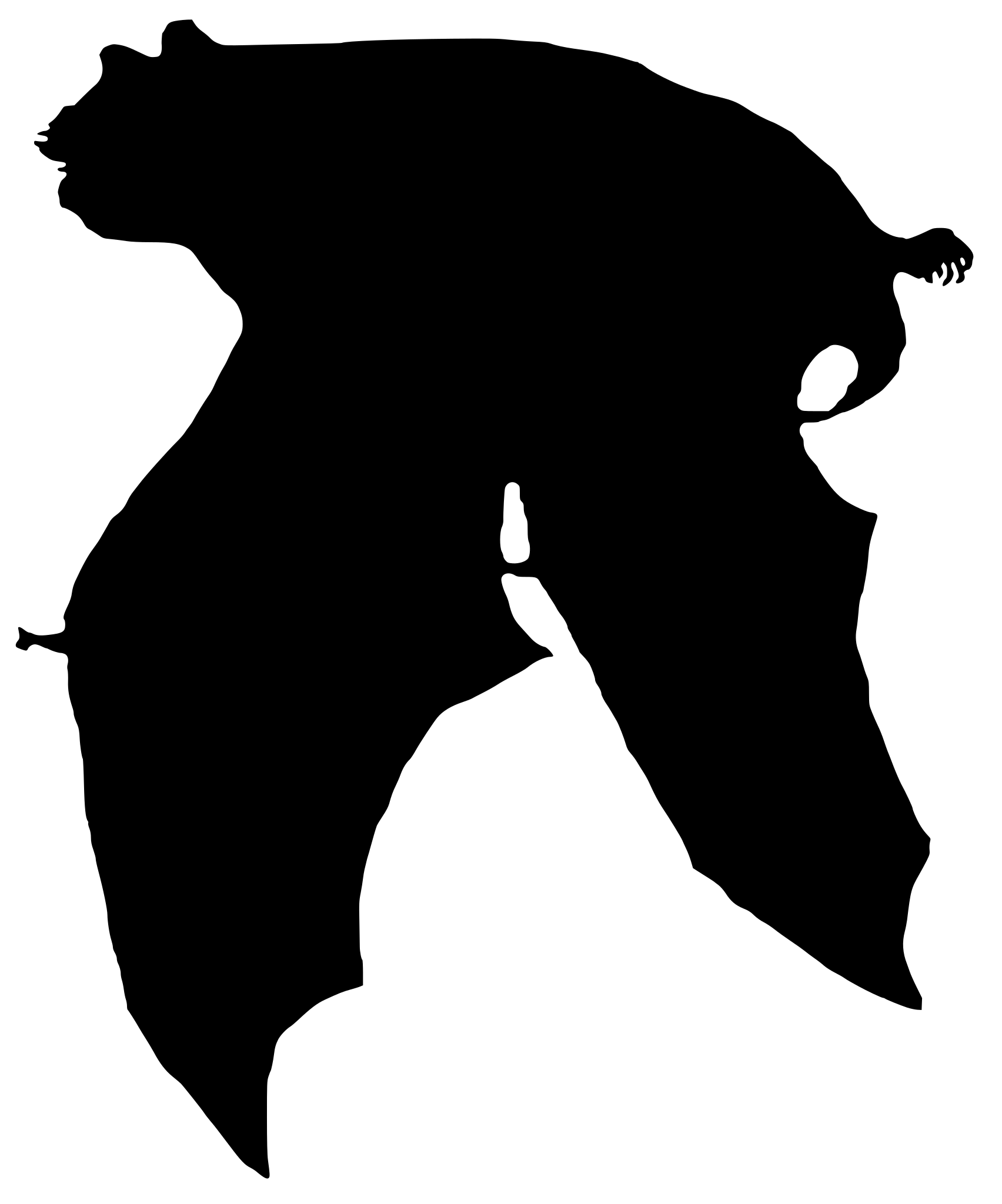
North Dakota is the eastern edge of the long-legged myotis’s world, and the state’s 17 records could hardly be more concentrated. McHenry and Ward counties, two neighbors in the north-central part of the state, hold 16 of them between them. A single record from Billings County, in the badlands of the far west, is the only documentation anywhere else.
A concentration that tight almost always says something about effort rather than the animal. Somebody surveyed for bats in the Turtle Mountain and Missouri plateau country, and the long-legged myotis turned up. Whether it’s equally present in the state’s other wooded pockets is a question the record can’t answer yet, and NatureServe lists the species’ North Dakota status as unrankable for exactly this kind of reason: not enough data to judge.
The timing adds one more wrinkle. May accounts for the largest share of reports, with only scattered entries through summer. For a bat often thought of as a mountain-forest resident, an early-season pulse on the northern plains hints at movement through the state in spring, though 17 records can only hint at anything.
 Full species profile




