
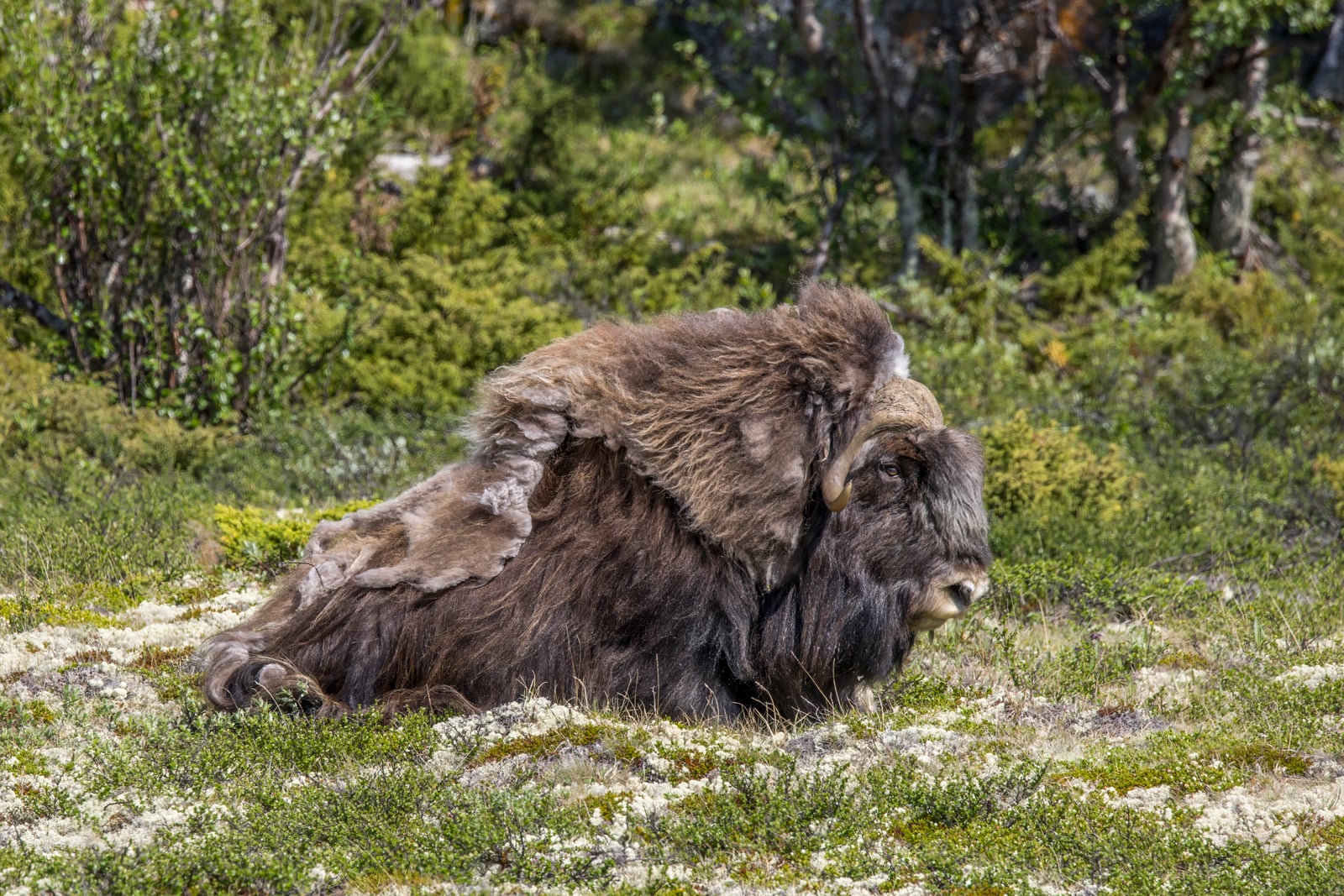
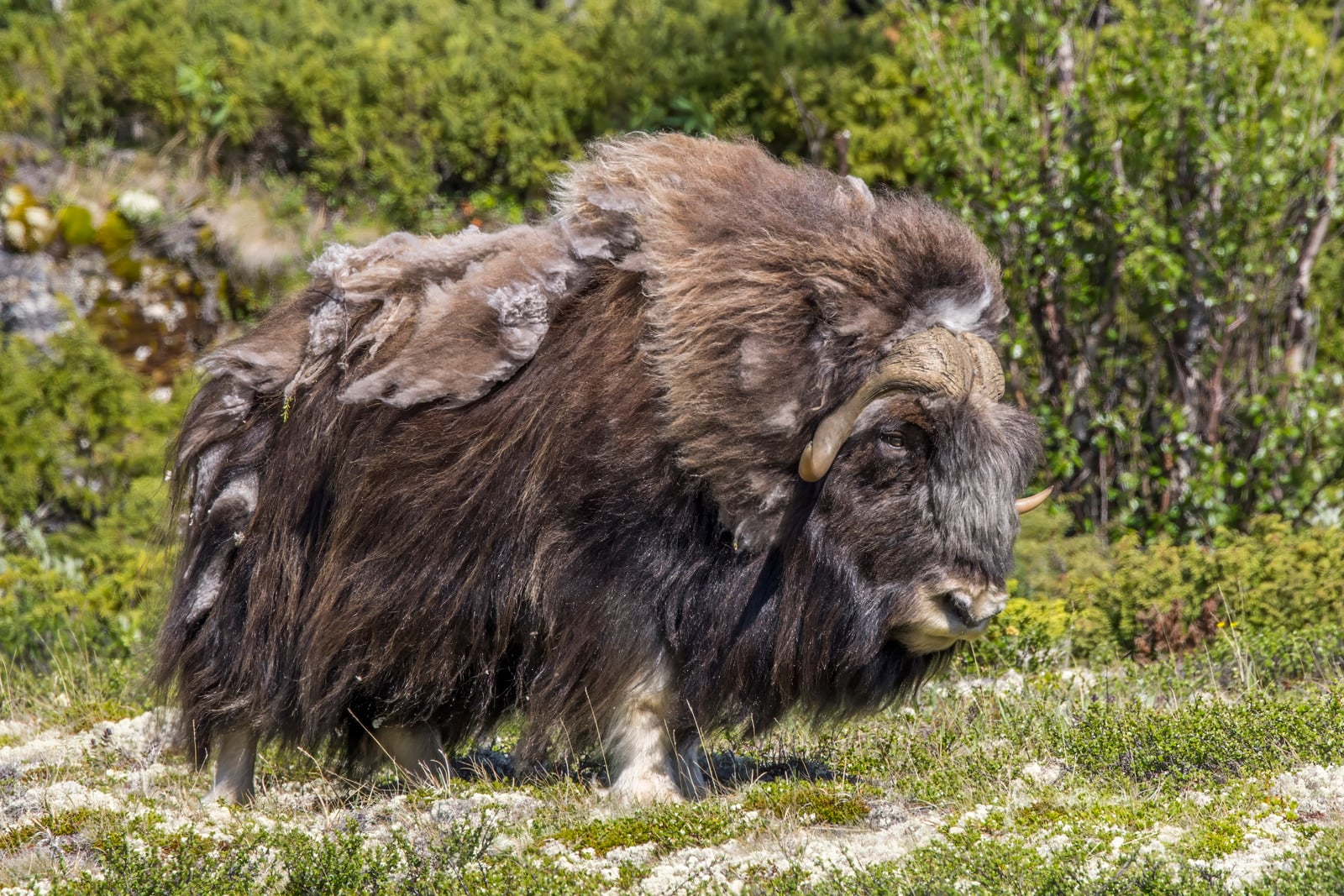
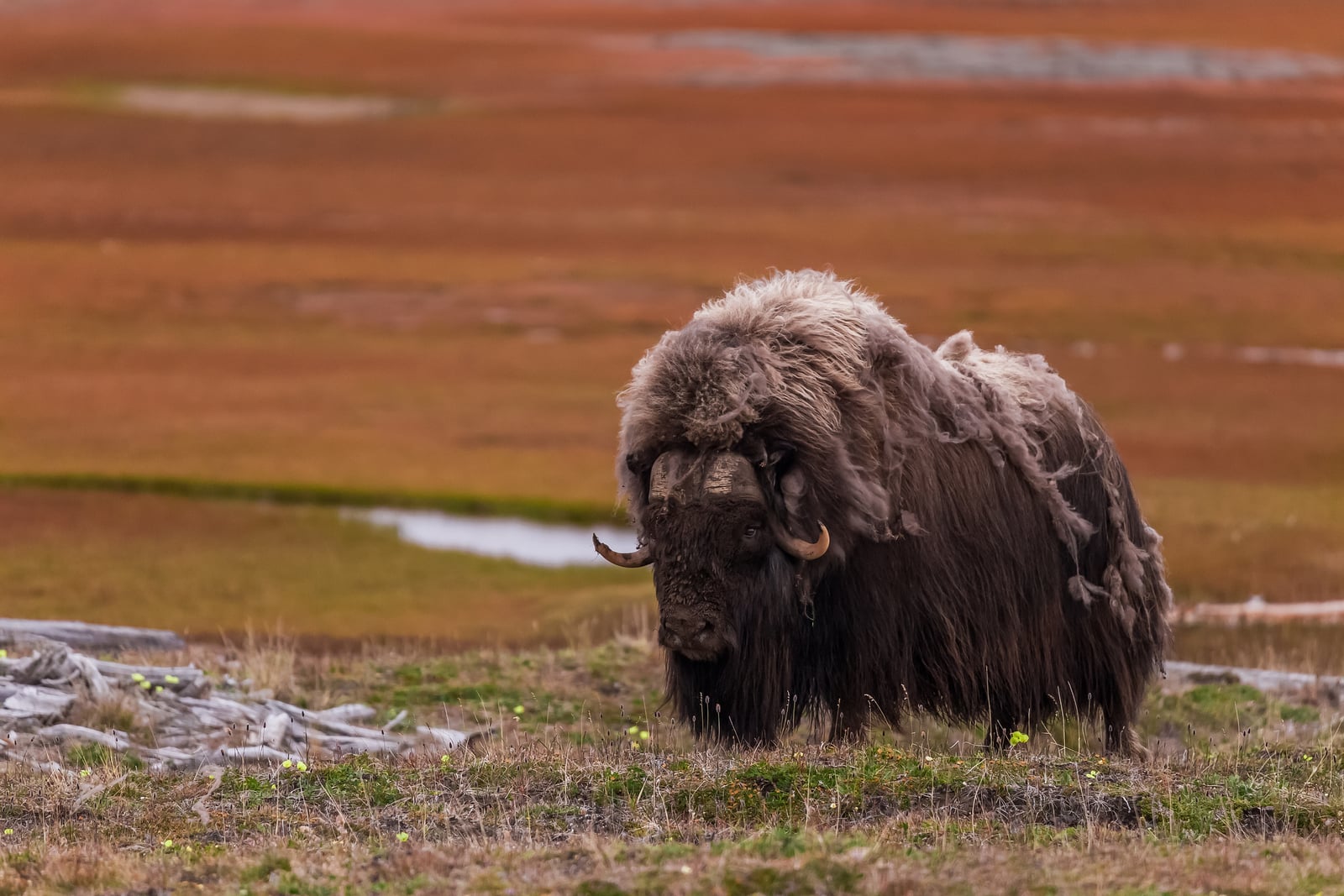
Muskox reports concentrate on the Seward Peninsula around Nome, 484 of the state’s 727, with the North Slope’s open coastal tundra north of the Brooks Range next, where the Dalton Highway corridor alone accounts for 120. That pattern traces the species’ real comeback story: muskoxen were wiped out in Alaska by the late 1800s, and every animal on the North Slope today descends from a Greenland herd released on Nunivak Island in the 1930s.
Out on the tundra, muskoxen stay put through the dark winter instead of migrating, pawing through snow with their heads and hooves to reach frozen sedges, grasses, and willow. When wolves or a bear close in, the herd doesn’t scatter. Adults form a tight ring facing outward with calves tucked behind them, a defense built for animals that chase down stragglers, not for a hunter with a rifle.
Records run heaviest from June through August, when the near-constant daylight of an Arctic summer gives observers their only real window onto the tundra. The herds are on the same ground come January; they’re just far harder to reach and see.
 Full species profile




