Mississippi mammals

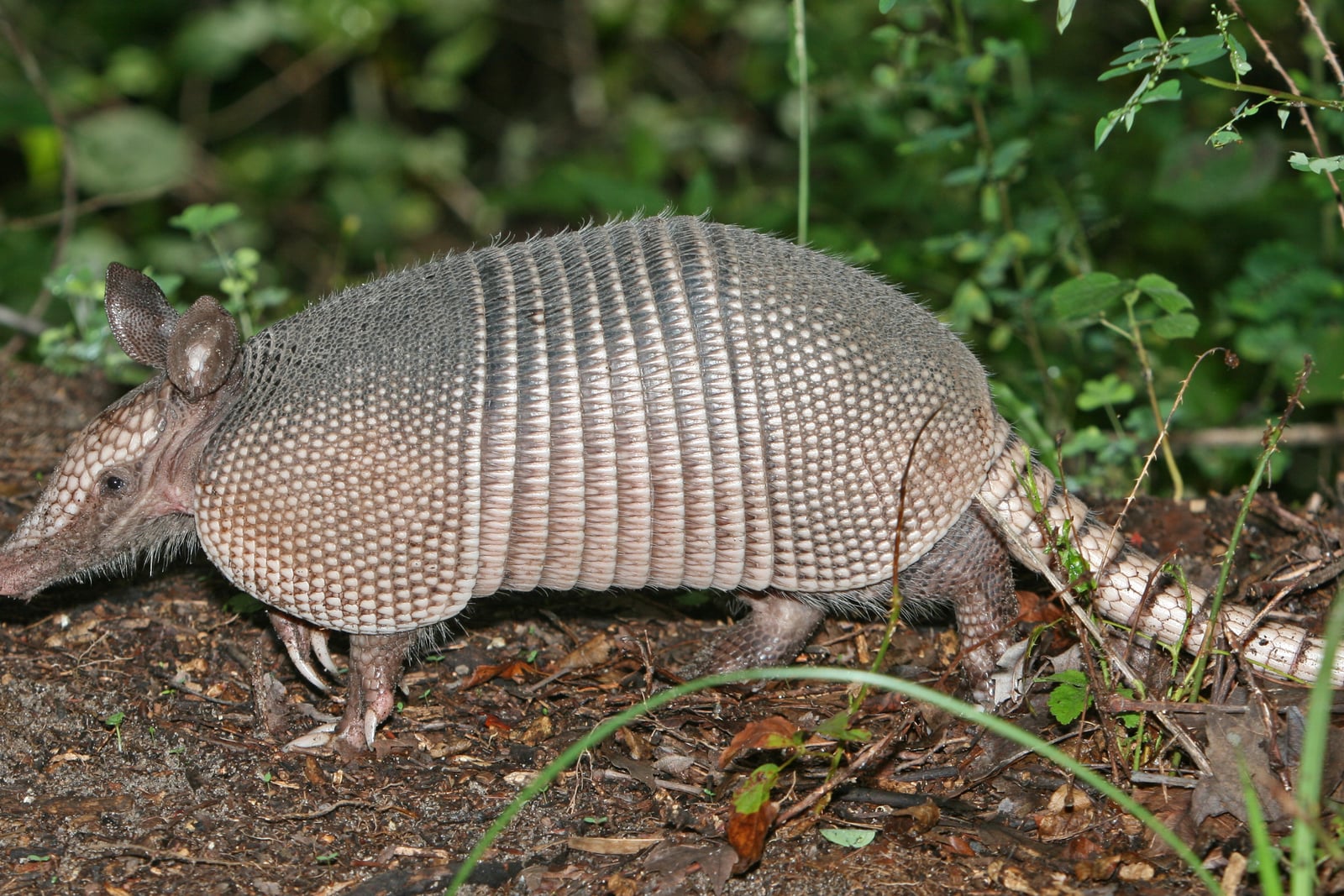
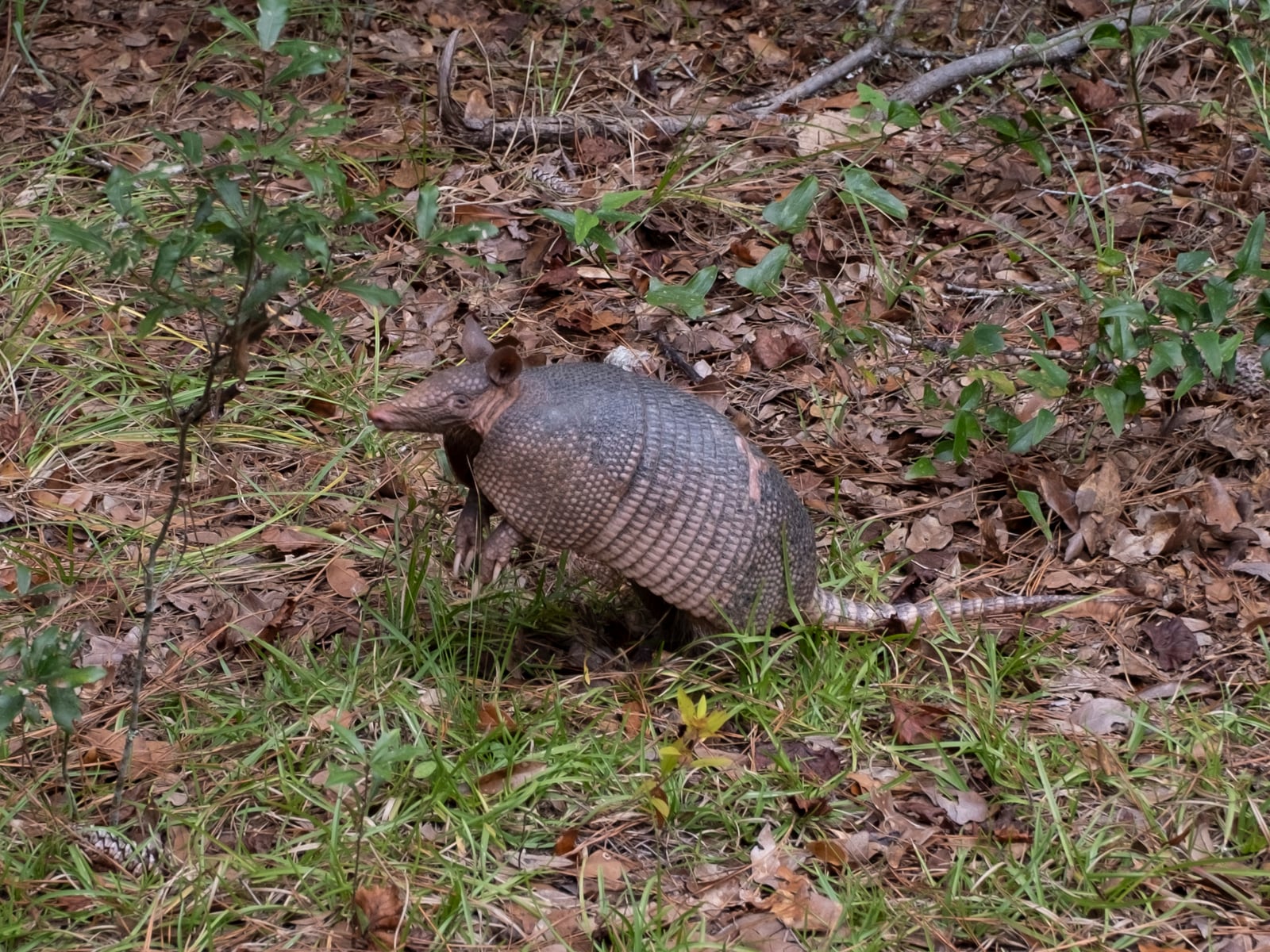
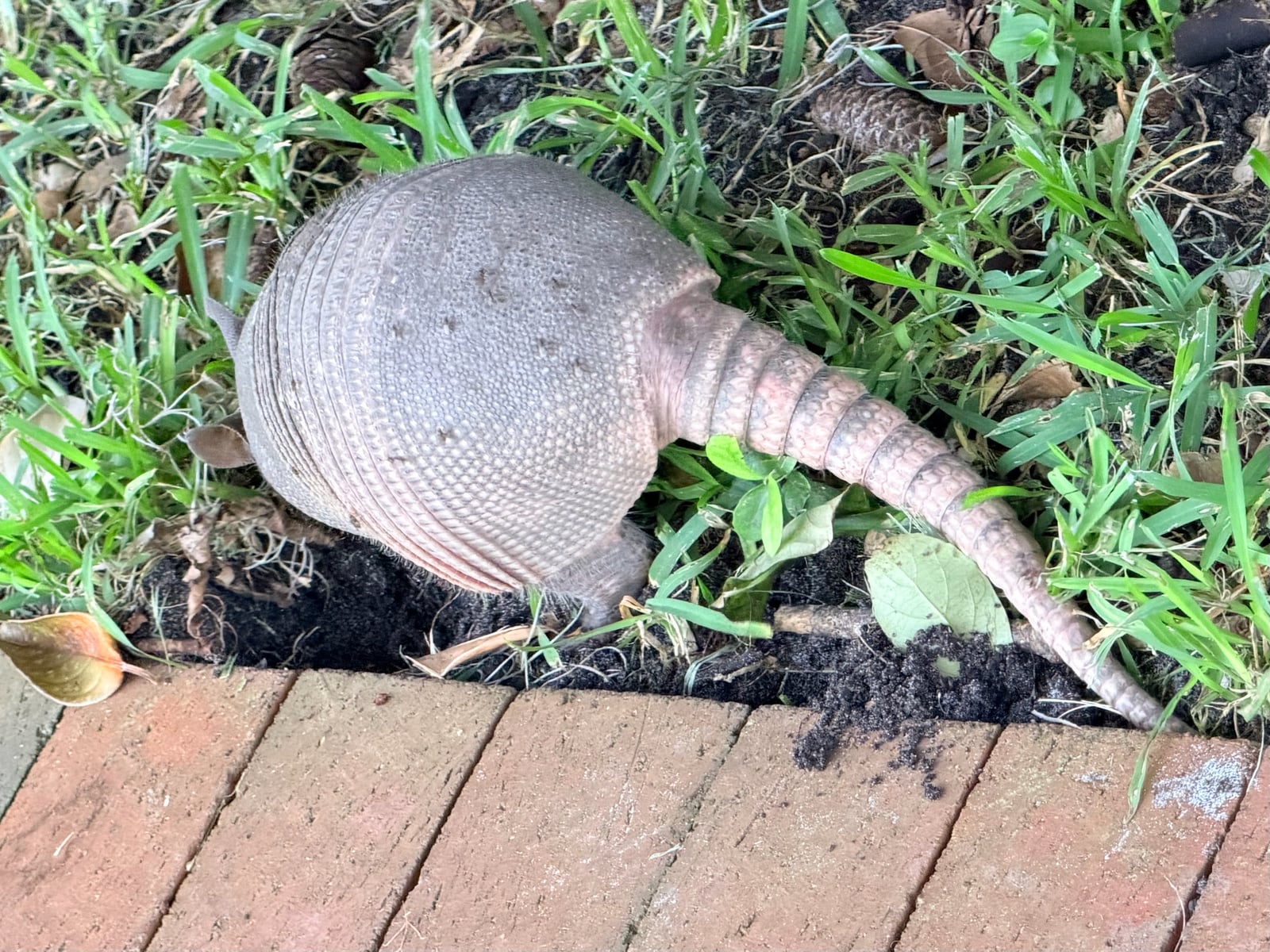
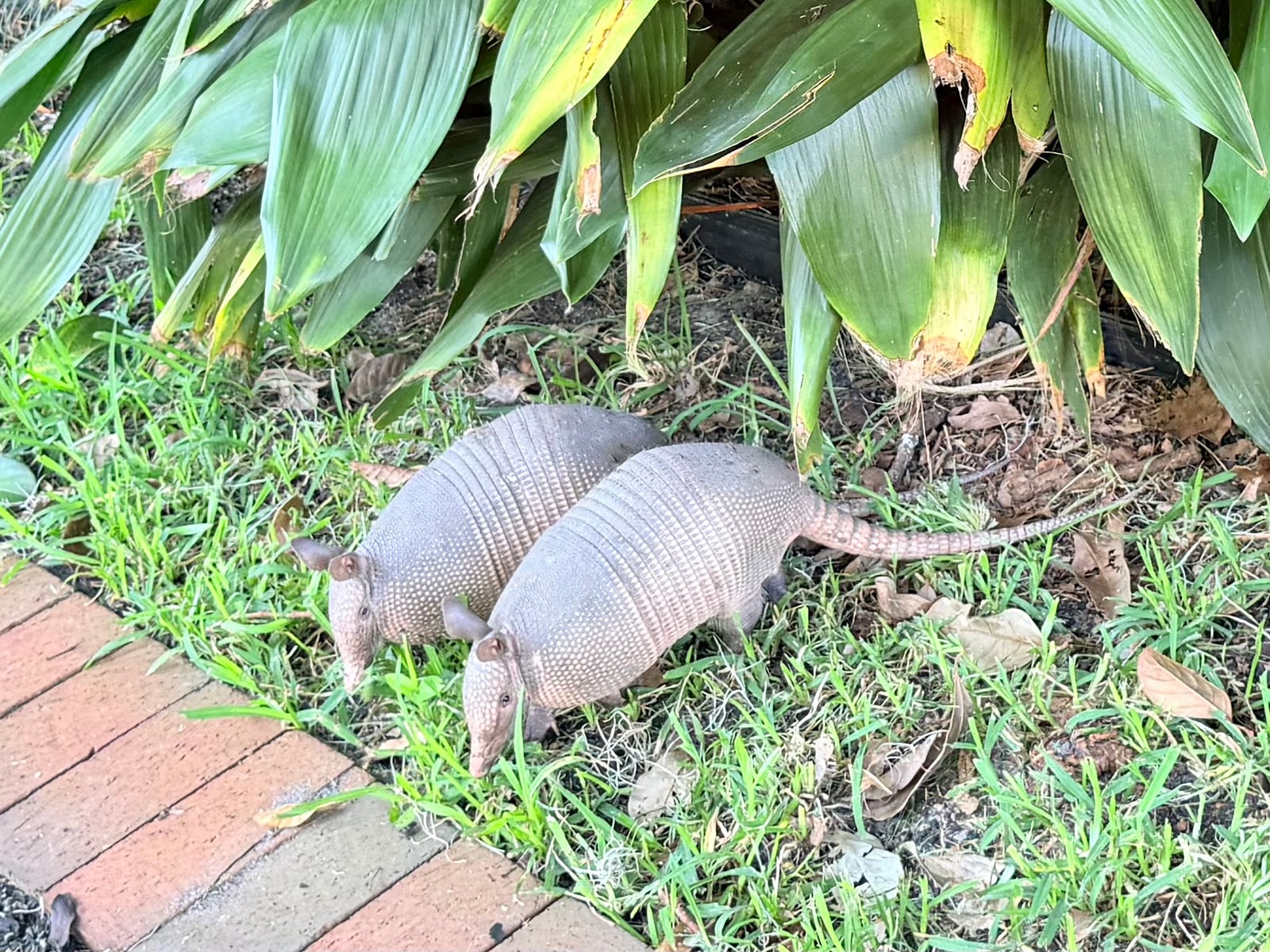
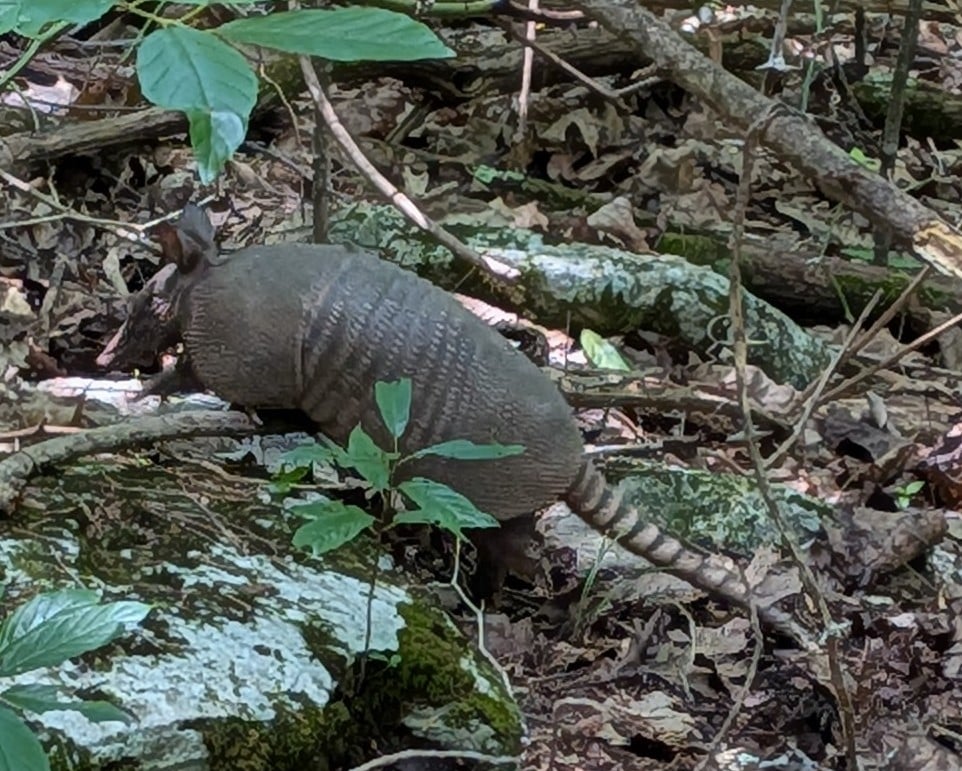
Nine-banded Armadillo in Mississippi

Dasypus mexicanus

Native to Mississippi SNR Unranked in Mississippi

Not listed as nonindigenous in Mississippi by USGS NAS; native to its Mississippi range.

IUCN Red List status

NE – Not Evaluated

Not yet assessed against IUCN Red List criteria.

Nine-banded Armadillo in Mississippi, by the numbers

Common in Mississippi 5th most recorded of 74 mammals logged in Mississippi

433 occurrence records
433 with iNaturalist photos
Aug 5, 2026 Last seen in Mississippi

Records from 2000–2026.

433 total records count every Mississippi occurrence from GBIF and iNaturalist; the map plots a georeferenced sample of 300.

When to look for the Nine-banded Armadillo in Mississippi

Most sightings fall in April to May.

433 Mississippi occurrence records (iNaturalist and GBIF) by month of year, 2000–2026. Shows when the species is recorded, not a guarantee of presence.

Monthly Mississippi records (table)
MonthRecords
January41
February38
March33
April41
May57
June31
July36
August38
September38
October33
November21
December26

Monthly nine-banded armadillo occurrence records (iNaturalist and GBIF) in Mississippi, 2000–2026.

Seasonality

Year-round in Mississippi, with recorded sightings peaking in April–May, with a smaller rise in July–September and January–February.

Occurrence map

Where Nine-banded Armadillo has been recorded in Mississippi

300 records mapped · zoom and drag to explore

300 Mississippi records mapped

Notable places to look

Park, forest, or monumentiNaturalist records
Holly Springs National Forest 13
Gulf Islands National Seashore 11
Natchez Trace Parkway 5
Vicksburg National Military Park 4
Lefleur's Bluff State Park 4
Graveline Bay Coastal Reserve 4
De Soto National Forest 3
Tishomingo State Park 2

Protected places with the most nine-banded armadillo sightings, from the USGS Protected Areas Database plus named mountain ranges, good spots to look, not a full breakdown, so they don't sum to the total.

Where it's recorded in Mississippi

CountyRecords
Jackson County 100
Adams County 30
Harrison County 24
Hancock County 16
Lafayette County 15
Oktibbeha County 14
Lowndes County 13
Marshall County 13
Hinds County 12
Grenada County 12
Forrest County 10
Pearl River County 9
55 other counties 165

The complete county distribution, spread across 67 Mississippi counties. Every occurrence record falls in one county, so these sum to the total. Counties from GBIF and US Census boundaries.

The Gulf Coast leads Mississippi’s armadillo record. Jackson County alone has 100 reports, with Harrison and Hancock carrying most of the rest of the coastal weight. Head inland and the tallies thin, though Adams County, home of Natchez, shows with 30 records that the species is well established up the Mississippi too.

Sixty-six of 82 counties have at least one report, so the coastal tilt is partly a matter of who is looking: the coast and the reservoir counties simply have more people outdoors year-round.

The calendar crests in April and May and never fully empties, fitting an animal that stays active through Mississippi’s mild winters. Protected ground from Holly Springs National Forest in the north to Gulf Islands National Seashore on the coast all holds records. The species has long since stopped being a coastal curiosity and become a statewide resident.
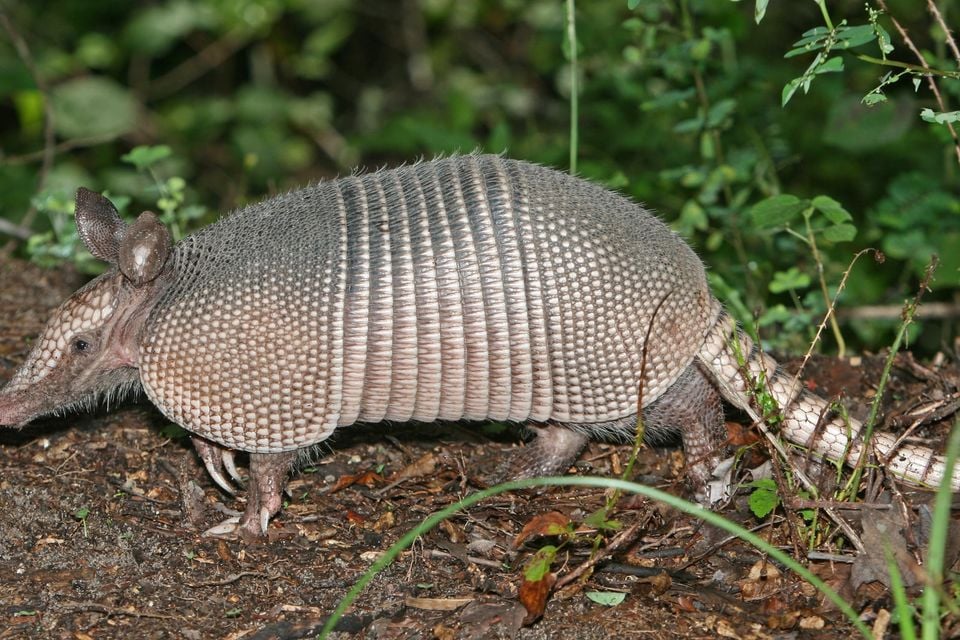

Occurrence data from iNaturalist.

Nine-banded Armadillo in other states

Nine-banded Armadillo range map (all states)

More mammals in Mississippi in the atlas

Data & sources

The data and visualizations on this page draw on these open sources:

  • GBIFCC-BY 4.0occurrence records behind the range map, elevation, and record counts
  • iNaturalistCC0 / CC-BY / CC-BY-SAobservations, photos, and audio recordings
  • NatureServe ExplorerCC-BYthe state conservation rank
  • IUCN Red Listattributed factthe global conservation status
  • USGS NASpublic domainnative / introduced status
  • Natural Earthpublic domainthe relief basemap
  • USFSpublic domainnational-forest boundaries
  • USGS Protected Areas Databasepublic domainthe named parks, forests, and refuges behind "notable places to look"



