


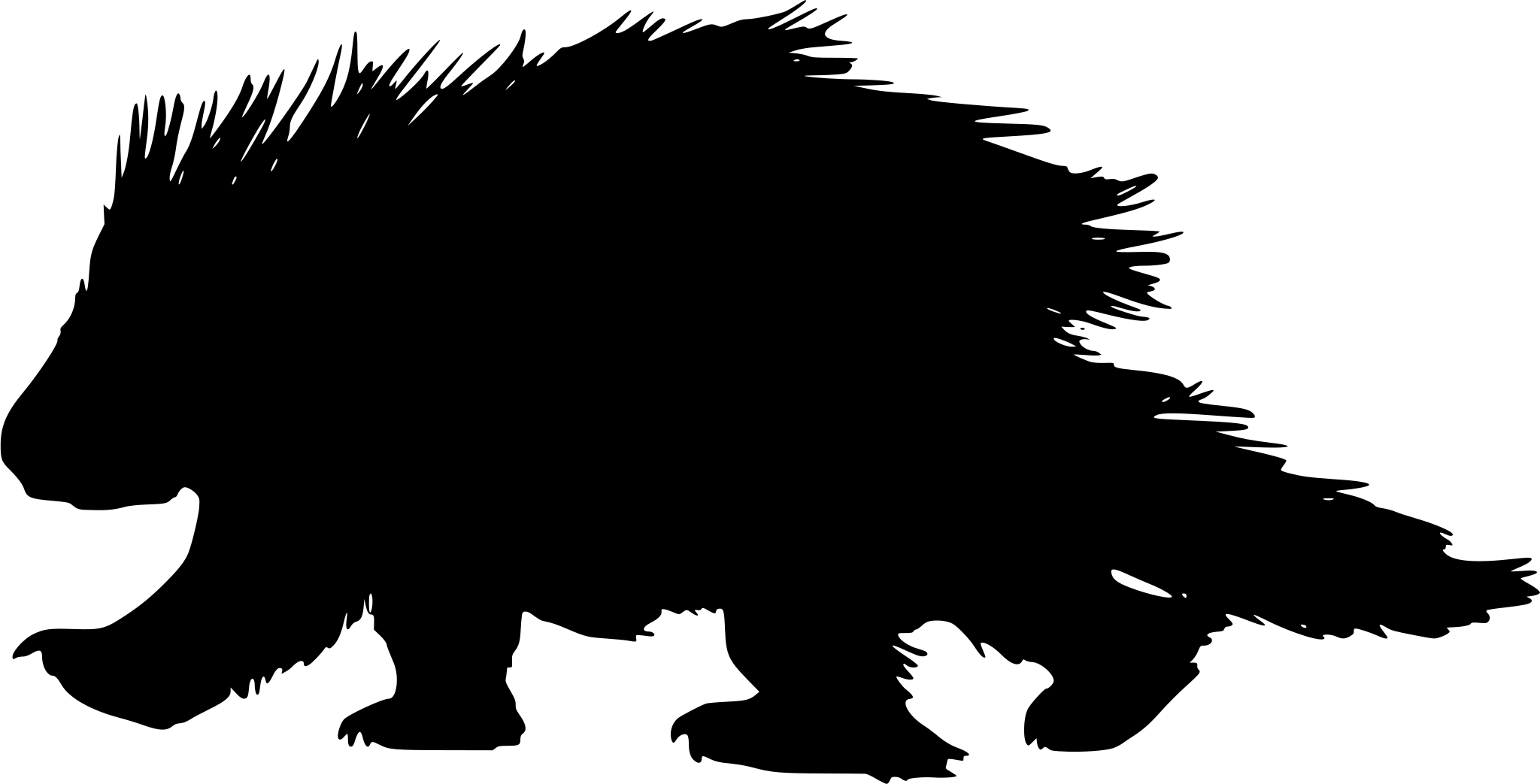
North American porcupines are the continent’s second-largest rodent after the beaver, slow-moving, quill-covered browsers of bark and buds that spend most nights working a home range they know by memory. In North Dakota, records concentrate in Theodore Roosevelt National Park and the surrounding Little Missouri National Grassland, where the badlands’ eroded buttes and wooded draws give porcupines both rock crevices for denning and stands of cottonwood and juniper to feed on.
This is one of the more visible small mammals in this set: iNaturalist photos actually outnumber GBIF specimen records here, a reasonable outcome for a large, slow animal that doesn’t flee at the sight of a hiker. Records peak in April, May, and July, likely reflecting when porcupines are easiest to spot without summer leaf cover rather than the true rhythm of their activity, which continues through winter. Ranked occasional among North Dakota’s mapped mammals, in the middle tier by record count, the species shows up reliably without being one of the state’s most-recorded rodents.
 Full species profile




