


Porcupines in South Dakota are a western animal. Of the state’s 116 records, nearly all fall west of the Missouri River: Pennington and Lawrence counties cover the Black Hills, Jackson County and Badlands National Park mark the badlands country, and Harding County holds a notable cluster in the northwest corner.
Quills, claws, and a taste for trees
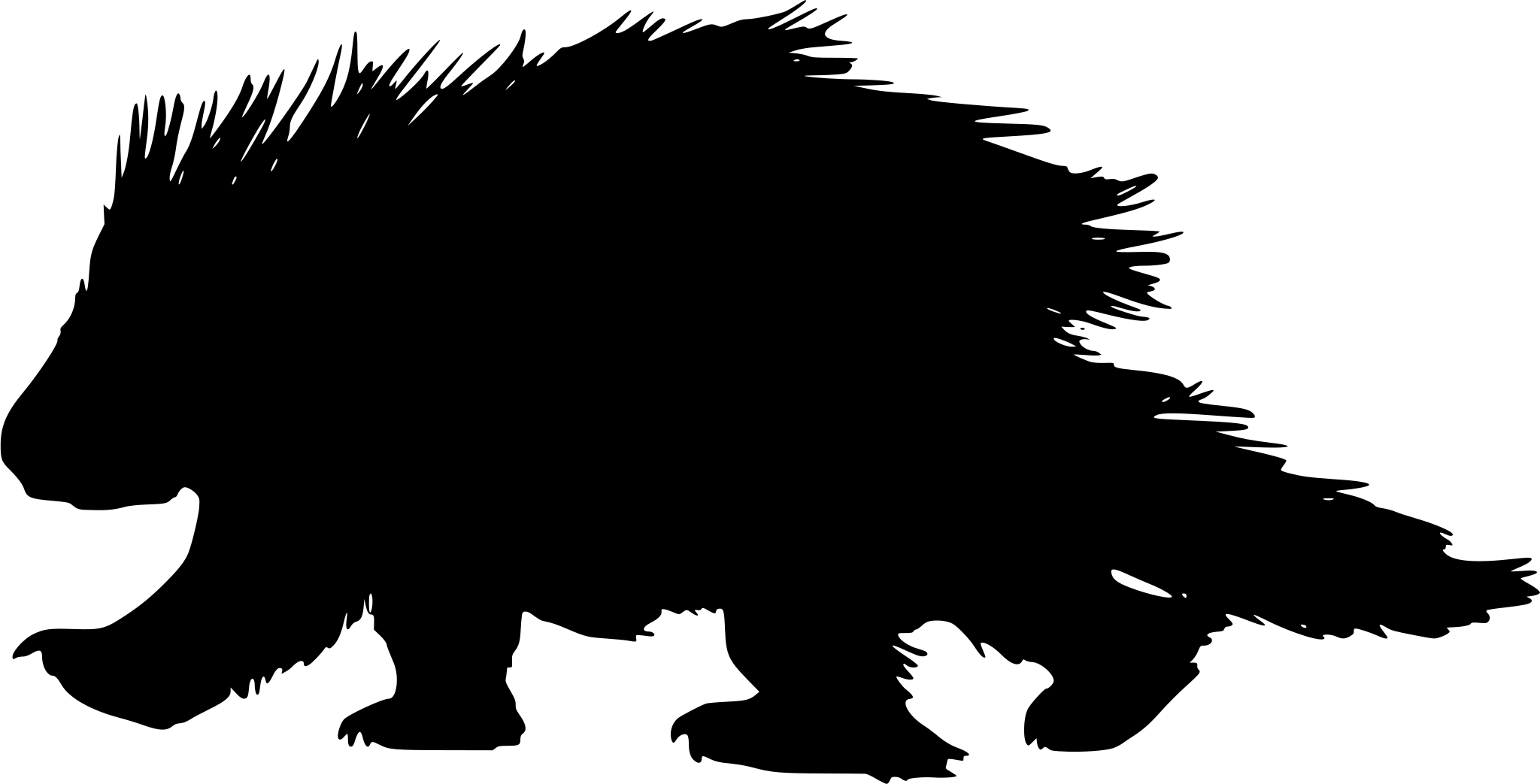
The porcupine is a large, deliberate rodent armored in tens of thousands of quills, modified hairs that detach on contact but are never thrown. It climbs well and spends much of its time in trees, which in prairie South Dakota means the ponderosa forests of the Black Hills, juniper breaks, and cottonwood river bottoms. Buffalo Gap National Grassland and the timbered draws inside Badlands National Park supply most of the mapped sites.
Bark in winter, greens in summer
Porcupines do not hibernate. Through the cold months they live on inner bark and evergreen needles, sometimes feeding for days in a single tree, then shift to leaves, forbs, and other green growth in summer. South Dakota’s records appear in every month of the year, cresting from June through August with a smaller rise in October as the animals range between feeding sites.
Status in South Dakota
No NatureServe state rank is on file for the porcupine in South Dakota, but USGS NAS does not list it as nonindigenous and it is treated as native to its mapped range. The species carries no specific listing under the state’s conservation framework and is ranked Least Concern globally by the IUCN.
 Full species profile




