
Prairie Shrew

Sorex haydeni

Also known as: Hayden's Shrew

LCLeast Concern

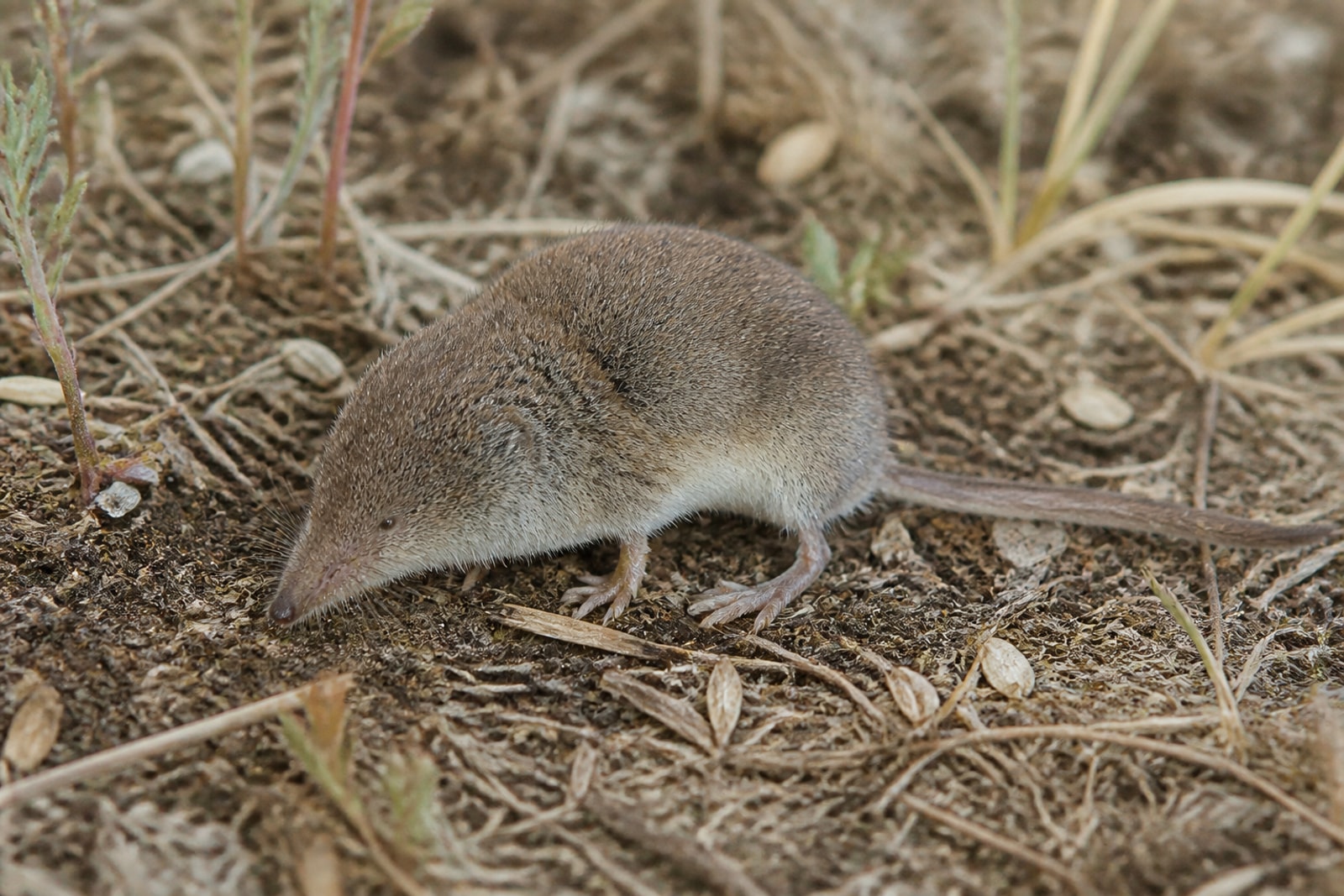
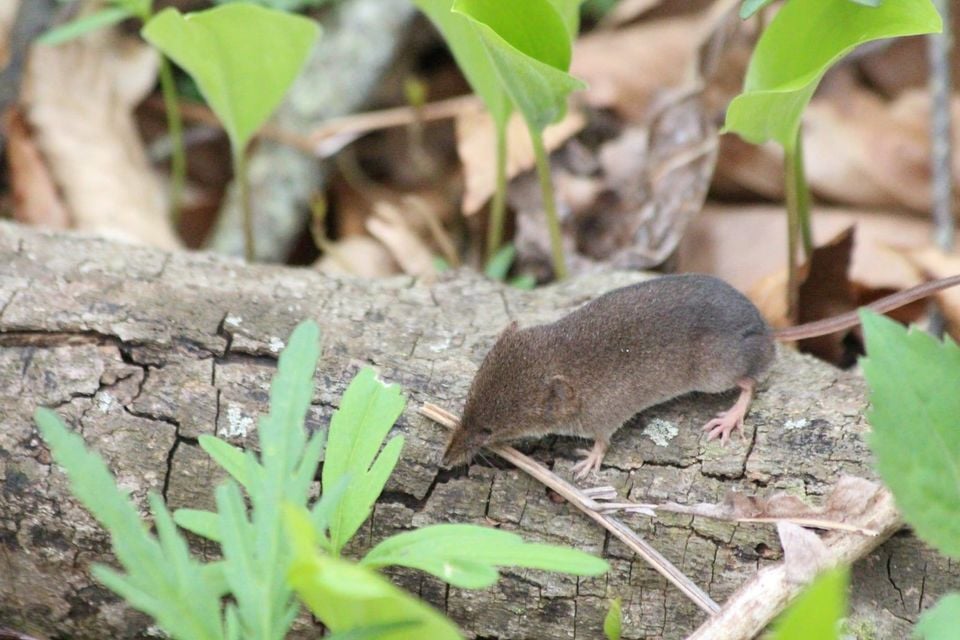
The prairie shrew is a small, brown shrew of the northern Great Plains, a grassland insect-hunter that was long filed as a subspecies of the masked shrew before earning its own name. It runs the ground under sod and leaf litter from Minnesota to Montana and south to Missouri. Records are thickest in South Dakota and Minnesota, though a shrew this small is always easier to trap than to see.

Range through the year

Where Prairie Shrew is seen

Prairie Shrew is recorded in 6 US states from 80 occurrence records, most heavily in North Dakota (40 records) and Montana (24).

Current range80 records · 6 states
AlabamaArizonaArkansasCaliforniaColoradoConnecticutDelawareDistrict of ColumbiaFloridaGeorgiaIdahoIllinoisIndianaIowa · view state pageKansasKentuckyLouisianaMaineMarylandMassachusettsMichiganMinnesota · 9 records · view state pageMississippiMissouri · view state pageMontana · 24 records · view state pageNebraska · view state pageNevadaNew HampshireNew JerseyNew Mexico · 5 recordsNew YorkNorth CarolinaNorth Dakota · 40 records · view state pageOhioOklahomaOregonPennsylvaniaRhode IslandSouth CarolinaSouth Dakota · 1 records · view state pageTennesseeTexasUtahVermontVirginiaWashingtonWest VirginiaWisconsinWyoming · view state pageAlaska · 1 recordsAKHawaiiHIPuerto RicoPR
Occurrence data by state and month
Prairie Shrew – occurrence records by US state and month (80 total across 6 states)
StateJanFebMarAprMayJunJulAugSepOctNovDecYear
North Dakota·····1147513··40
Montana······11121···24
Minnesota······81····9
New Mexico·····2·3····5
South Dakota········1···1
Alaska·······1····1

Based on 955 georeferenced US records, 2000-2026. Shading is observation density (where people record sightings), not true abundance. Alaska, Hawaii & Puerto Rico shown as insets.

Explore by state

Prairie Shrew across 8 states

Occurrence records, conservation status, and the places it turns up, state by state. Open a state for detail, or visit its full page.

  • South DakotaNativeCommon353 records

    State rankSecure

    Notable placesBlack Elk Wilderness · Weiger Slough · Fort Sisseton · Gary Gulch

    Countiesrecorded in 12

    Year-round in South Dakota, with recorded sightings peaking in June–July, with a smaller rise in April.

  • MinnesotaNativeOccasional211 records

    State rankApparently Secure

    Notable placesWestern Prairie State Scientific and Natural Area · Cedar Rock State Wildlife Management Area · Felton State Wildlife Management Area · Altona State Wildlife Management Area

    Countiesrecorded in 12

    Year-round in Minnesota, with recorded sightings peaking in July–August.

  • North DakotaNativeCommon133 records

    State rankUnranked

    Notable placesNd State Lands - Surface Ownership · North Dakota State Forest Service Land

    Countiesrecorded in 12

    Year-round in North Dakota, with recorded sightings peaking in October, with a smaller rise in July–August.

  • NebraskaNativeCommon96 records

    State rankApparently Secure

    Notable placesAgate Fossil Beds National Monument

    Countiesrecorded in 12

    Year-round in Nebraska, with recorded sightings peaking in December, with a smaller rise in May.

  • MissouriNativeOccasional78 records

    State rankUnranked

    Countiesrecorded in 6

    Year-round in Missouri, with recorded sightings peaking in January, with a smaller rise in April and June–July.

  • MontanaNativeOccasional43 records

    State rankVulnerable

    Countiesrecorded in 12

    Year-round in Montana, with recorded sightings peaking in July–August.

  • IowaNativeOccasional18 records

    State rankApparently Secure

    Notable placesSpringbrook State Park

    Countiesrecorded in 13

    Year-round in Iowa, with recorded sightings peaking in August, with a smaller rise in June.

  • WyomingNativeRare14 records

    State rankImperiled

    Countiesrecorded in 3

    Year-round in Wyoming, with recorded sightings peaking in July.

IUCN Red List status

  1. LC
  2. NT
  3. VU
  4. EN
  5. CR
  6. EW
  7. EX

LC – Least Concern

Widespread and abundant; not at risk.

SizePrairie Shrew beside a 1.8 m adult, drawn to scale
Created by potrace 1.16, written by Peter Selinger 2001-2019 Created by potrace 1.16, written by Peter Selinger 2001-2019
Body length
7–10 cm3 in–4 in
Weight
3–6 g0.1–0.2 oz

Silhouettes drawn to scale against a 1.8 m5 ft 11 in adult.

Elevation

From 199 georeferenced records, the Prairie Shrew is recorded from 185 m607 ft to 2,692 m8,832 ft, with half of sightings below 380 m1,247 ft.

Each band shows the share of georeferenced sightings that fall within it. Records cluster where people live and hike, so low, populated elevations are over-represented. Read this as observation density, not true abundance.

Best encounter

Where and when to see a Prairie Shrew

Your best chance: South Dakota.

Where
South DakotaSD

Life history

The Prairie Shrew (3–6 g0.1–0.2 oz) is a carnivore that first breeds around 0.7 years, carries a 19-day gestation, and bears about 6.6 young per litter. Maximum recorded longevity is 2.5 years.

Life cycle

  1. Gestation19 days
  2. Birthlitter of 6.6 young
  3. Sexual maturity0.7 yr (female)
  4. Maximum recorded longevity2.5 years

Reproduction

Gestation
19days
Litter size
6.6youngaverage
Litters / year
1.7litters
Age at first breeding
0.7years

Diet composition

Carnivore

By foraging composition: 70% invertebrates, 30% scavenged.

  • Invertebrates70%
  • Scavenged30%

Most active around the clock.

Typical values for the species, not local measurements. Maximum longevity is the longest lifespan on record; most individuals live far less.

Commonly confused with

Animals people sometimes mistake for the prairie shrew, and how to tell them apart.

Small, brown, and hard to name

Shrew identification is specialist work, and this species is a case study. It measures about 3 to 4 inches including the tail, plain brown above and paler below, with the long pointed snout and tiny eyes of its kind. It looks so much like the masked shrew that mammalogists treated the two as one species for decades, and it took skull measurements and genetic work to separate them cleanly.

In the field, geography does most of the sorting. The masked shrew keeps to forests and bogs across the north, while the prairie shrew is the animal of open grassland. A small brown shrew caught in a dry prairie in the Dakotas is far more likely this species than any other.

Grassland ground life

True to its name, this shrew lives in prairie: native sod, hayfields, grassy ditches, and the thatch along wetland edges. It hunts insects, spiders, and other small prey through the litter layer, using runways made by voles and mice. Like other shrews it burns energy at a ferocious rate and must eat frequently, day and night, in every season.

That metabolism shapes the record. Shrews don’t hibernate, and they remain active under snow, so the animal is present year-round even where reports cluster in summer and fall. The seasonal pattern mostly reflects when people trap and survey small mammals, not when the shrews are out. Records are not a population count, and a month with few reports says more about fieldwork than about the animal.

A name with history

Older references call it Hayden’s shrew, and some state lists still carry that name. Both refer to the same animal, and the two labels can make the same records look like two species in older data. The split from the masked shrew is settled science now, but the leftover names linger in collections and checklists.

Widespread but rarely seen

The IUCN rates the prairie shrew Least Concern, and its range covers the heart of the northern plains. It persists in farm country where strips of grass survive, and in native prairie it can be one of the commoner small mammals, though “common” for a shrew still means most people never see one. South Dakota and Minnesota hold the deepest record sets, with Iowa, Missouri, Kansas, Montana, and Wyoming marking the range edges.

The honest caveat is effort. Prairie shrews turn up where mammalogists run traplines, and large parts of their range go unsurveyed in any given year. What the records do show is a shrew holding its grassland ground across a huge and heavily plowed landscape.


Data & sources

The data and visualizations on this page draw on these open sources:

  • GBIFCC-BY 4.0occurrence records behind the range map, elevation, and record counts
  • PhyloPicCC0 / CC-BY per itemthe to-scale silhouettesBecky Barnes (Sorex) · Andrew A. Farke (human silhouette, CC-BY 3.0)
  • AnAge (HAGR)CC-BY 3.0longevity, maturity, and gestation figures
  • IUCN Red Listattributed factthe global conservation status
  • Amniote Life-History DatabaseCC0 · public domainreproduction figures
  • EltonTraitsCC0 · public domaindiet and foraging-activity data


