
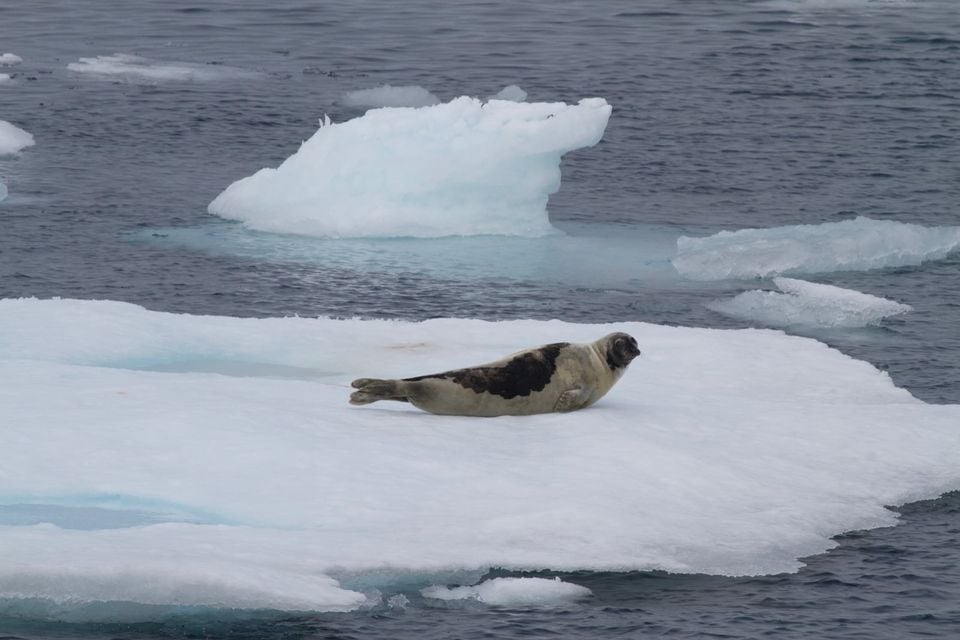
The ribbon pattern that names it
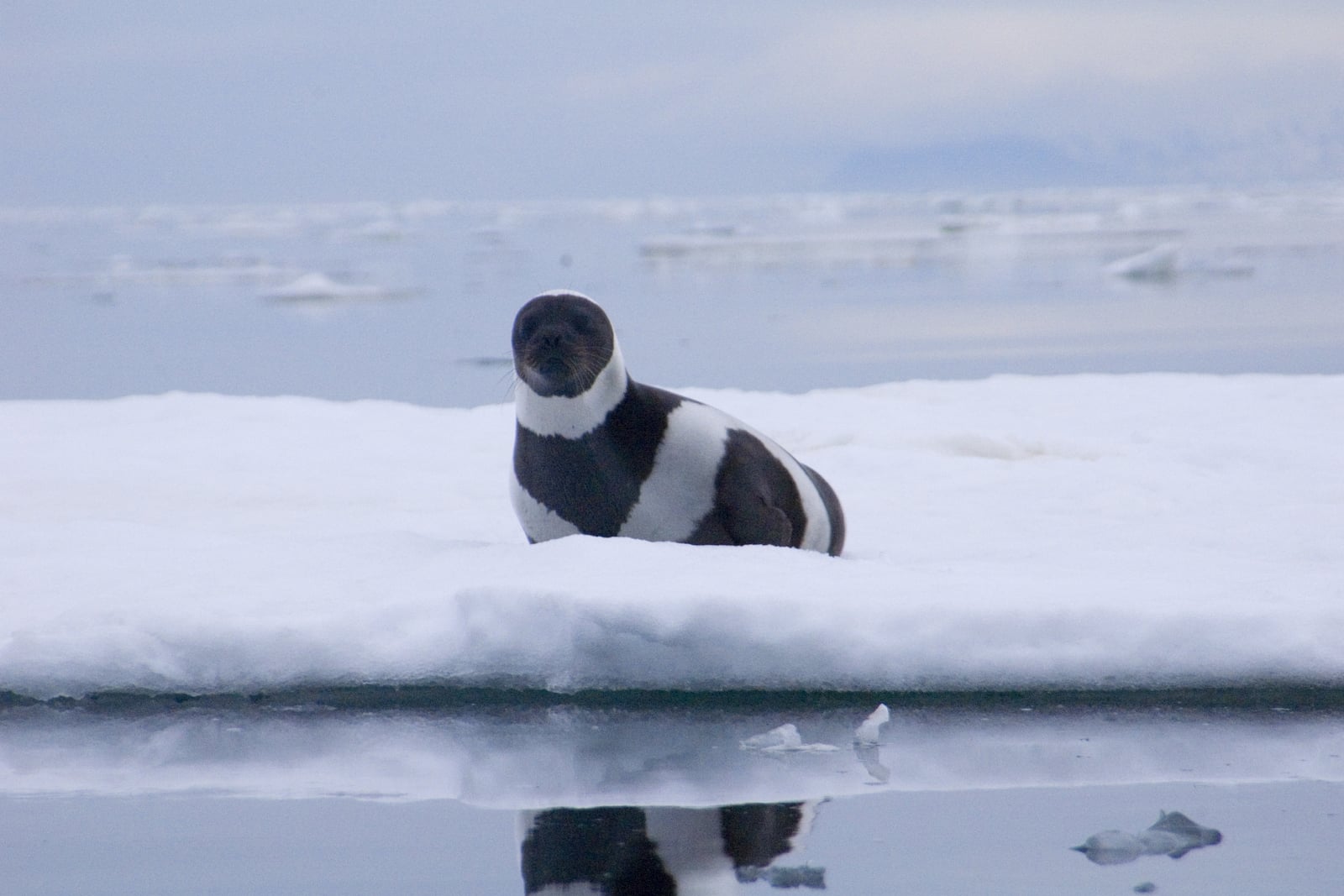
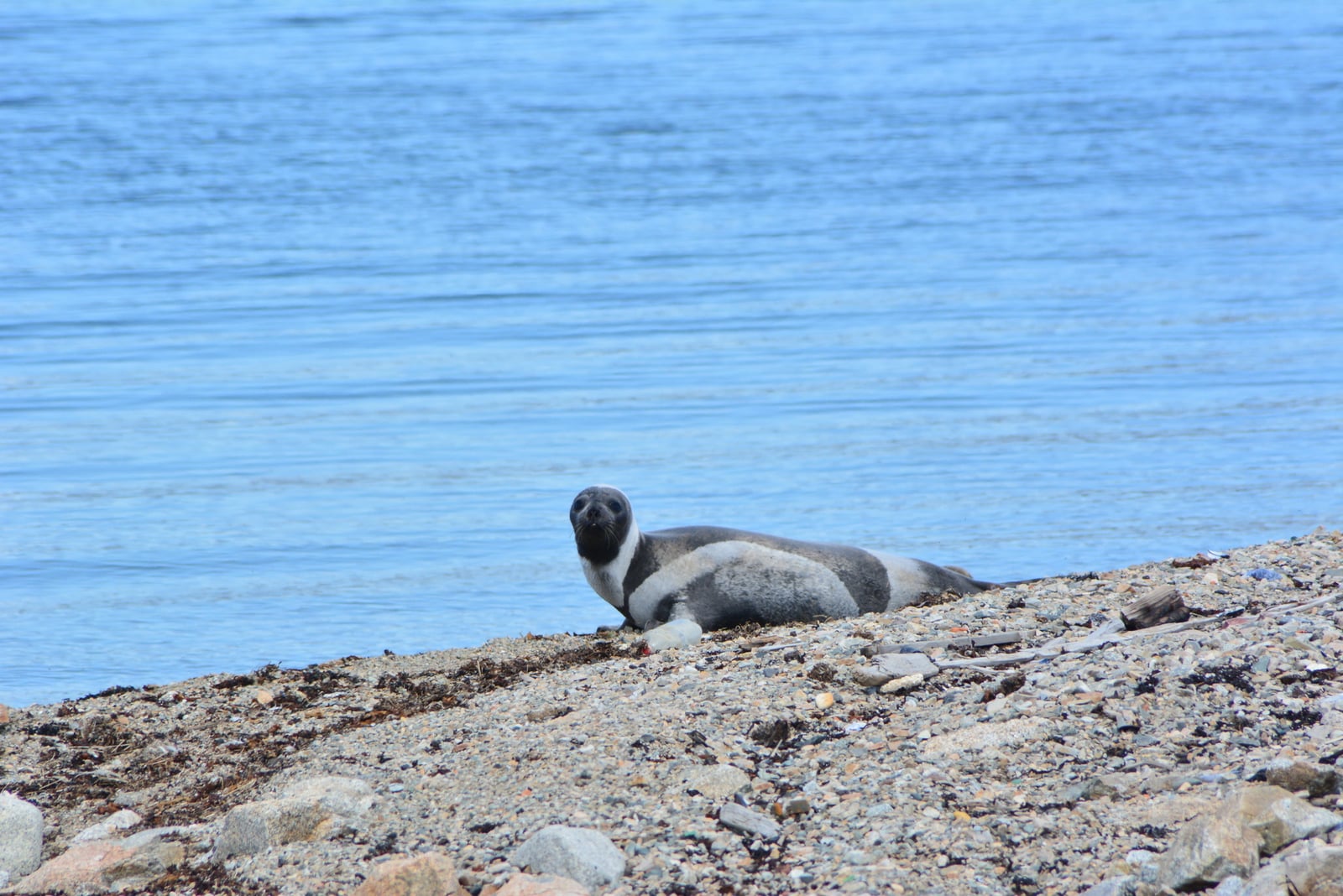
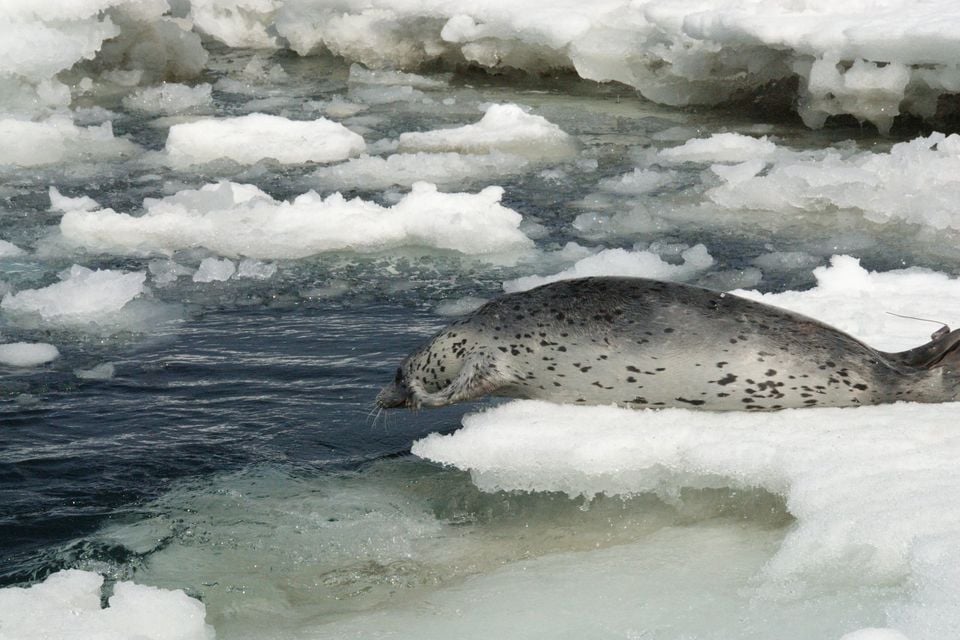
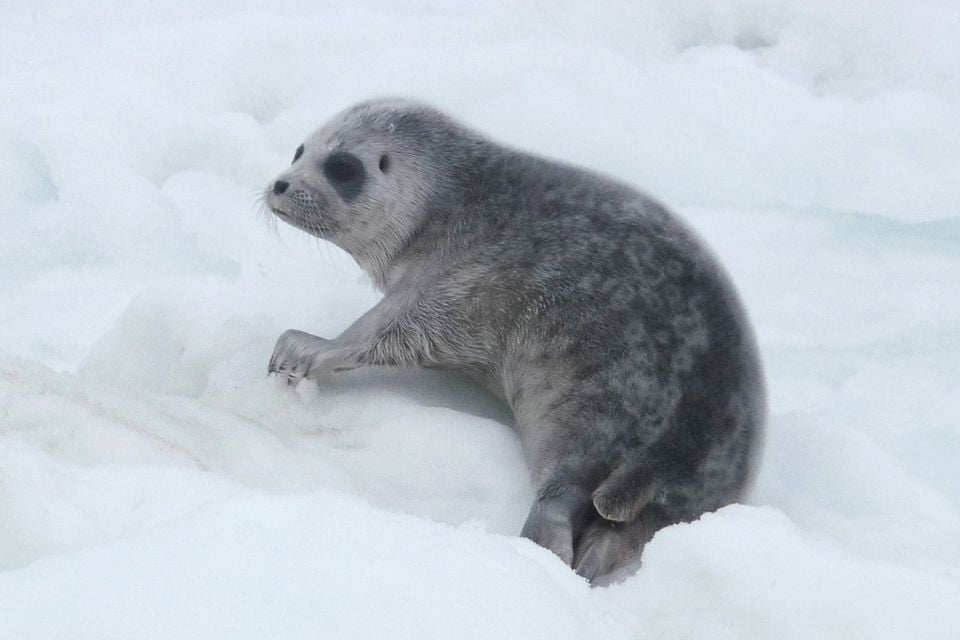
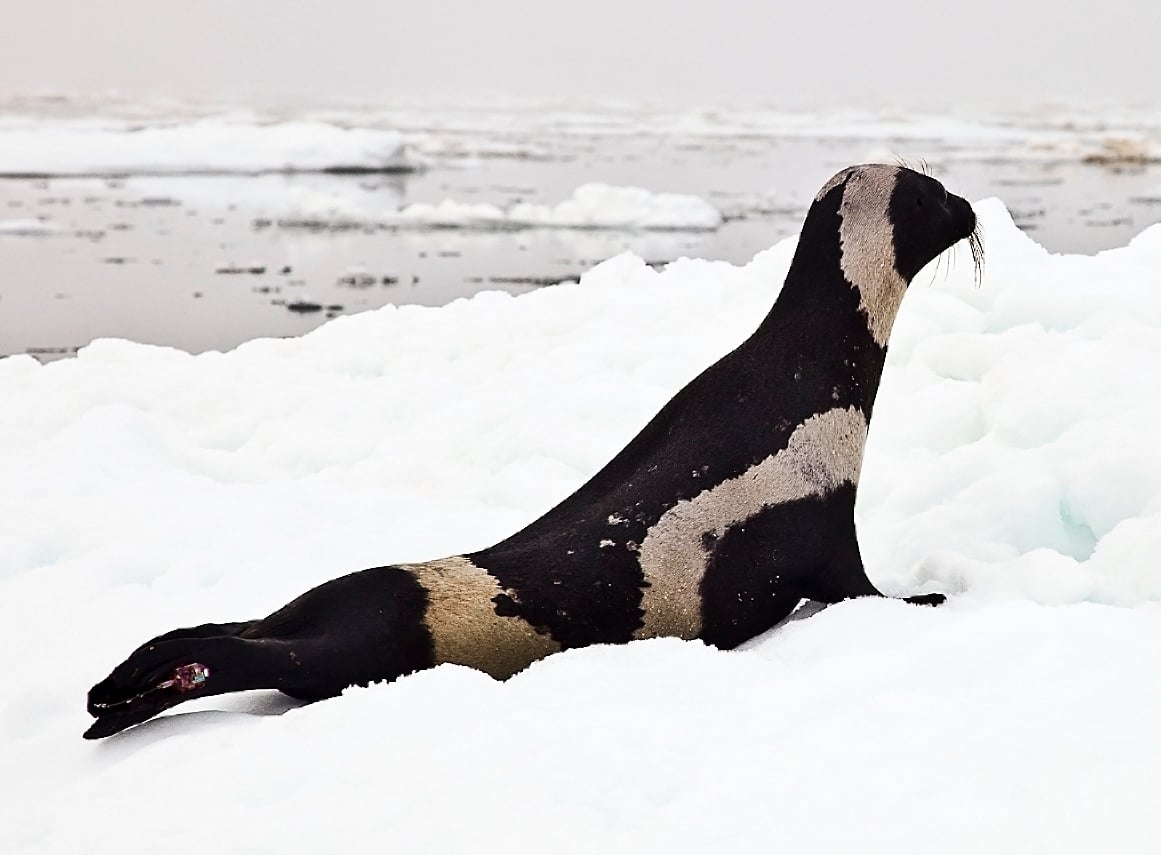
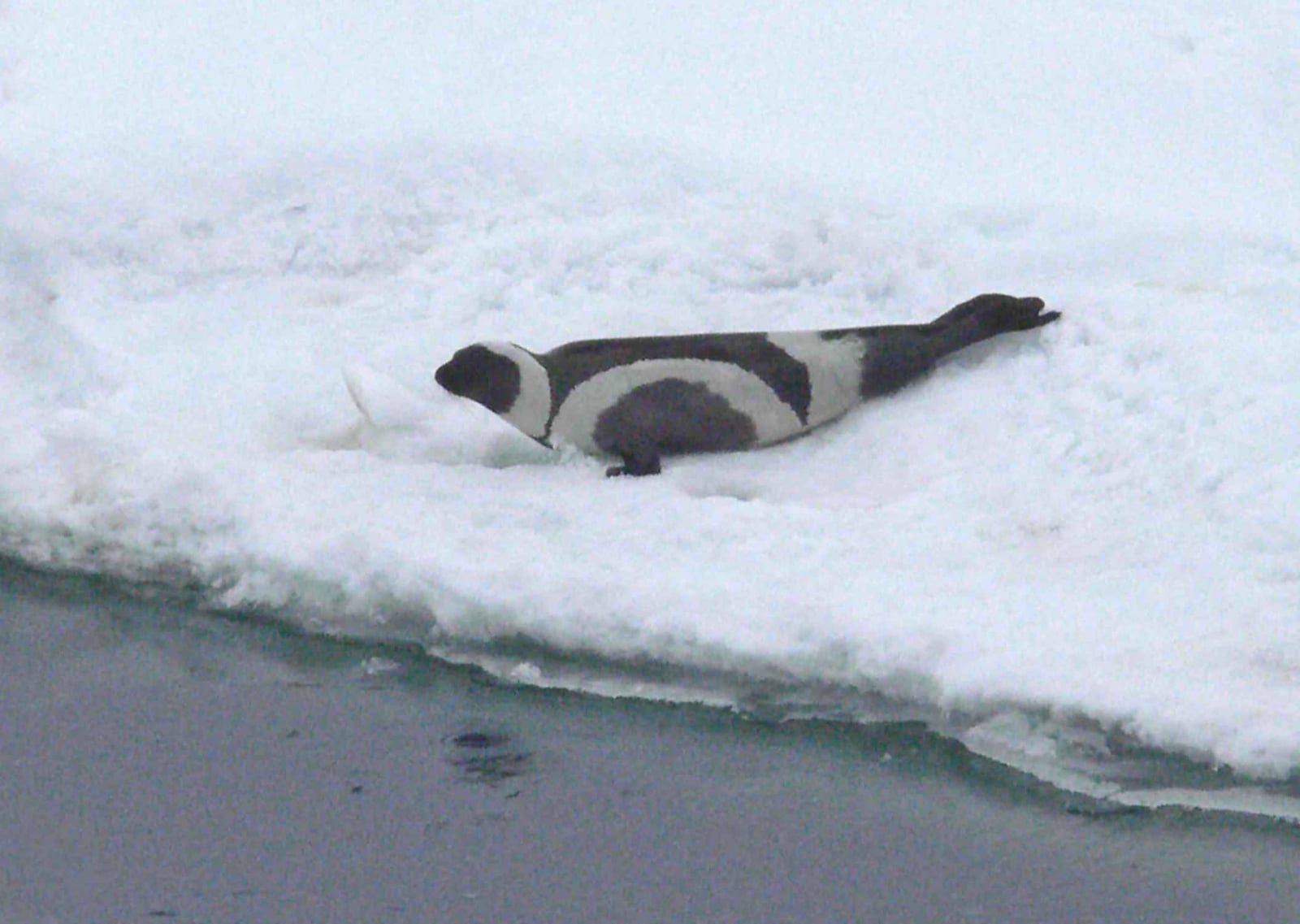
A ribbon seal is impossible to mistake for anything else in Alaska waters. Adult males run dark chocolate-brown to black, wrapped in four pale bands: one around the neck, one circling each fore flipper, and one that wraps the hips like a belt. Females wear the same layout in softer, more muted tones, and pups start out plain silvery-gray, with the banded pattern only showing up as they grow into adulthood. It’s the only living species in its genus, and no other North Pacific seal wears anything close to this design, so a clear look at the neck and shoulders is really all you need for a confident identification. The bands aren’t just decorative either. Researchers think the sharp contrast may help ribbon seals recognize each other at a distance, useful for a species that otherwise spends very little time in groups.
A solitary seal of the drifting ice
Unlike harbor seals or Steller sea lions, ribbon seals don’t gather at crowded haul-outs. They’re built for a scattered, ice-associated life, spending most of the year alone on drifting pack ice or out in open water, well away from any shoreline. Alaska’s Bering and Chukchi seas hold the species’ entire US range. That’s the southern edge of a wider distribution that also reaches into Russia’s Sea of Okhotsk. Most reports here cluster in early summer. Retreating ice concentrates the remaining seals onto fewer floes, and that gives boats and researchers more chances to spot them. The seasonal pattern likely reflects ice conditions and observer effort as much as the seals’ own habits. It’s a record of when people found them, not a full picture of where every seal is at any given moment.
Deep dives for fish and squid
Ribbon seals feed well below the surface, diving for walleye pollock, saffron cod, capelin, and eelblennies, along with squid, shrimp, and crabs picked up near the seafloor. That mixed fish-and-invertebrate diet lets them draw on a wider slice of the water column than a seal locked into one prey type. It’s likely part of why they can afford to live so spread out, rather than competing at packed haul-outs the way colonial seals do. Dives can run deep and long. A seal’s catch shifts with the season and the depth it happens to be hunting, but fish and invertebrates both stay on the menu year-round. Between dives, seals haul out on ice mainly to rest, molt, and give birth, not to socialize.
Pups born on the ice, then gone within weeks
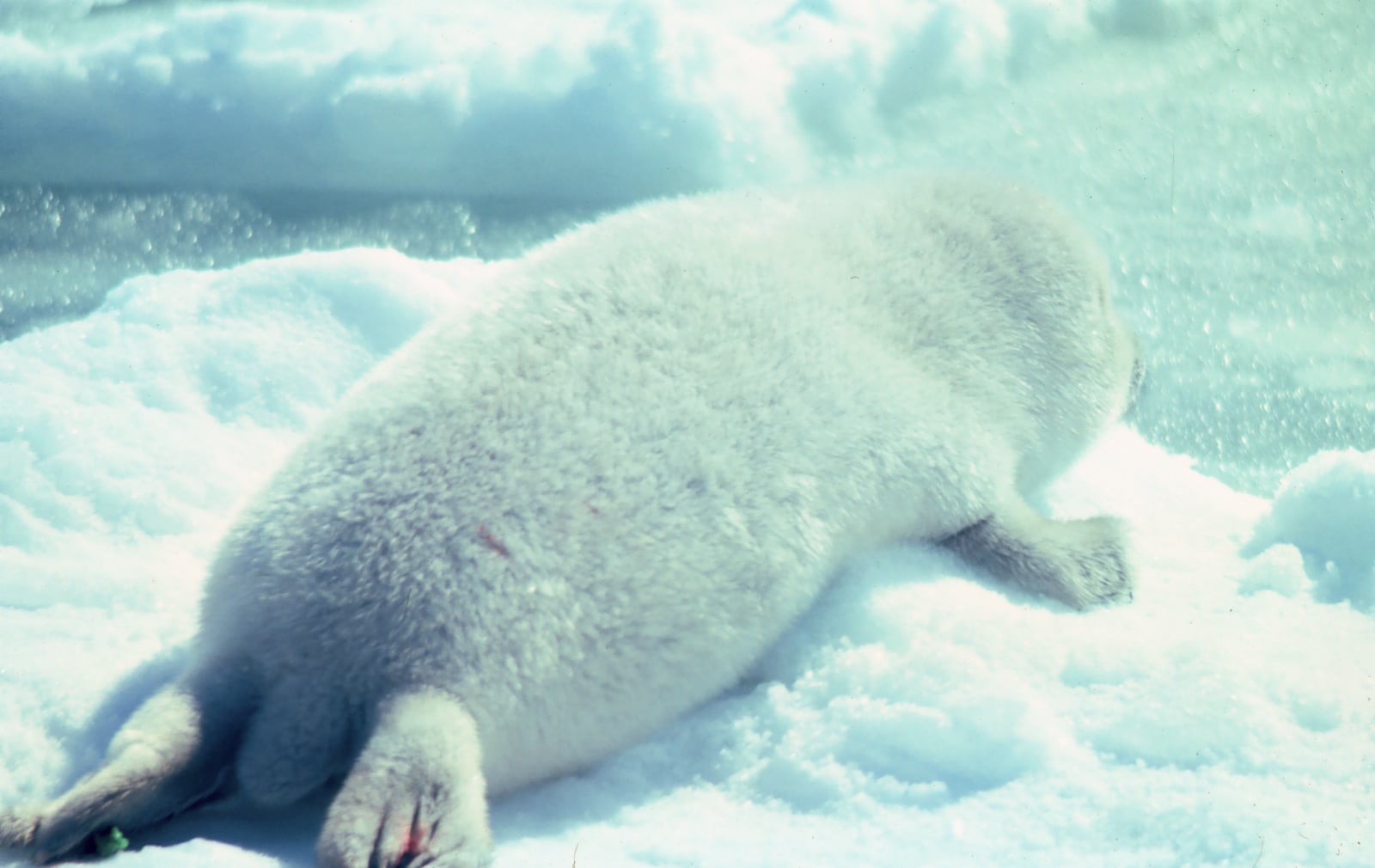
Ribbon seals breed and pup on the spring pack ice, mothers nursing a single pup on rich, fatty milk that lets it more than double its weight within a couple of weeks. Pups arrive in a soft white coat, useful camouflage against snow, before molting into the gray juvenile pattern soon after weaning. Once a pup is weaned, mother and pup head back to open water separately, so the dense pupping colonies seen in some other ice seals never really form here. Adults mate again on the ice shortly after weaning their pup, then molt themselves before scattering across the Bering and Chukchi seas for the rest of the year. It’s a fast, solitary breeding season built entirely around the timing of the spring ice.
Watched for the ice it depends on
The IUCN lists the ribbon seal as Least Concern, and the population is thought to be stable across its Bering, Chukchi, and Okhotsk sea range. Polar bears are its main natural predator, taking pups and hauled-out adults when the chance arises. The bigger long-term question isn’t predation, though. It’s the ice itself. This is a species built around a predictable window of spring pack ice for pupping, nursing, and molting. Shifting sea-ice timing or extent in the Bering and Chukchi seas could squeeze when and where all three of those things happen. For now, the species’ wide range and flexible diet give it more room to adjust than some other ice-dependent animals get. It isn’t currently classified as at risk.




