
Alaska mammals

Sea Otter in Alaska

Enhydra lutris

Native to Alaska S4 Apparently Secure in Alaska

Not listed as nonindigenous in Alaska by USGS NAS; native to its Alaska range.

IUCN Red List status

  1. LC
  2. NT
  3. VU
  4. EN
  5. CR
  6. EW
  7. EX

EN – Endangered

Very high risk of extinction in the wild.

Sea Otter in Alaska, by the numbers

Common in Alaska 6th most recorded of 108 mammals logged in Alaska

6,370 occurrence records
2,862 with iNaturalist photos
Jul 12, 2026 Last seen in Alaska

Records from 2000–2026.

6,370 total records count every Alaska occurrence from GBIF and iNaturalist; the map plots a georeferenced sample of 300; the monthly chart covers the 6,310 records with a full observation date.

When to look for the Sea Otter in Alaska

Most sightings fall in April to August.

6,310 Alaska occurrence records (iNaturalist and GBIF) by month of year, 2000–2026. Shows when the species is recorded, not a guarantee of presence.

Monthly Alaska records (table)
MonthRecords
January578
February180
March282
April968
May753
June973
July1,067
August785
September365
October189
November86
December84

Monthly sea otter occurrence records (iNaturalist and GBIF) in Alaska, 2000–2026.

Seasonality

Year-round in Alaska, with recorded sightings peaking in April–August.

Occurrence map

Where Sea Otter has been recorded in Alaska

300 records mapped · zoom and drag to explore

286 Alaska records mapped

Notable places to look

Park, forest, or monumentiNaturalist records
Chugach National Forest 57
Shoup Bay State Marine Park 15
Glacier Bay National Park 5
State Land Disposals - Municipal Entitlements, Mun 4
Sawmill Bay State Marine Park 4
Tugidak Island Critical Habitat Area 4
Simeonof Wilderness Area 4
State Tentatively Approved (tad) 3

Protected places with the most sea otter sightings, from the USGS Protected Areas Database plus named mountain ranges, good spots to look, not a full breakdown, so they don't sum to the total.

Where it's recorded in Alaska

CountyRecords
Kenai Peninsula County 1,454
Valdez-Cordova County 1,209
Kodiak Island County 350
Hoonah-Angoon County 308
Sitka County 194
Aleutians West County 178
Petersburg County 52
Aleutians East County 38
Prince of Wales-Hyder County 36
Yakutat County 23
Juneau County 23
Lake and Peninsula County 23
13 other counties 2,482

The complete county distribution, spread across 25 Alaska counties. Every occurrence record falls in one county, so these sum to the total. Counties from GBIF and US Census boundaries.

Alaska records concentrate around Kodiak National Wildlife Refuge, Glacier Bay National Park and Preserve, and Prince William Sound, tracing the kelp forests and rocky shallows sea otters depend on along the Southcentral and Southeast coast. Almost every sighting comes from at or near sea level, right where the animals raft, groom, and forage just offshore.

Sea otters carry the densest fur of any mammal, thick enough to trap a layer of air for warmth since they don’t have blubber like most marine mammals. They often float on their backs to crack open a clam or urchin with a rock balanced on their chest, a rare case of tool use in a marine mammal, and by keeping urchin numbers down they help protect the kelp forest itself.

Records climb through the summer months, when calm water and long daylight make otters easier to spot from a boat or shoreline as they groom and forage. A female typically raises just one pup roughly every fourteen months, one of the slowest reproductive rates of any marine mammal, which is part of why the species remains listed as Endangered even a century after Alaska’s fur trade nearly wiped it out.
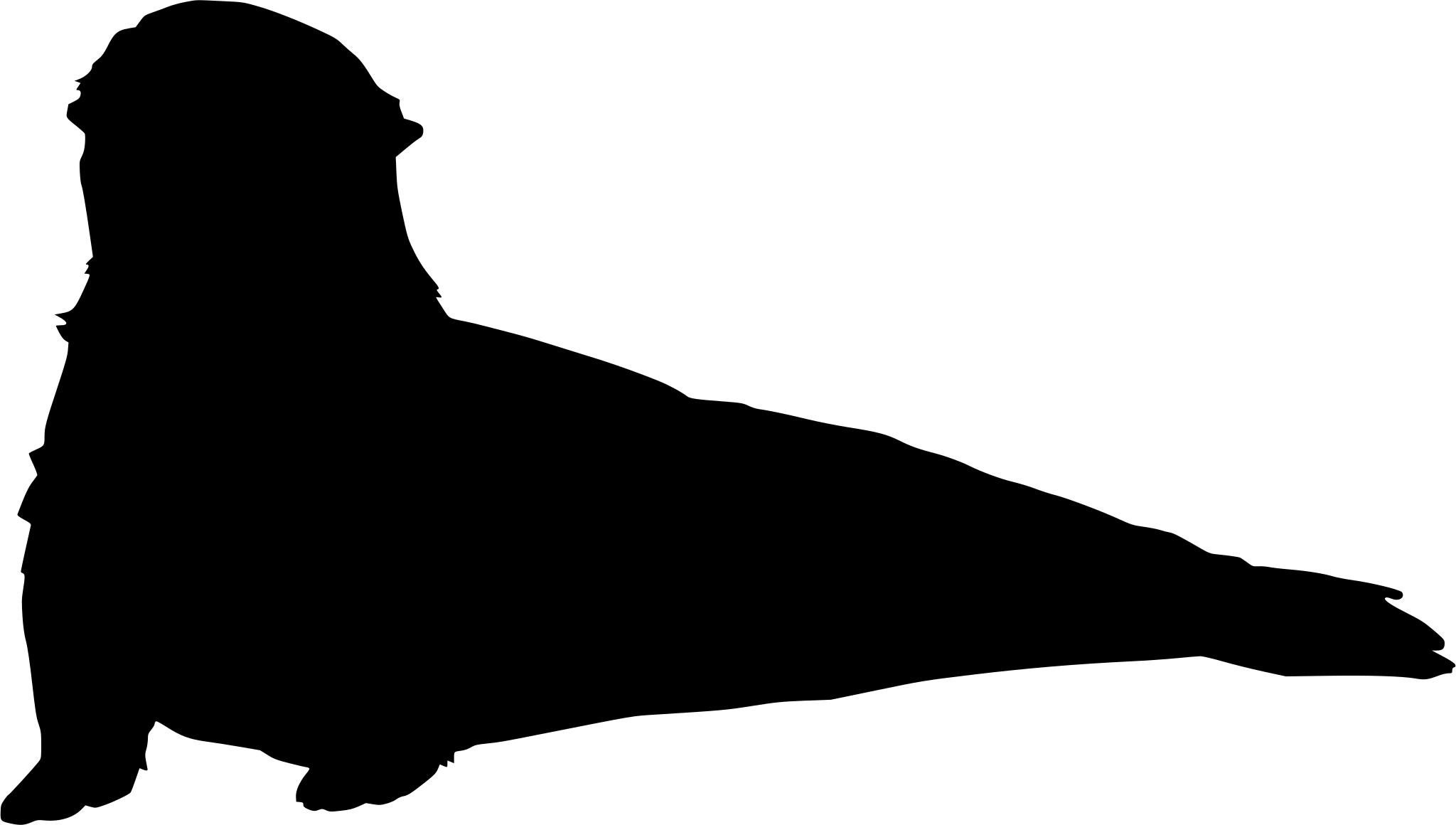
Occurrence data from iNaturalist and GBIF.

Sea Otter in other states

More mammals in Alaska in the atlas

Data & sources

The data and visualizations on this page draw on these open sources:

  • GBIFCC-BY 4.0occurrence records behind the range map, elevation, and record counts
  • iNaturalistCC0 / CC-BY / CC-BY-SAobservations, photos, and audio recordings
  • NatureServe ExplorerCC-BYthe state conservation rank
  • IUCN Red Listattributed factthe global conservation status
  • USGS NASpublic domainnative / introduced status
  • Natural Earthpublic domainthe relief basemap
  • USFSpublic domainnational-forest boundaries
  • USGS Protected Areas Databasepublic domainthe named parks, forests, and refuges behind "notable places to look"




