


Virginia opossums pile up 913 records across Oklahoma, one of the heaviest totals in the state’s mammal atlas, spread through 66 counties. Tulsa, Cleveland, and Oklahoma counties lead the list, a reminder that this marsupial is as much a backyard animal as a forest one, though Ouachita National Forest, Lake Thunderbird State Park, and Red Slough all hold records too.
North America’s only marsupial
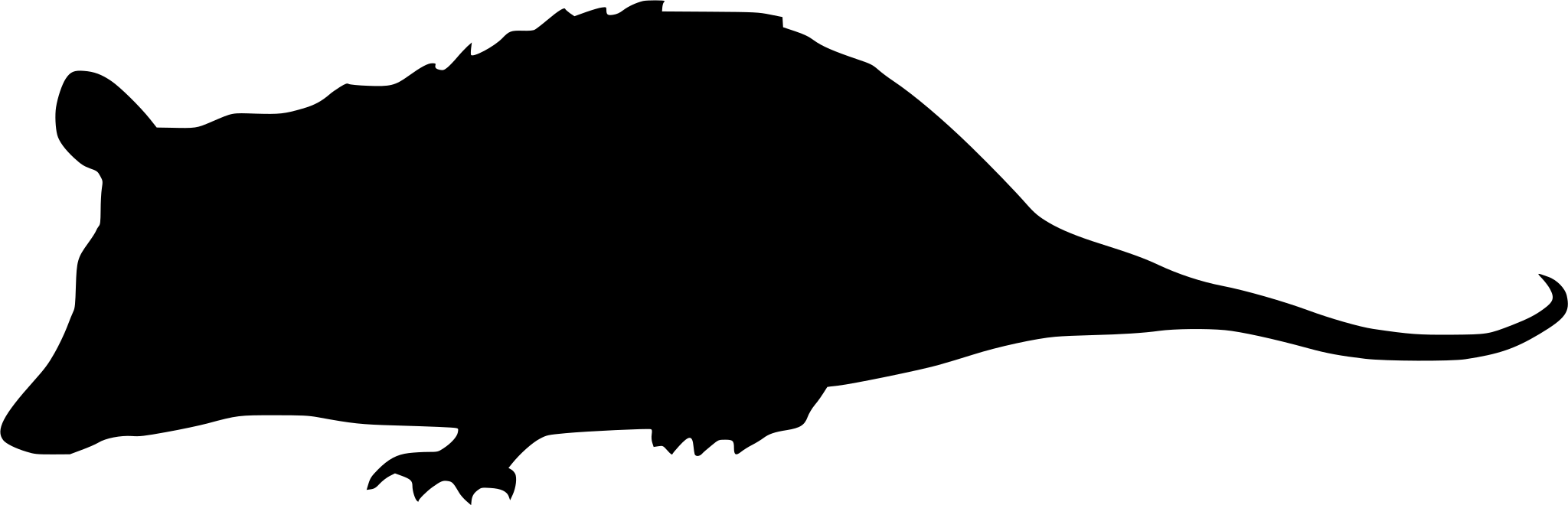
An opossum raises its young in a pouch, then carries the litter on its back once the joeys outgrow it, gripping branches with a prehensile tail and an opposable thumb on each hind foot. Its famous collapse under threat is not acting but an involuntary faint that can last for hours. It eats nearly anything, insects, fruit, eggs, carrion, and the ticks it grooms from its own fur, which makes it as comfortable along a wooded creek bottom as behind a suburban woodpile.
Thin-furred and out in every month
Opossums do not hibernate, and Oklahoma’s record runs in every month of the year, cresting in April as breeding season peaks and females carry full pouches. Winter costs them more than it costs most Oklahoma mammals; their bare ears and tails take frostbite in severe cold, one reason the species’ stronghold has always been the milder South, where Oklahoma sits comfortably.
Status in Oklahoma
NatureServe lists the Virginia opossum SNR, unranked, in Oklahoma, and the species is native to the state with no USGS NAS nonindigenous listing. It is not specifically listed under Oklahoma’s conservation framework, and the IUCN ranks it Least Concern globally.
 Full species profile




