
White-nosed Coati

Nasua narica

Also known as: Coatimundi

LCLeast Concern

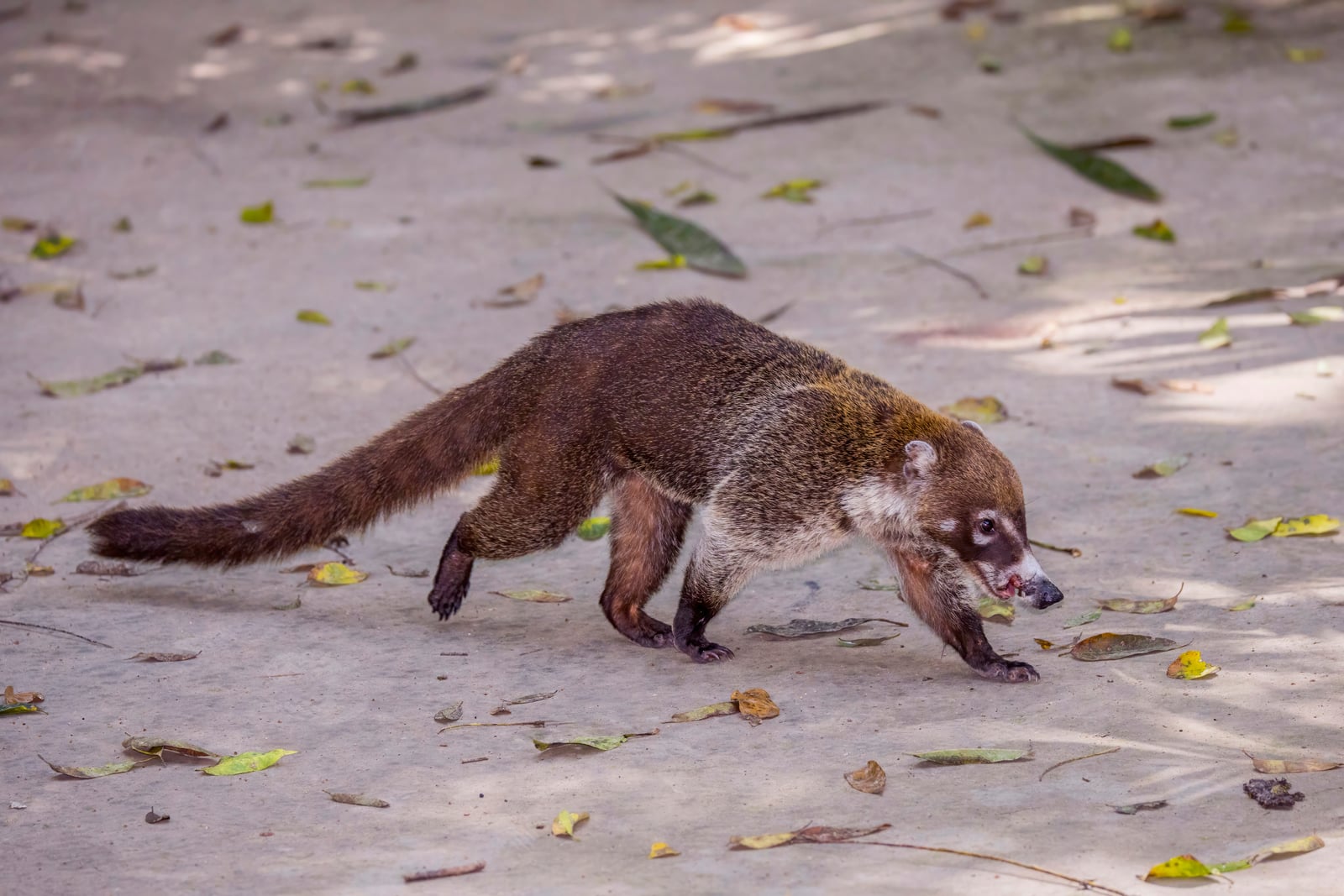
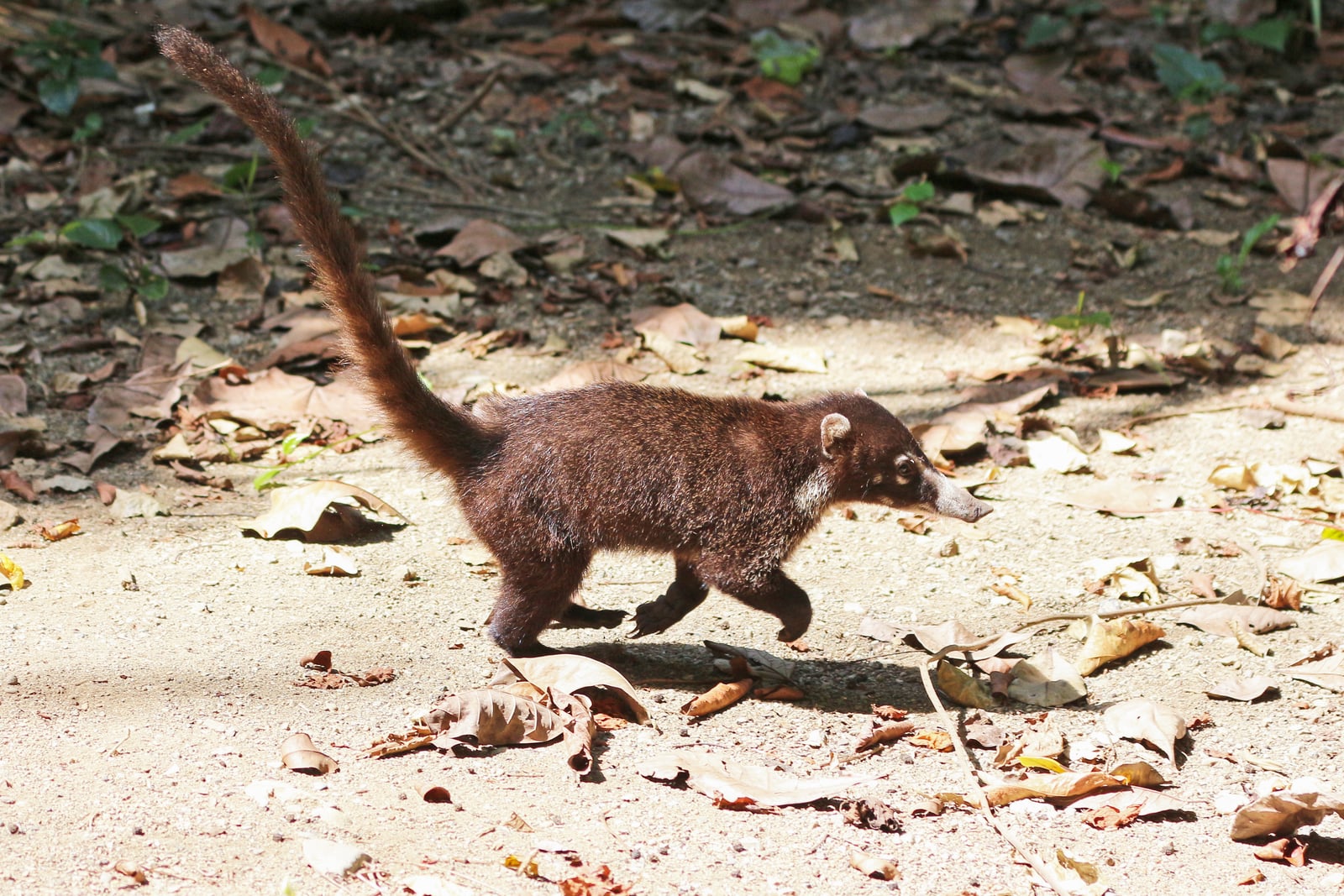
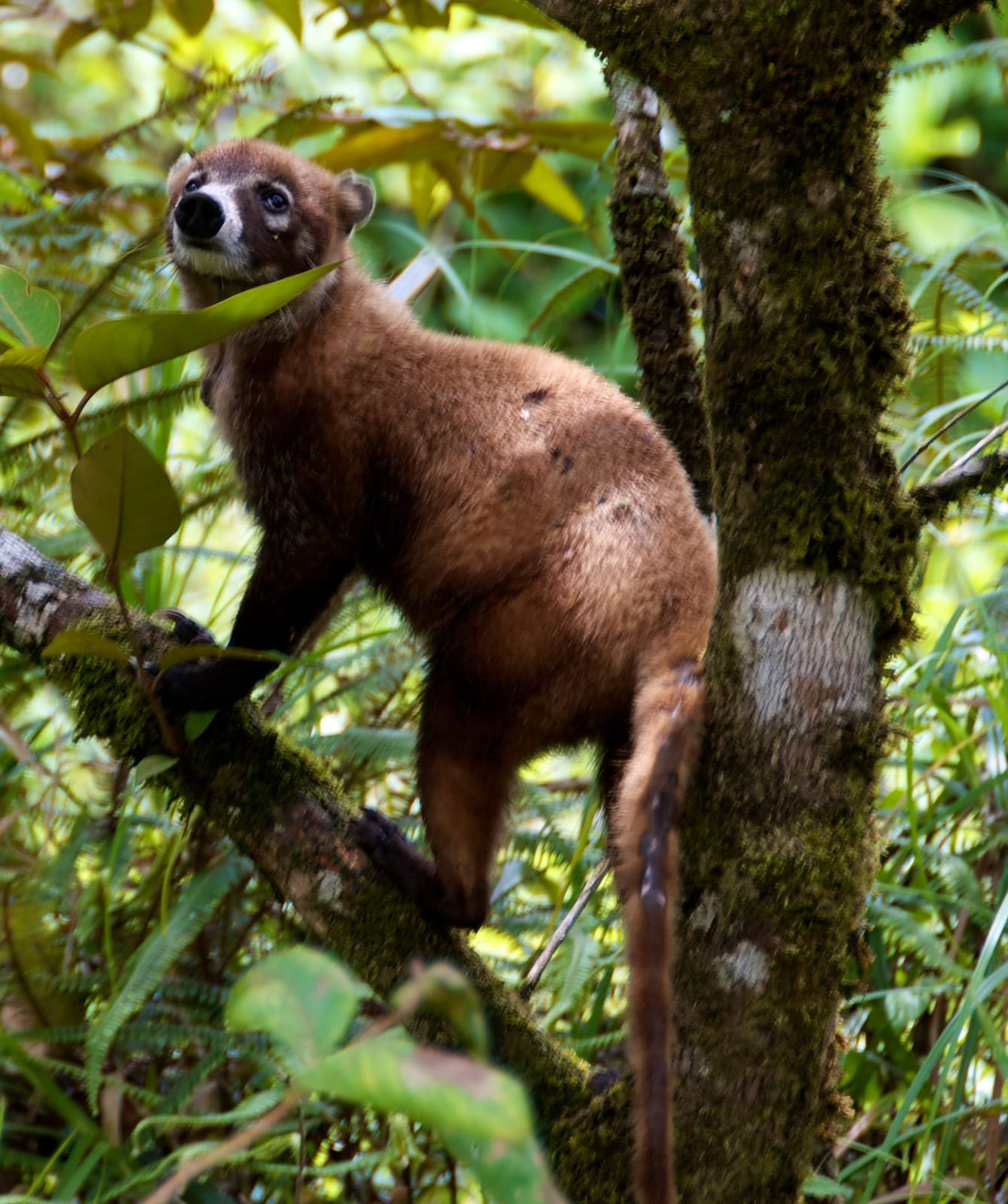
The white-nosed coati is a long-snouted raccoon relative that often walks with its ringed tail held like a flag. Females and young travel in social bands, probing soil and leaf litter, while adult males usually live alone. Records capture only the northern edge of a mostly tropical range, following wooded canyons and mountain country into Arizona, New Mexico, and Texas.

Range through the year

Where White-nosed Coati is seen

White-nosed Coati is recorded in 5 US states from 1,600 occurrence records, most heavily in Arizona (1,545 records) and New Mexico (47).

Current range1,600 records · 5 states
AlabamaArizona · 1,545 records · view state pageArkansasCaliforniaColoradoConnecticutDelawareDistrict of ColumbiaFlorida · 1 recordsGeorgiaIdahoIllinoisIndianaIowaKansasKentuckyLouisianaMaineMarylandMassachusettsMichiganMinnesotaMississippiMissouriMontanaNebraskaNevadaNew HampshireNew JerseyNew Mexico · 47 records · view state pageNew YorkNorth CarolinaNorth DakotaOhioOklahomaOregonPennsylvania · 1 recordsRhode IslandSouth CarolinaSouth DakotaTennesseeTexas · 6 recordsUtahVermontVirginiaWashingtonWest VirginiaWisconsinWyomingAlaskaAKHawaiiHIPuerto RicoPR
Occurrence data by state and month
White-nosed Coati – occurrence records by US state and month (1,600 total across 5 states)
StateJanFebMarAprMayJunJulAugSepOctNovDecYear
Arizona11382851661651031441761041211491371,545
New Mexico35384352353347
Texas···3111·····6
Florida1···········1
Pennsylvania···········11

Based on 2,306 georeferenced US records, 2000-2026. Shading is observation density (where people record sightings), not true abundance. Alaska, Hawaii & Puerto Rico shown as insets.

Explore by state

White-nosed Coati across 2 states

Occurrence records, conservation status, and the places it turns up, state by state. Open a state for detail, or visit its full page.

  • ArizonaNativeCommon2,237 records

    State rankApparently Secure

    Notable placesCoronado National Forest · Chiricahua National Monument · Madera Canyon (Santa Rita Mountains) · Patagonia Lake State Park

    Countiesrecorded in 12

    Year-round in Arizona, with no strong seasonal peak in observations.

  • New MexicoNativeOccasional61 records

    State rankImperiled

    Notable placesGila National Forest · Gila Wilderness · Living Desert State Park · State Trust Land

    Countiesrecorded in 9

    Year-round in New Mexico, with recorded sightings peaking in April, with a smaller rise in July and October.

IUCN Red List status

  1. LC
  2. NT
  3. VU
  4. EN
  5. CR
  6. EW
  7. EX

LC – Least Concern

Widespread and abundant; not at risk.

SizeWhite-nosed Coati beside a 1.8 m adult, drawn to scale
Created by potrace 1.16, written by Peter Selinger 2001-2019 Created by potrace 1.16, written by Peter Selinger 2001-2019
Body length
0.8–1.3 m2 ft 7 in–4 ft 3 in
Weight
3–6 kg6.6–13 lb

Silhouettes drawn to scale against a 1.8 m5 ft 11 in adult.

Elevation

From 200 georeferenced records, the White-nosed Coati is recorded from 39 m128 ft to 2,442 m8,012 ft, with half of sightings below 1,365 m4,478 ft.

Each band shows the share of georeferenced sightings that fall within it. Records cluster where people live and hike, so low, populated elevations are over-represented. Read this as observation density, not true abundance.

Observation peakMarch17,809 records

Seasonality from research-grade observation dates across the US (17,809 records, all years). Reflects when the species is recorded, not a guarantee of presence.

Daily activity clockDiurnal– most active during daylight hours

1,369 white-nosed coati observations logged by hour of day. Activity is diurnal (most active during daylight hours), peaking around 1 PM.

12 AM: 13 observations1 AM: 3 observations2 AM: 6 observations3 AM: 2 observations4 AM: 6 observations5 AM: 5 observations6 AM: 15 observations7 AM: 52 observations8 AM: 82 observations9 AM: 116 observations10 AM: 119 observations11 AM: 121 observations12 PM: 119 observations1 PM: 139 observations2 PM: 121 observations3 PM: 121 observations4 PM: 96 observations5 PM: 96 observations6 PM: 63 observations7 PM: 25 observations8 PM: 10 observations9 PM: 16 observations10 PM: 12 observations11 PM: 11 observations12 AM6 AM12 PM6 PM

Based on 1,369 records (all years). Reflects when people record sightings, not only when the animal is active.

Hourly observation counts: 12 AM 13, 1 AM 3, 2 AM 6, 3 AM 2, 4 AM 6, 5 AM 5, 6 AM 15, 7 AM 52, 8 AM 82, 9 AM 116, 10 AM 119, 11 AM 121, 12 PM 119, 1 PM 139, 2 PM 121, 3 PM 121, 4 PM 96, 5 PM 96, 6 PM 63, 7 PM 25, 8 PM 10, 9 PM 16, 10 PM 12, 11 PM 11.

Sounds & calls

Hear the White-nosed Coati: 2 field recordings. Press play to listen.

Best encounter

Where and when to see a White-nosed Coati

Your best chance: Arizona, in March, during the day.

Where
ArizonaAZ
When
March
Time
During the daydiurnal
Trophic relationshipsFood web What a White-nosed Coati eats, and what eats it.
Eaten by5
Mountain LionPuma concolorCoyoteCanis latransJaguarPanthera oncaOcelotLeopardus pardalisMargayLeopardus wiedii
This speciesWhite-nosed Coati
rodentsBread WheatTriticum aestivumBlunt-leaved Trumpet TreeCecropia obtusifoliaSurinam CherryEugenia unifloraWest Indian ElmGuazuma ulmifoliaMamey SapotePouteria sapotalizards & snakesbirds
Eats8

A sample of documented feeding relationships, filtered to species that also occur in the US. Diet and predators vary by region and season, and this is not a complete list, many animals eat, and are eaten by, more than what has been formally recorded here.

Life history

The White-nosed Coati (3–6 kg6.6–13.2 lb) is an omnivore that first breeds around 1.9 years, carries a 78-day gestation, and bears about 4.2 young per litter. Maximum recorded longevity is 26.4 years.

Life cycle

  1. Gestation78 days (≈2.6 months)
  2. Birthlitter of 4.2 young
  3. Sexual maturity1.9 yr (female)
  4. Typical lifespan7 years
  5. Maximum recorded longevity26.4 years

Reproduction

Gestation
78days≈2.6 months
Litter size
4.2youngaverage
Litters / year
1.1litters
Age at first breeding
1.9years

Diet composition

Omnivore

By foraging composition: 70% fruit, 20% vertebrates, 10% invertebrates.

  • Fruit70%
  • Vertebrates20%
  • Invertebrates10%

Most active during the day.

Typical values for the species, not local measurements. Maximum longevity is the longest lifespan on record; most individuals live far less.

Commonly confused with

Animals people sometimes mistake for the white-nosed coati, and how to tell them apart.

Most of the raccoon family keeps to the dark. The white-nosed coati does the opposite. It moves in loud daytime bands, noses down and ringed tails held straight up like raised flags, flipping stones and combing leaf litter through the middle of the afternoon. People meeting one for the first time often reach for the wrong name, guessing lemur, anteater, or some odd long-snouted raccoon. That last guess is the closest. Nasua narica is a procyonid, a full cousin of the raccoon and the ringtail, but it has traded their solitary night-prowling for a social, conspicuous, ground-level life lived in the open.

The long snout and the flag tail

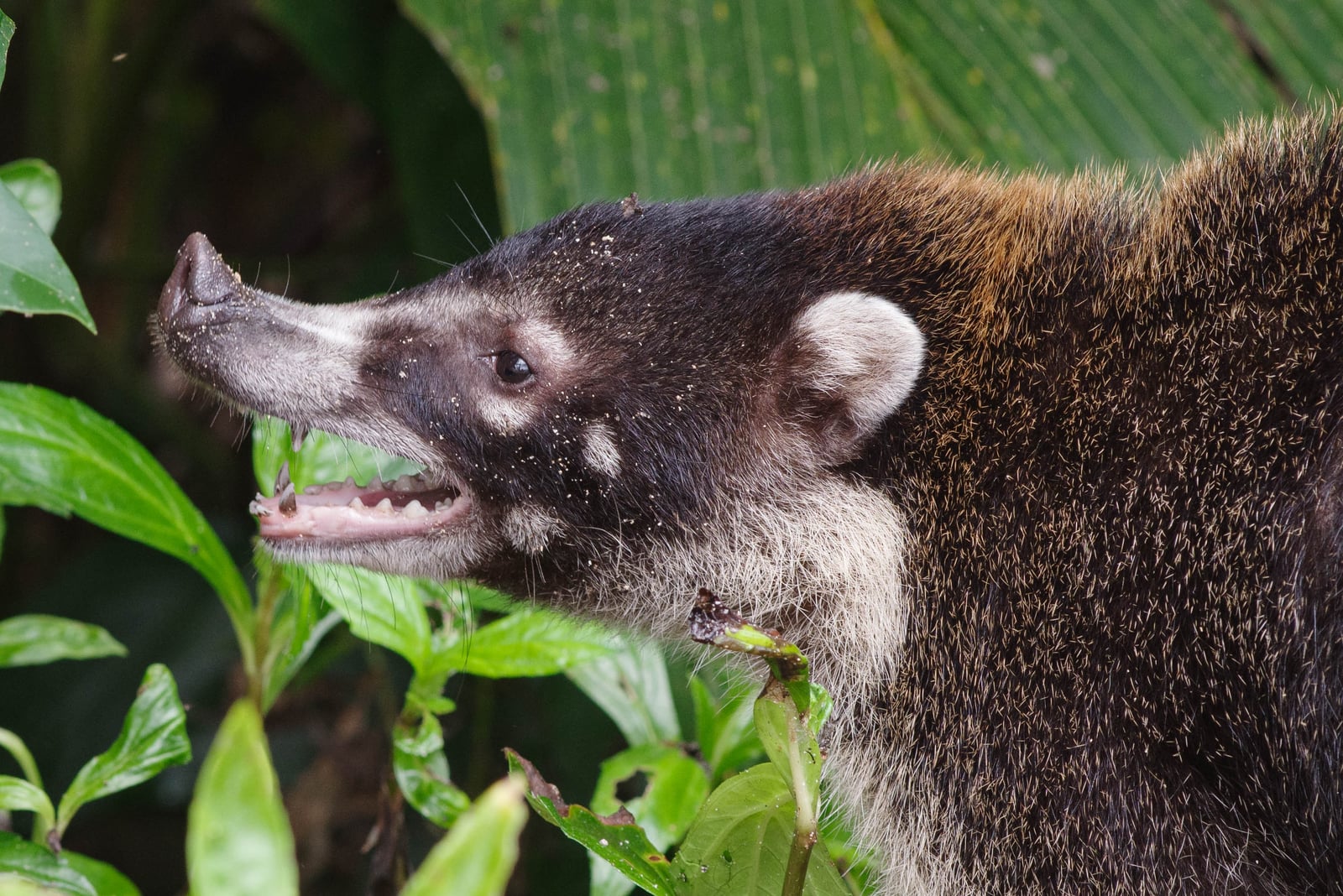
A coati is easiest to name by its two strangest features. The snout is long, tapered, and remarkably mobile, overshooting the lower jaw and swiveling almost like a short trunk to work into cracks and soil. The tail is nearly as long as the head and body together, faintly ringed, and carried straight up while the animal walks, so a moving band looks like a row of furred question marks drifting above the grass. Total length runs from about 31 to 51 inches, more than half of that tail. Adults usually weigh 7 to 13 pounds. The coat is grizzled brown to rusty, the legs and feet dark, and the face is stamped with white around the muzzle, cheeks, and eyes. That’s only part of the picture.

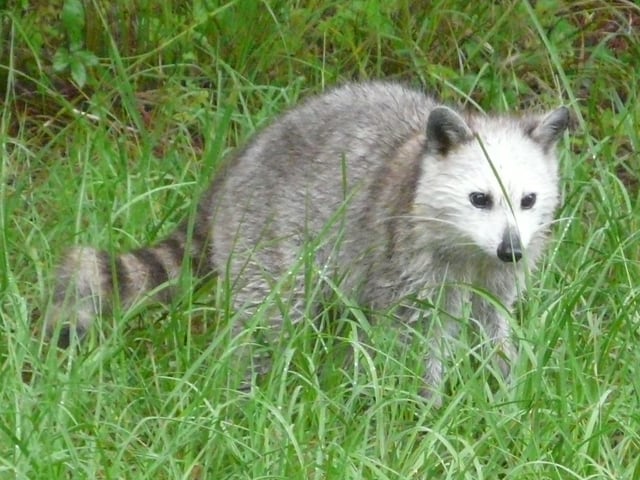
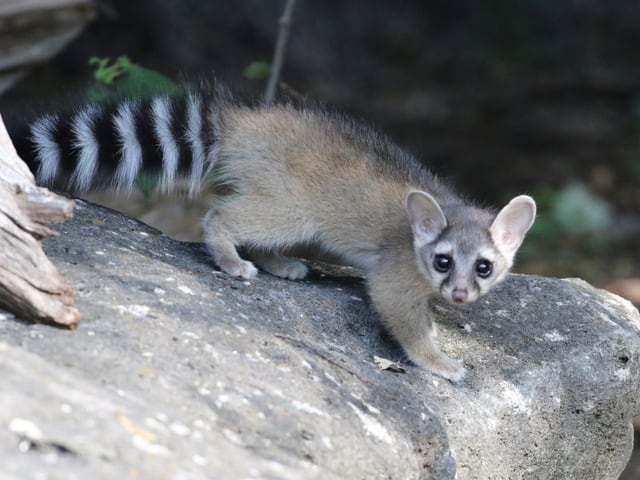
Two relatives cause most of the confusion. A common raccoon is stockier and shorter in the face, wears a broad black mask, and carries its boldly ringed tail low or trailing. A ringtail is much smaller and cat-like, with enormous dark eyes, a pointed face, and a sharp black-and-white banded tail longer than its own body. Next to either one a coati looks longer in the nose, higher in the tail, and far busier, rarely still and almost always working the ground.

A tropical animal at its northern limit

For all that it is a prized southwestern sighting, the coati is fundamentally a Latin American mammal. Its range runs from Colombia and Ecuador north through Panama, Central America, and most of Mexico, and the United States catches only the northern tip of it. Inside the country it is a borderlands animal, not a coast-to-coast one. It lives in the mountain canyons of southern Arizona, the bootheel of southwestern New Mexico, and the ranges and river country of west Texas around Big Bend, and essentially nowhere else north of the border. The Arizona-Sonora Desert Museum traces the first confirmed Arizona record to the 1890s, with the animals spreading north over the following century along wooded, water-holding canyons.

That corridor preference explains where coatis turn up. They belong to the Madrean sky islands, the isolated ranges where oak and sycamore canyons, pine-oak slopes, and shaded streamside bottoms rise out of the surrounding desert. Sightings cluster in that mid-elevation woodland band rather than the open low desert, and in cooler months bands drift downslope into warmer streamside corridors. Cliffs, ledges, and tall trees supply the overnight roosts a band returns to again and again.
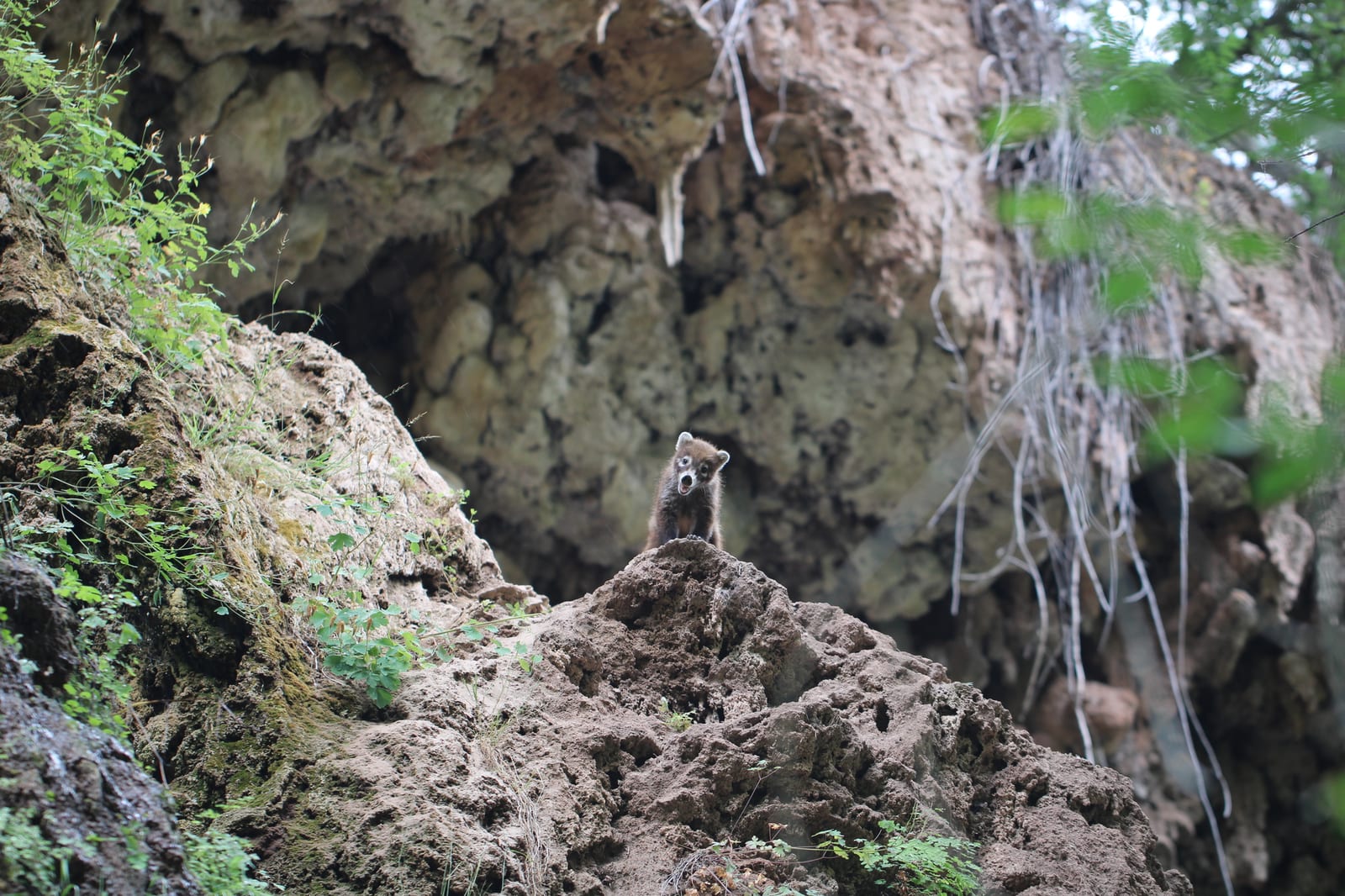
A white-nosed coati on an eroded canyon bank beside a rock hollow
A young coati on a broken canyon wall beside a rock recess, the kind of shaded, vertical cover that sky-island bands shelter and den in. Photo: Carlos A. Armenta, CC BY-SA.

Nose to the ground, claws in the litter

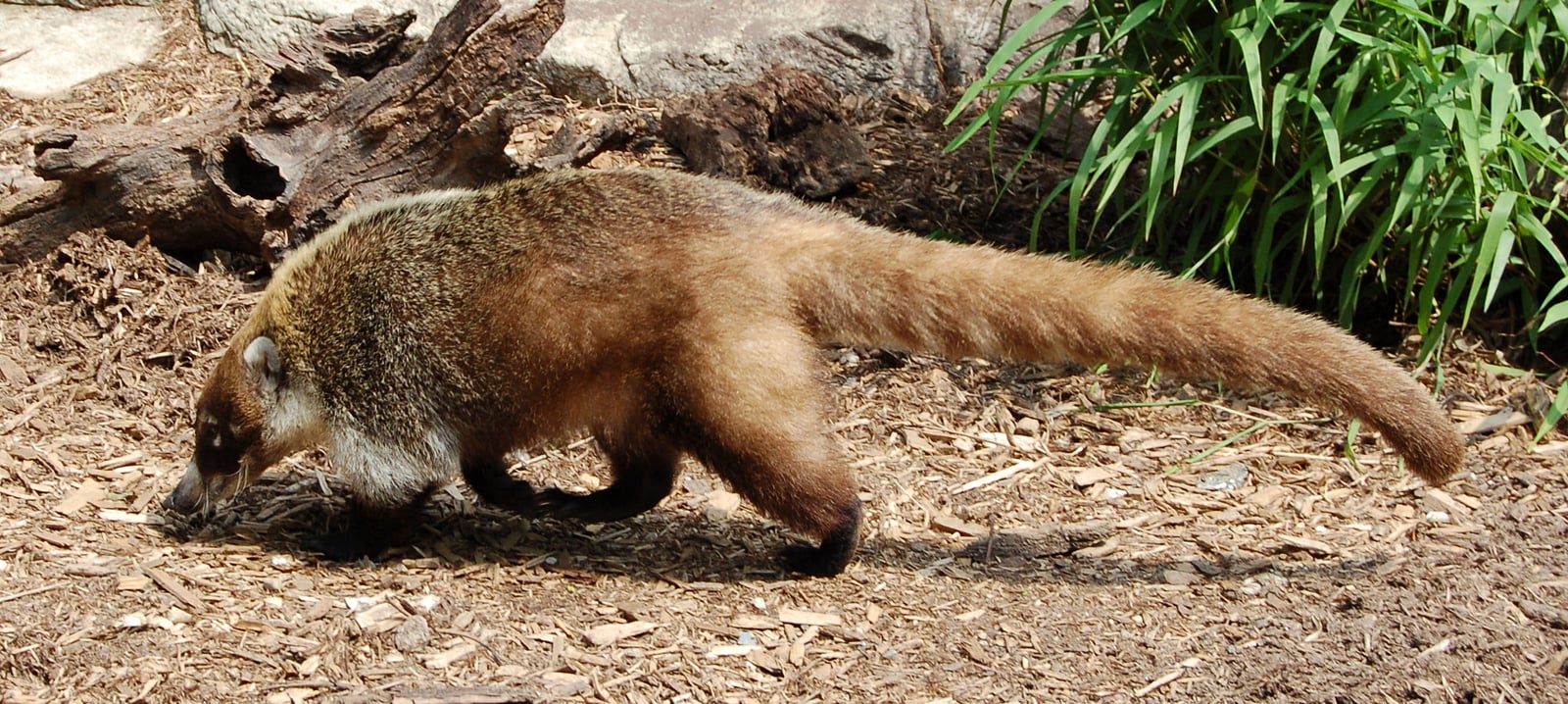
A coati hunts mostly by smell and touch, working the surface it walks on. The long snout probes soil, leaf litter, bark crevices, and rotting wood while the strong front claws dig into soft ground, roll stones, and tear apart punky logs. The diet leans heavily on fruit, roughly two-thirds of what a coati eats, rounded out with a steady haul of invertebrates and small vertebrates: beetle grubs, ants, termites, spiders and scorpions, lizards, bird eggs, and the occasional small rodent. Coatis climb readily for ripe fruit, nuts, and eggs, but most daylight hours are spent nose-down on the canyon floor.

That constant ground work leaves them exposed, and plenty of predators take advantage. In the United States mountain lions, bobcats, coyotes, and large hawks and owls all hunt coatis, and farther south in the range jaguars, ocelots, and margays join the list. Animals in their first year are the most vulnerable, which is one reason the band and the nightly retreat into trees and cliff dens matter so much.
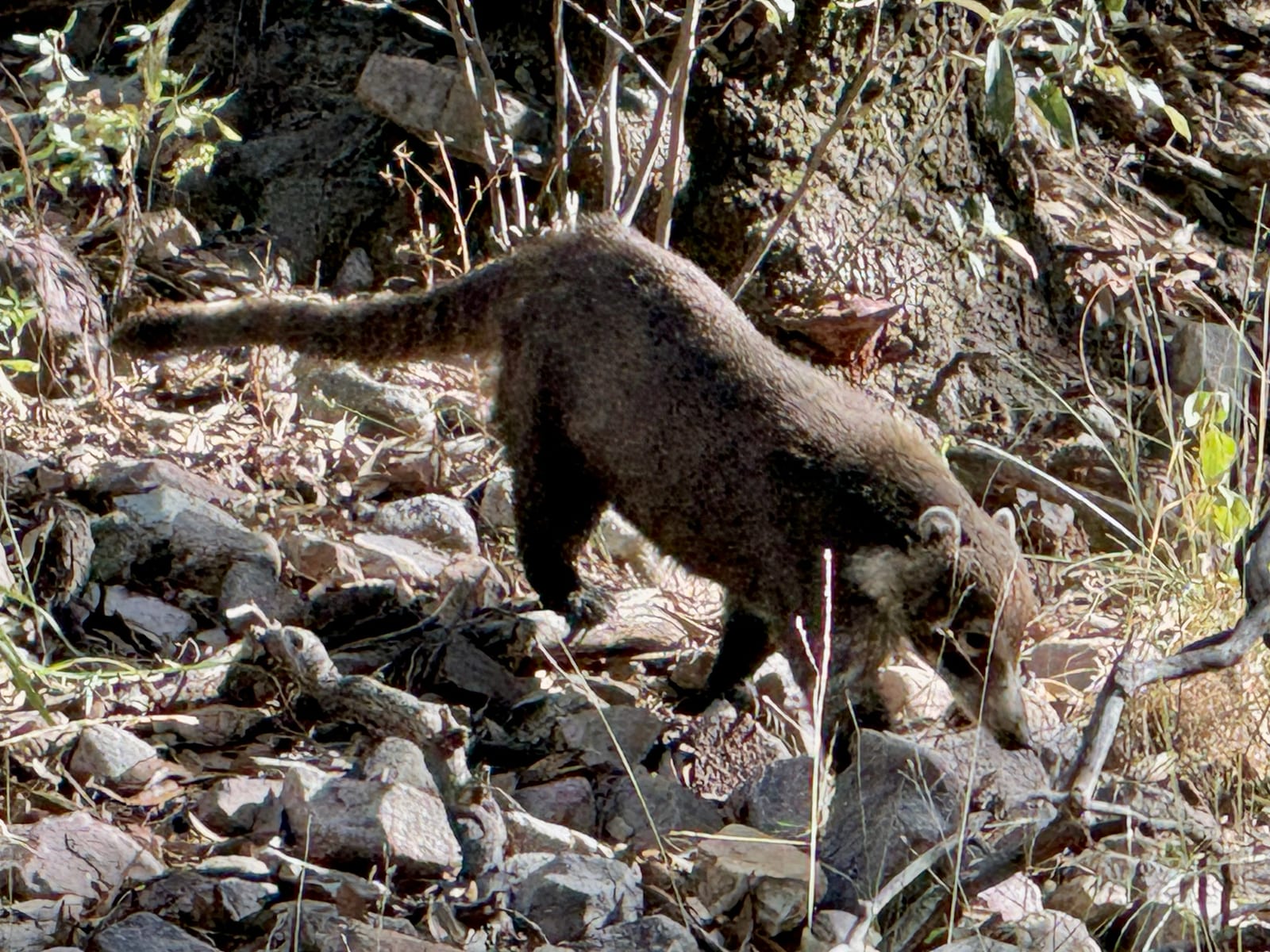
A white-nosed coati foraging with its snout to the ground on a rocky slope
A coati works a sunlit, rocky slope with its snout to the ground, the species’ default posture through most of the day. Photo: CK2AZ, CC BY.

Bands run by females, and the solitary “coatimundi”

The social system is the coati’s real signature. The daytime bands are made up of adult females and their young, commonly four to twenty animals and sometimes many more, moving and foraging together and staying in contact with soft grunts, chitters, squeals, and the raised-tail semaphore. Adult males are the exception. Outside the breeding season they live alone, and lone males were once mistaken for a separate animal entirely, which is how the old name coatimundi, roughly “lone coati,” entered the language.

Breeding follows the food. When fruit is abundant a male is tolerated in a band long enough to mate, then returns to his solitary life. After a gestation of roughly eleven weeks a pregnant female leaves the group and builds a nest of sticks and leaves high in a tree, where she gives birth to a litter of two to seven. The young stay in the tree nest for several weeks, and once they can climb and travel they come down with their mother to rejoin the band. From then on the related females share much of the work of watching and rearing, so a coati grows up inside a moving, cooperative crowd. Wild coatis rarely reach seven years; captive ones can live twice that.
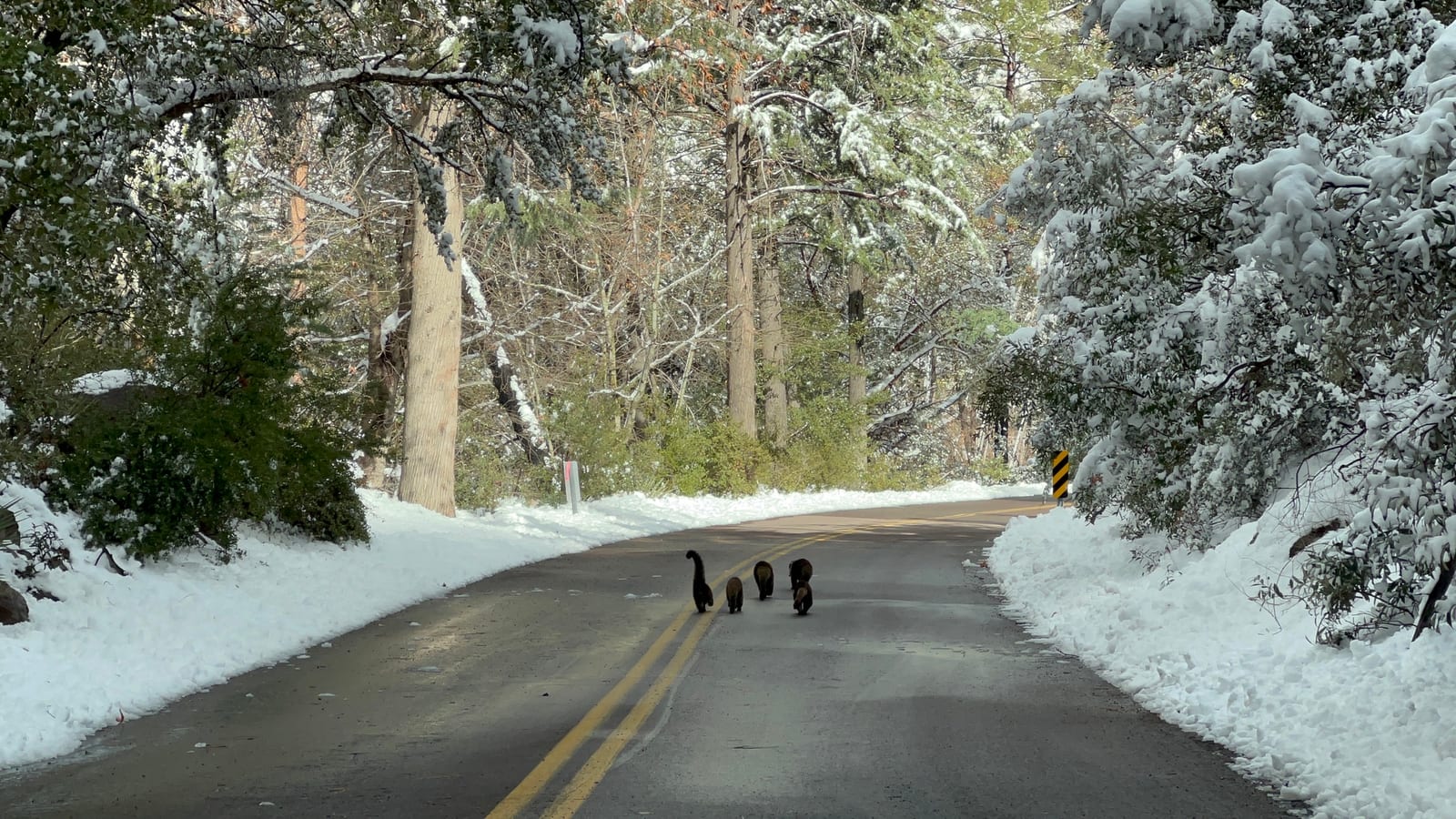
A band of white-nosed coatis crossing a snowy forest road
A band crosses a snow-dusted road in a sky-island pine forest, tails up and traveling together, the way females and young move for most of the year. Photo: Crystal A. Crown, CC BY.

Least Concern worldwide, marginal in the United States

Globally the coati is in no trouble. The IUCN rates it Least Concern, and it stays common across much of Mexico and Central America. The picture inside the United States is narrower, because the population here is a thin northern fringe rather than a core. Its persistence leans on connected canyons, standing tree cover, dependable seasonal fruit, and reliable water, which are exactly the things that drought, hotter wildfires, and shrinking streamside flow chip away at along the border. The exotic-pet trade adds pressure of a different kind, since young coatis are sometimes taken to be sold.

None of that shows in the global rating, which is why a United States coati record means more than one more dot on a distribution map. It marks a specific, well-vegetated canyon with shade, vertical cover, food in the litter, and an unbroken thread of habitat running south into the warmer country the species really belongs to. Coatis have grown bolder around some southern-Arizona picnic areas and campgrounds where people feed them, a habit land managers discourage, but the animals still live or fail by the canyons themselves.


Data & sources

The data and visualizations on this page draw on these open sources:


