
Montana mammals

White-tailed Jackrabbit in Montana

Lepus townsendii

Native to Montana S5 Secure in Montana

Not listed as nonindigenous in Montana by USGS NAS; native to its Montana range.

IUCN Red List status

  1. LC
  2. NT
  3. VU
  4. EN
  5. CR
  6. EW
  7. EX

LC – Least Concern

Widespread and abundant; not at risk.

White-tailed Jackrabbit in Montana, by the numbers

Occasional in Montana 53rd most recorded of 122 mammals logged in Montana

135 occurrence records

Records from 2000–2026.

135 total records count every Montana occurrence from GBIF and iNaturalist; the map plots a georeferenced sample of 132; the monthly chart covers the 130 records with a full observation date.

When to look for the White-tailed Jackrabbit in Montana

Most sightings fall in May to August.

130 Montana occurrence records (iNaturalist and GBIF) by month of year, 2000–2026. Shows when the species is recorded, not a guarantee of presence.

Monthly Montana records (table)
MonthRecords
January10
February1
March5
April7
May14
June22
July19
August15
September5
October7
November16
December9

Monthly white-tailed jackrabbit occurrence records (iNaturalist and GBIF) in Montana, 2000–2026.

Seasonality

Year-round in Montana, with recorded sightings peaking in May–August, with a smaller rise in November.

Occurrence map

Where White-tailed Jackrabbit has been recorded in Montana

132 records mapped · zoom and drag to explore

132 Montana records mapped

Notable places to look

Park, forest, or monumentiNaturalist records
Montana State Trust Lands 6
Yellowstone National Park 5
Absaroka-Beartooth Wilderness 2
Clearwater Crossing Fishing Access Site 1
Bannack State Park 1
Spotted Dog Wildlife Management Area 1
Gallatin National Forest 1
Glacier National Park 1

Protected places with the most white-tailed jackrabbit sightings, from the USGS Protected Areas Database plus named mountain ranges, good spots to look, not a full breakdown, so they don't sum to the total.

Where it's recorded in Montana

CountyRecords
Beaverhead County 13
Fergus County 10
Park County 9
Carbon County 8
Madison County 7
Carter County 6
Ravalli County 6
Phillips County 5
Judith Basin County 5
Garfield County 5
Cascade County 4
Powell County 4
32 other counties 53

The complete county distribution, spread across 44 Montana counties. Every occurrence record falls in one county, so these sum to the total. Counties from GBIF and US Census boundaries.

White-tailed jackrabbits range across Montana’s open country, 135 records spread over 44 counties with Beaverhead, Fergus, and Park counties leading. The named sites, from Yellowstone National Park to the state trust lands of the plains, share one trait: big, open ground where a hare survives on distance and speed rather than cover.

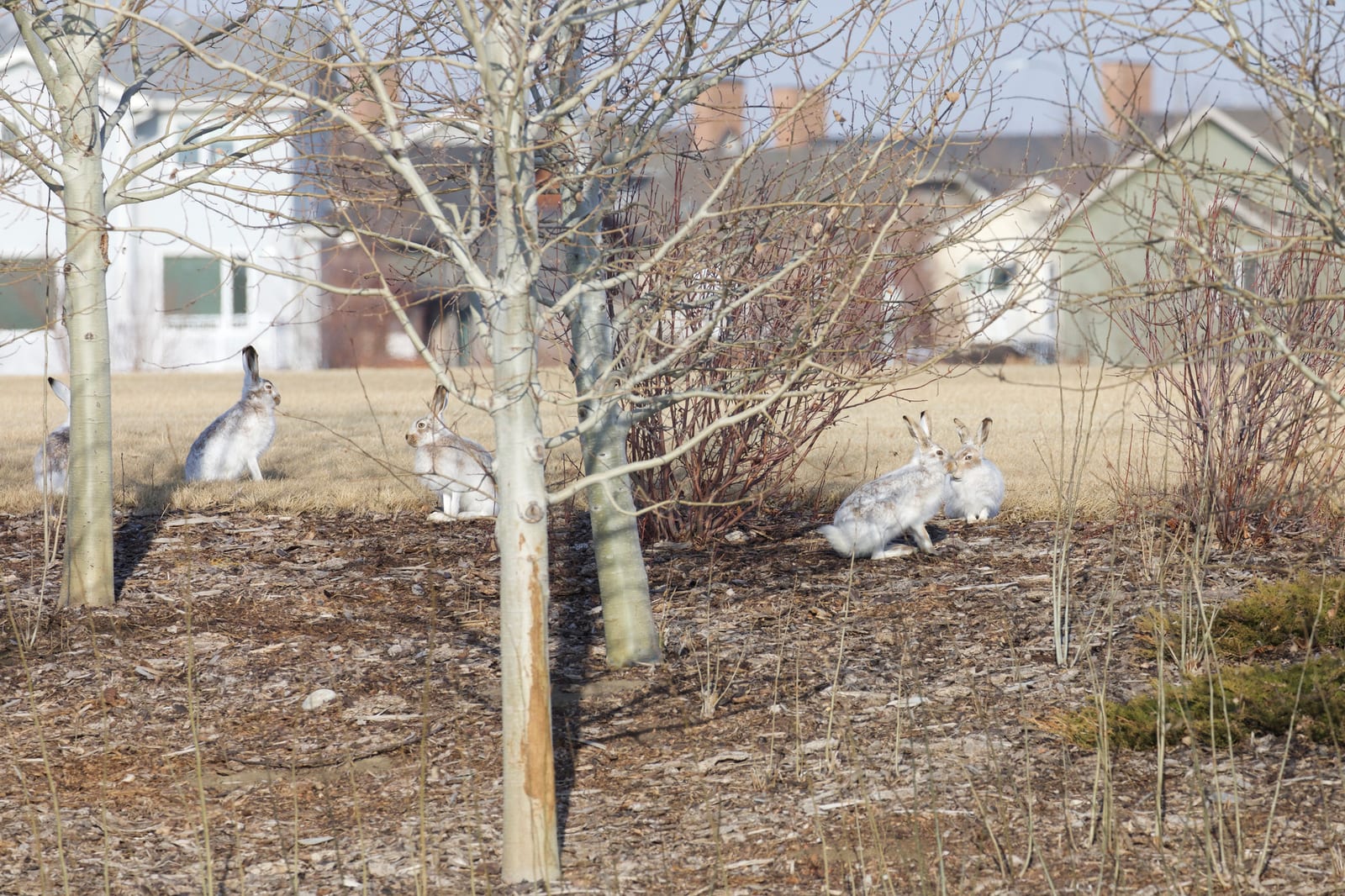
White in winter, brown in summer

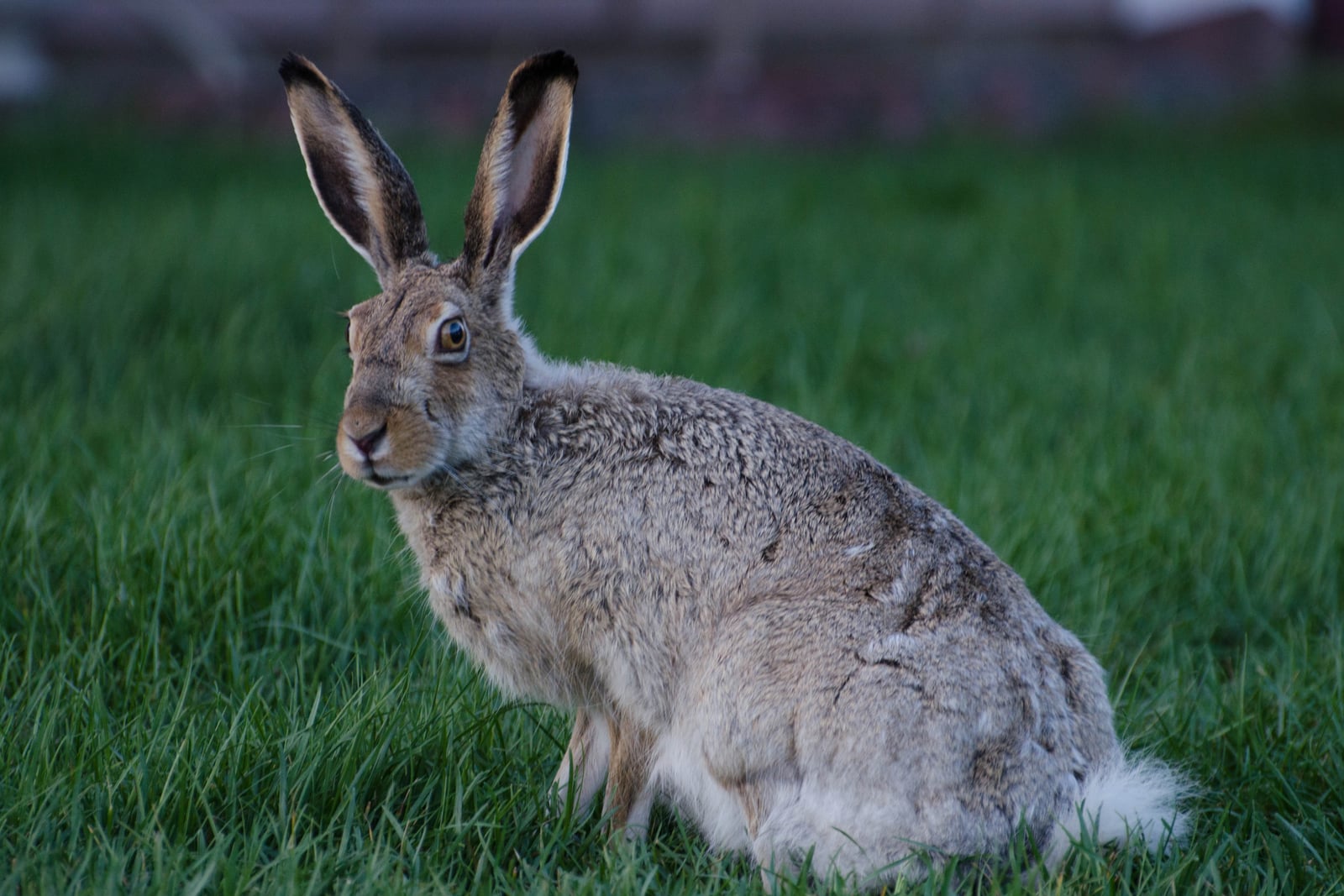
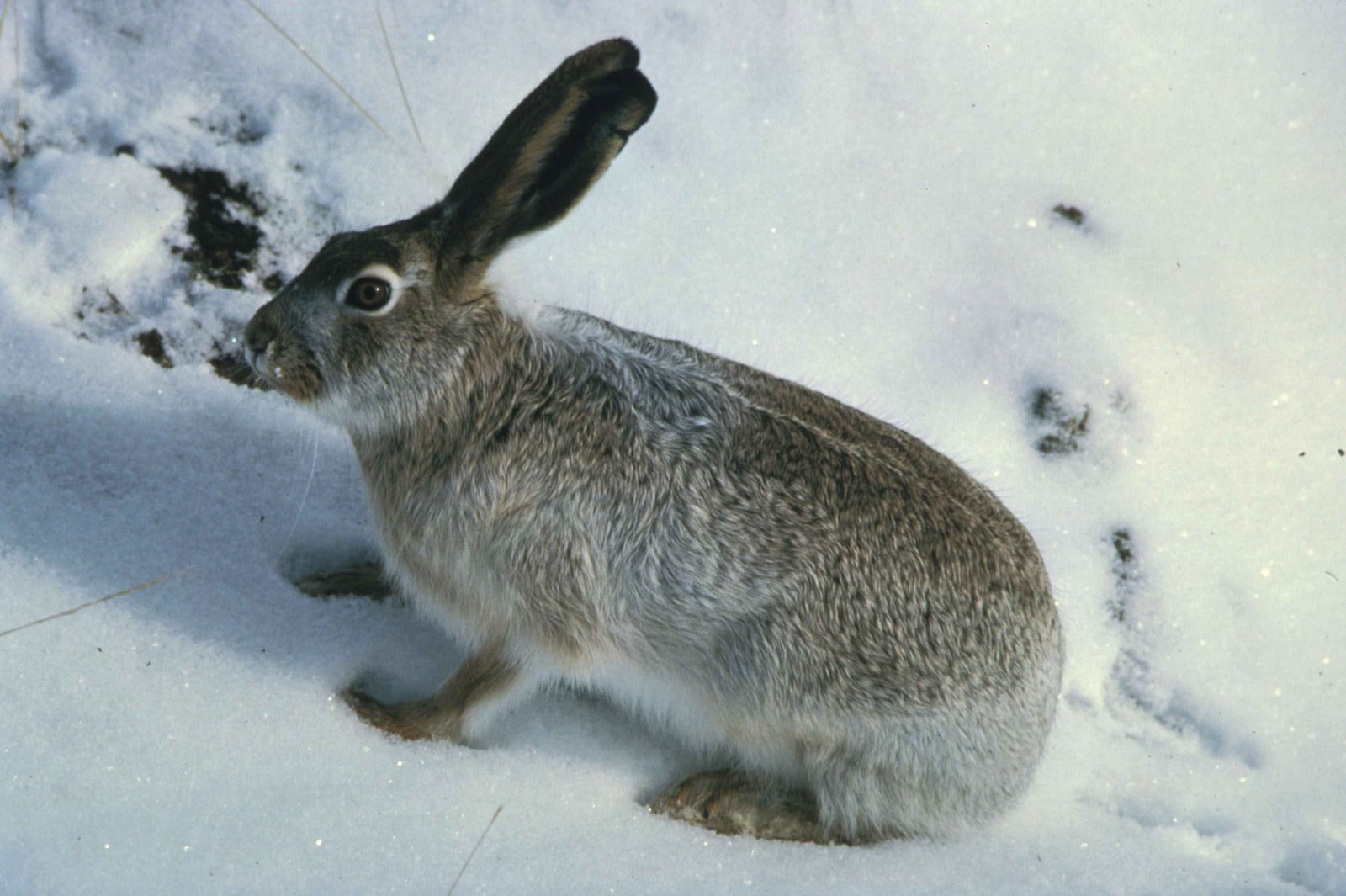
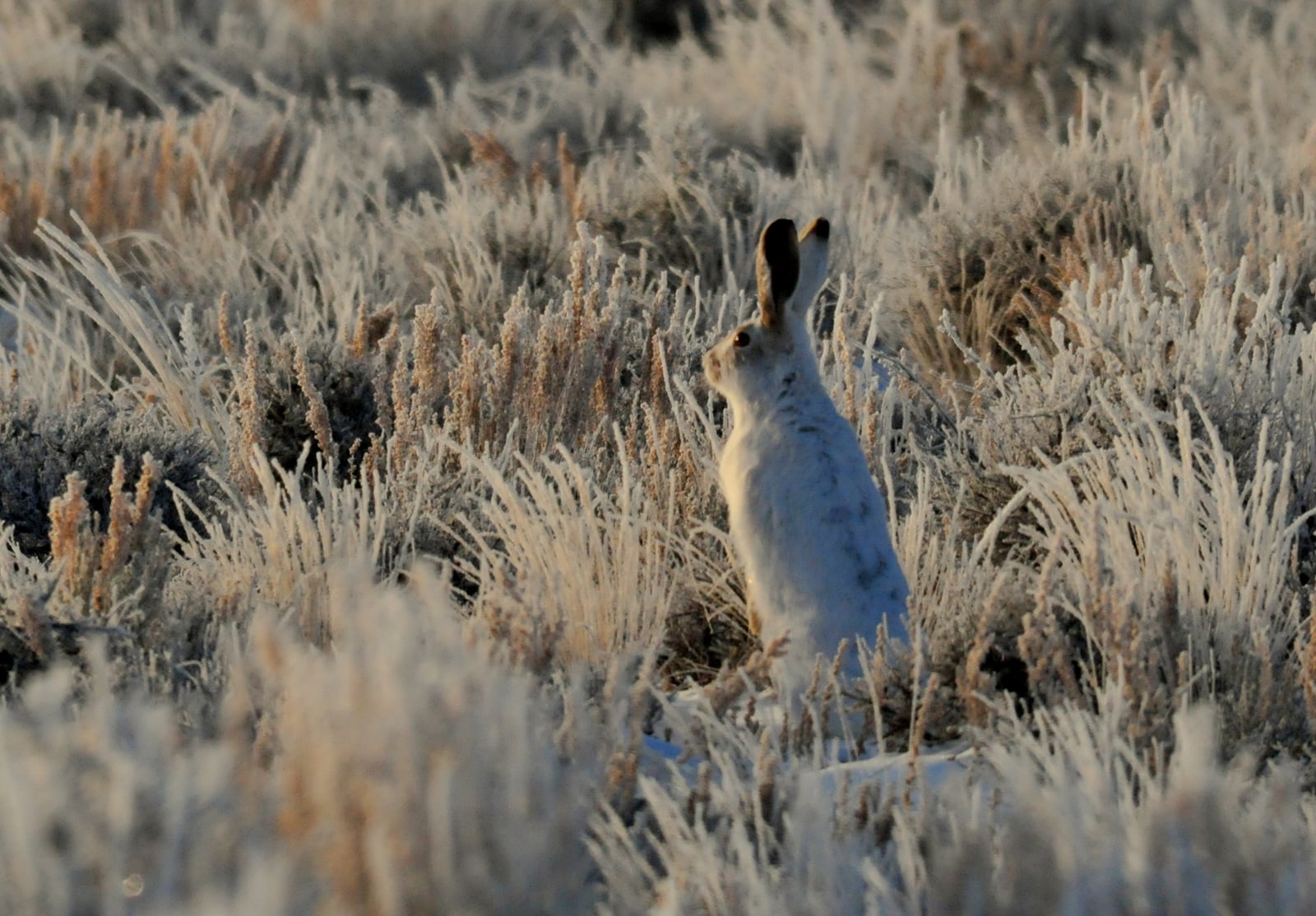
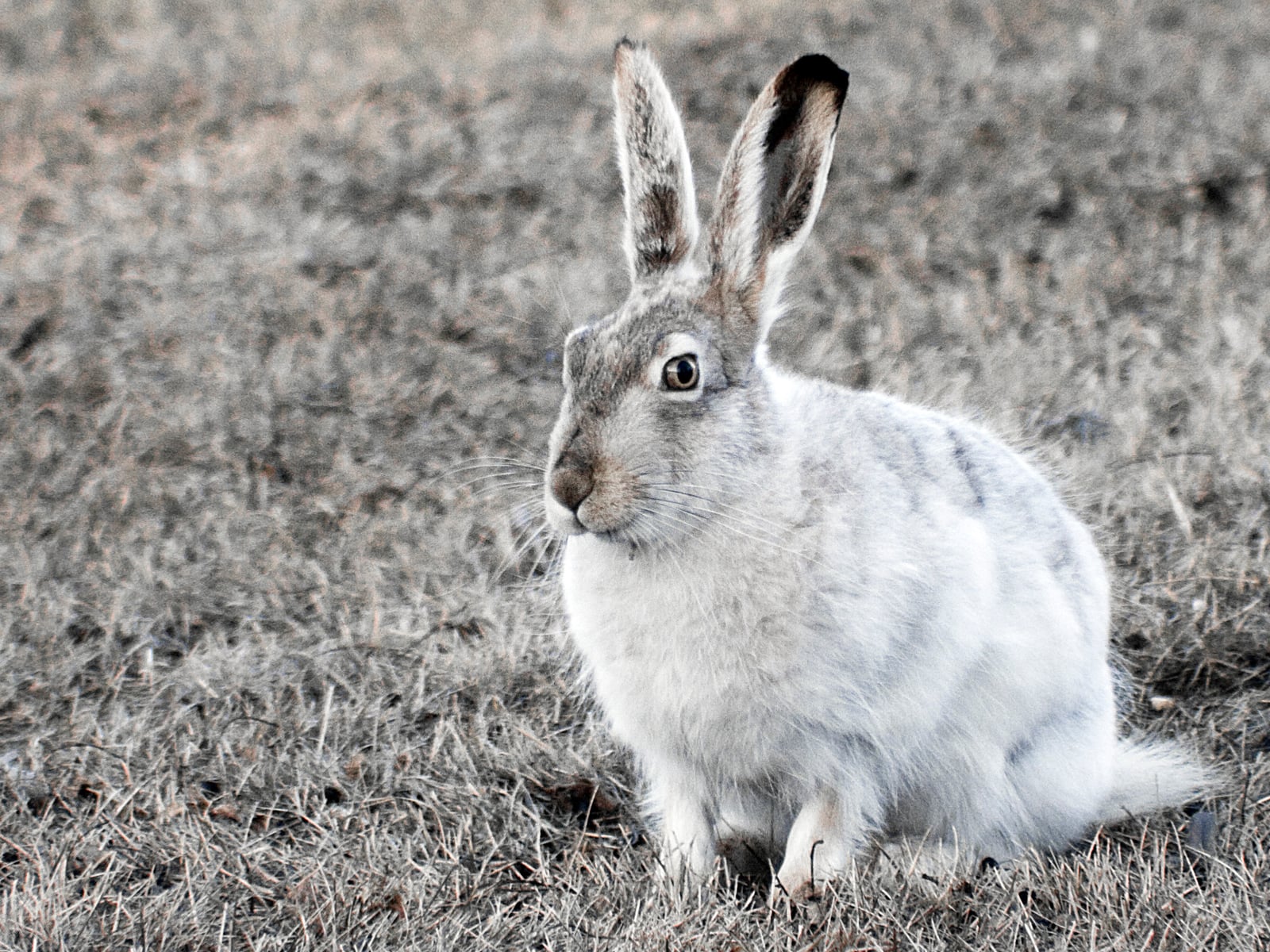
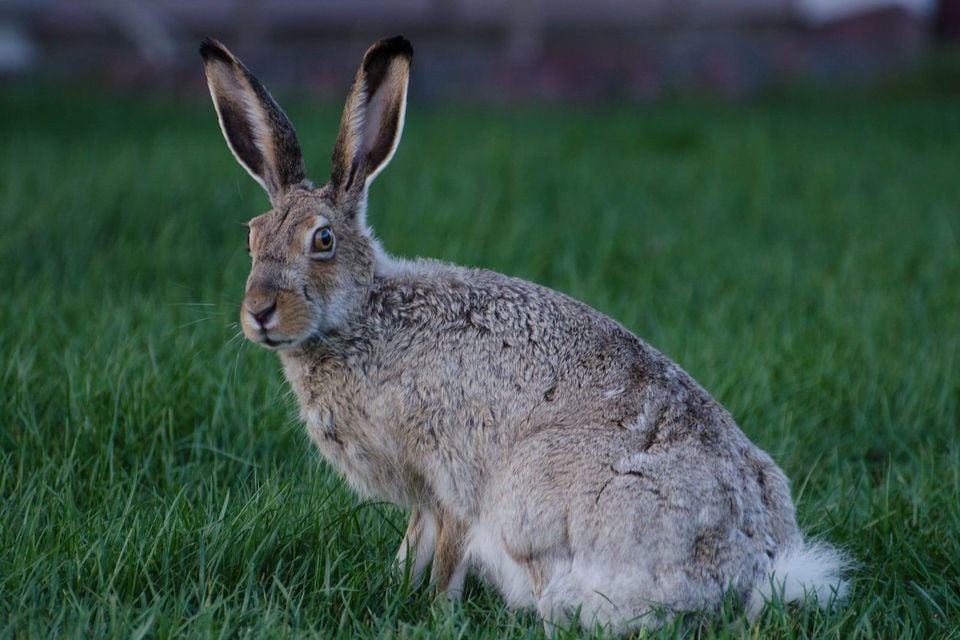
Few Montana mammals change so completely with the seasons. As the days shorten, the jackrabbit molts from gray-brown to snow white, keeping only the dark ear tips, then reverses the change in spring. The costume fits an animal of open prairie and sagebrush flats, where snow lies long and there is nowhere to hide but against the ground itself.

A hare that never dens

Unlike rabbits, jackrabbits do not burrow. The young are born fully furred and open-eyed in a shallow surface form and are moving within hours, and the adults stay above ground through Montana’s hardest winters, crouched in forms or sheltering in the lee of brush. Records appear in every month and climb from May through July as the year’s first young hares grow bold enough to be seen.

Status in Montana

NatureServe ranks the white-tailed jackrabbit S5, Secure, in Montana, and the species is native to the state. USGS NAS does not list it as nonindigenous here.
Occurrence data from iNaturalist and GBIF.

White-tailed Jackrabbit in other states

View all states →

More mammals in Montana in the atlas

Data & sources

The data and visualizations on this page draw on these open sources:

  • GBIFCC-BY 4.0occurrence records behind the range map, elevation, and record counts
  • iNaturalistCC0 / CC-BY / CC-BY-SAobservations, photos, and audio recordings
  • NatureServe ExplorerCC-BYthe state conservation rank
  • IUCN Red Listattributed factthe global conservation status
  • USGS NASpublic domainnative / introduced status
  • Natural Earthpublic domainthe relief basemap
  • USFSpublic domainnational-forest boundaries
  • USGS Protected Areas Databasepublic domainthe named parks, forests, and refuges behind "notable places to look"




