
California mammals

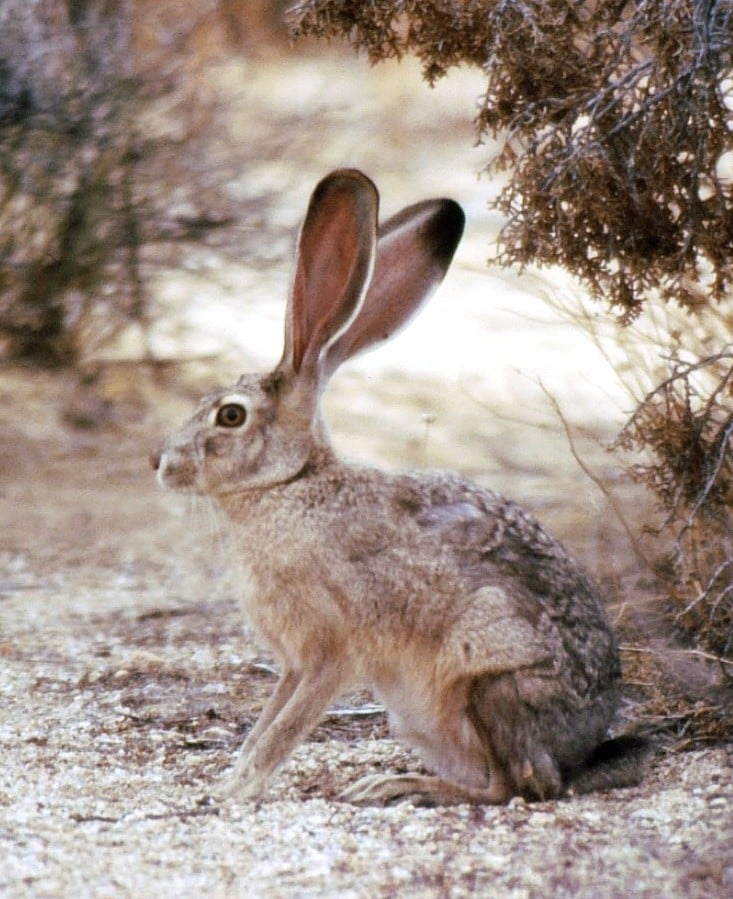
Black-tailed Jackrabbit in California

Lepus californicus

Native to California SNR Unranked in California

Not listed as nonindigenous in California by USGS NAS; native to its California range.

IUCN Red List status

  1. LC
  2. NT
  3. VU
  4. EN
  5. CR
  6. EW
  7. EX

LC – Least Concern

Widespread and abundant; not at risk.

Black-tailed Jackrabbit in California, by the numbers

Common in California 15th most recorded of 241 mammals logged in California

11,956 occurrence records
11,421 with iNaturalist photos

Records from 2000–2026.

11,956 total records count every California occurrence from GBIF and iNaturalist; the map plots a georeferenced sample of 300; the monthly chart covers the 11,103 records with a full observation date.

When to look for the Black-tailed Jackrabbit in California

Most sightings fall in February to June.

11,103 California occurrence records (iNaturalist and GBIF) by month of year, 2000–2026. Shows when the species is recorded, not a guarantee of presence.

Monthly California records (table)
MonthRecords
January728
February1,014
March1,433
April1,653
May1,492
June1,129
July970
August702
September634
October514
November385
December449

Monthly black-tailed jackrabbit occurrence records (iNaturalist and GBIF) in California, 2000–2026.

Seasonality

Year-round in California, with recorded sightings peaking in February–June.

Occurrence map

Where Black-tailed Jackrabbit has been recorded in California

300 records mapped · zoom and drag to explore

300 California records mapped

Notable places to look

Park, forest, or monumentiNaturalist records
Joshua Tree National Park 342
Golden Gate National Recreation Area 144
Mojave National Preserve 138
San Bernardino National Forest 106
Annadel State Park 87
Sugarloaf Ridge State Park 75
Pinnacles National Park 66
Santa Rosa And San Jacinto National Monument 64

Protected places with the most black-tailed jackrabbit sightings, from the USGS Protected Areas Database plus named mountain ranges, good spots to look, not a full breakdown, so they don't sum to the total.

Where it's recorded in California

CountyRecords
Santa Clara County 1,639
San Diego County 1,016
San Bernardino County 987
Sonoma County 744
Riverside County 701
Mariposa County 617
Marin County 590
San Mateo County 564
Yolo County 412
Alameda County 377
Sacramento County 345
Napa County 246
43 other counties 3,718

The complete county distribution, spread across 55 California counties. Every occurrence record falls in one county, so these sum to the total. Counties from GBIF and US Census boundaries.

Few California mammals are recorded as widely as the black-tailed jackrabbit. Its 11,956 records reach 55 counties, from the Bay Area grasslands of Santa Clara County through Mariposa and the Sierra foothills to San Bernardino, Riverside, and San Diego in the desert south.

A hare built for open country

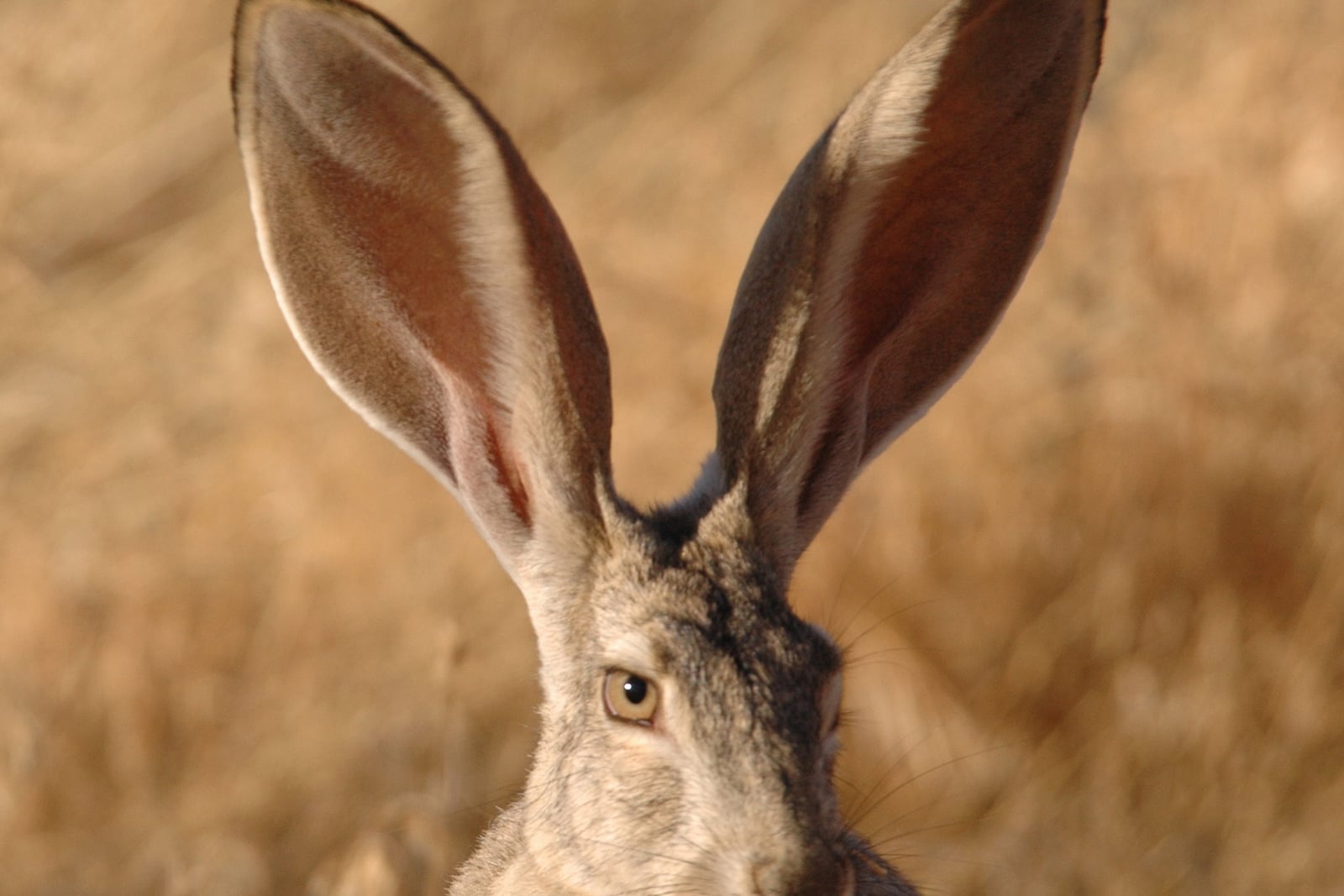
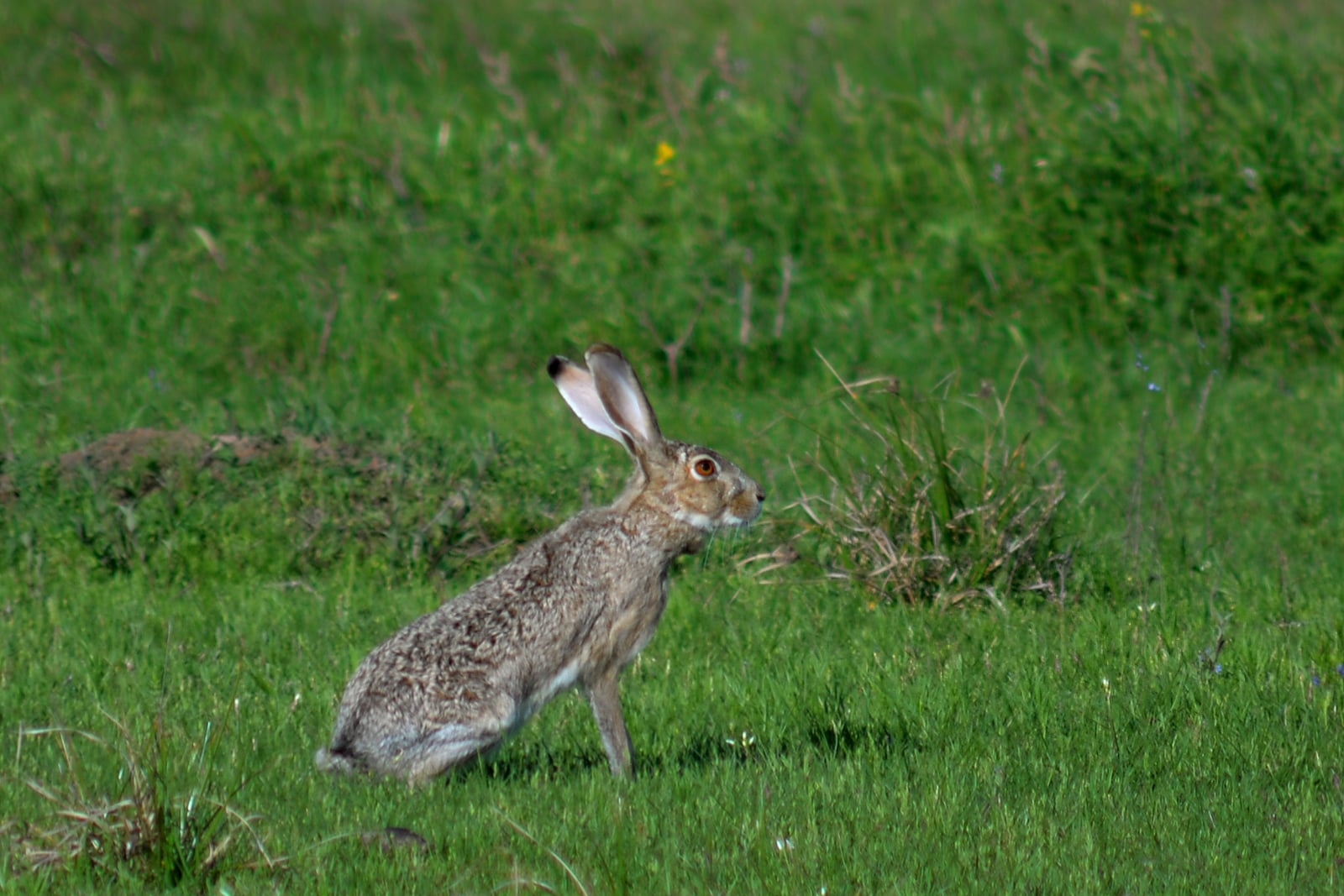
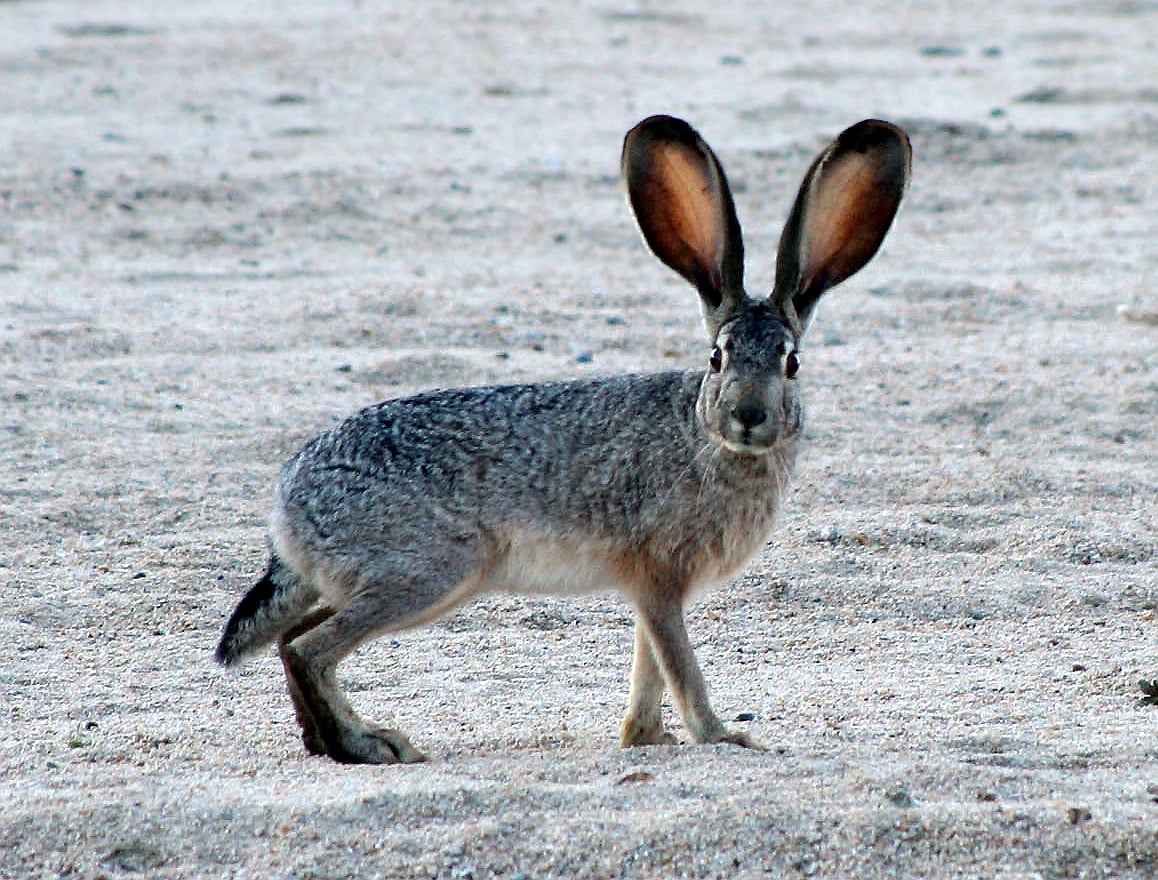
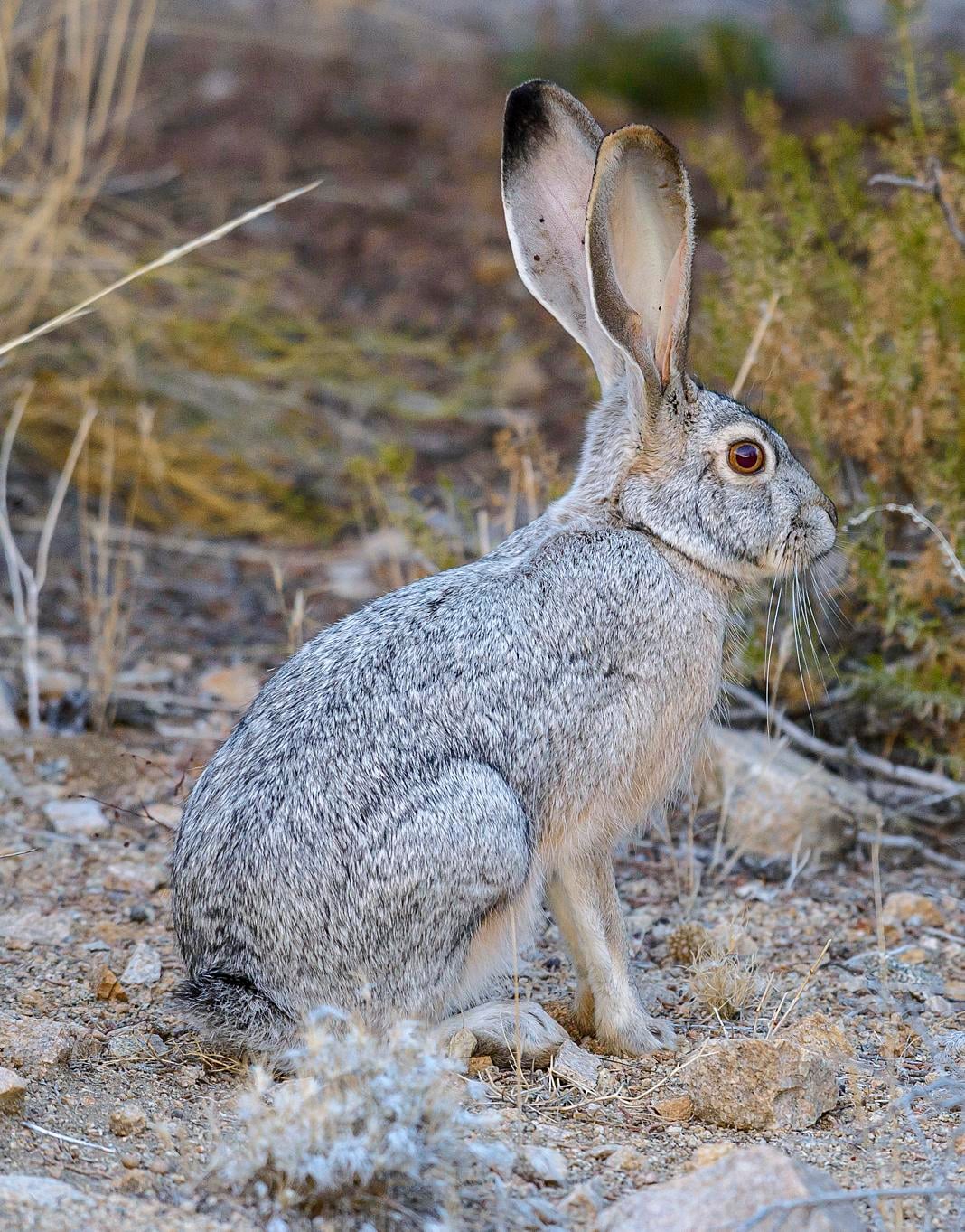
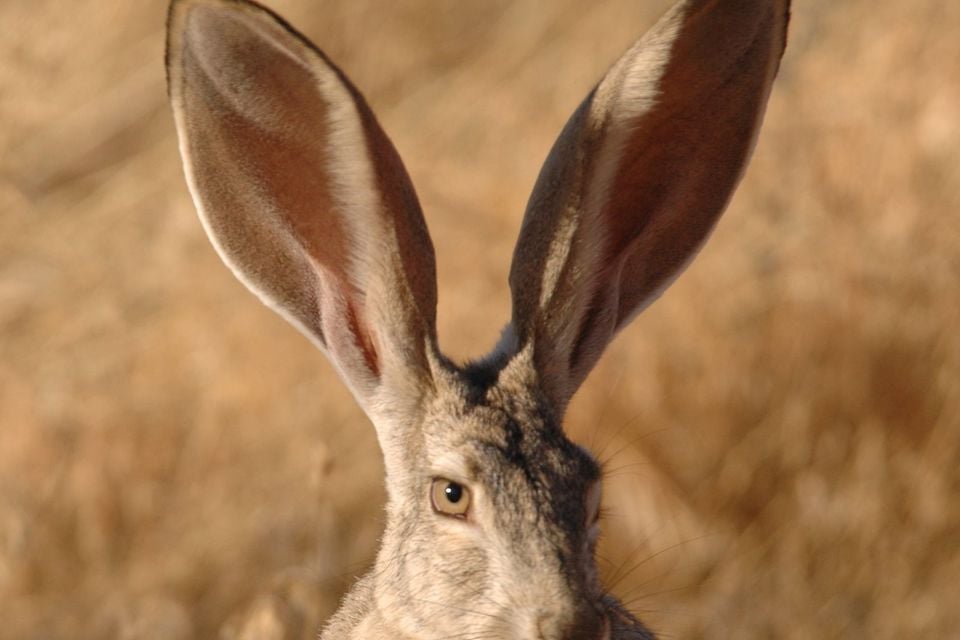
The black-tailed jackrabbit is a true hare, not a burrowing rabbit. It rests by day in a shallow form scratched out beneath a shrub, trusts its camouflage until the last moment, and explodes into a run that can top 40 miles per hour when flushed. Ears nearly as long as its head double as radiators, shedding heat on still desert afternoons. Everything about the animal suits the open, dry ground where California’s records cluster: Joshua Tree National Park with 403, Mojave National Preserve with 156, and grassland parks such as Annadel and Sugarloaf Ridge in the Coast Ranges.

Spring growth, spring sightings

Counts build from March through May, the year’s clear peak, then taper through the hottest months to a low in late fall and early winter. Jackrabbits breed through the mild part of the year, raising leverets born furred, open-eyed, and ready to move, and fresh spring growth feeds the grazing they do in the open at dawn and dusk. The Yolo Bypass Wildlife Area’s records sit on exactly that kind of ground, flat valley grassland where a running jackrabbit is hard to miss.

Status in California

NatureServe has not assigned a California rank (SNR), but the species is G5, secure, rangewide. The black-tailed jackrabbit is native to the state, is not listed as nonindigenous by USGS NAS, and carries no state-level conservation listing.

Occurrence data from iNaturalist and GBIF.

Black-tailed Jackrabbit in other states

View all states →

More mammals in California in the atlas

Data & sources

The data and visualizations on this page draw on these open sources:

  • GBIFCC-BY 4.0occurrence records behind the range map, elevation, and record counts
  • iNaturalistCC0 / CC-BY / CC-BY-SAobservations, photos, and audio recordings
  • NatureServe ExplorerCC-BYthe state conservation rank
  • IUCN Red Listattributed factthe global conservation status
  • USGS NASpublic domainnative / introduced status
  • Natural Earthpublic domainthe relief basemap
  • USFSpublic domainnational-forest boundaries
  • USGS Protected Areas Databasepublic domainthe named parks, forests, and refuges behind "notable places to look"




