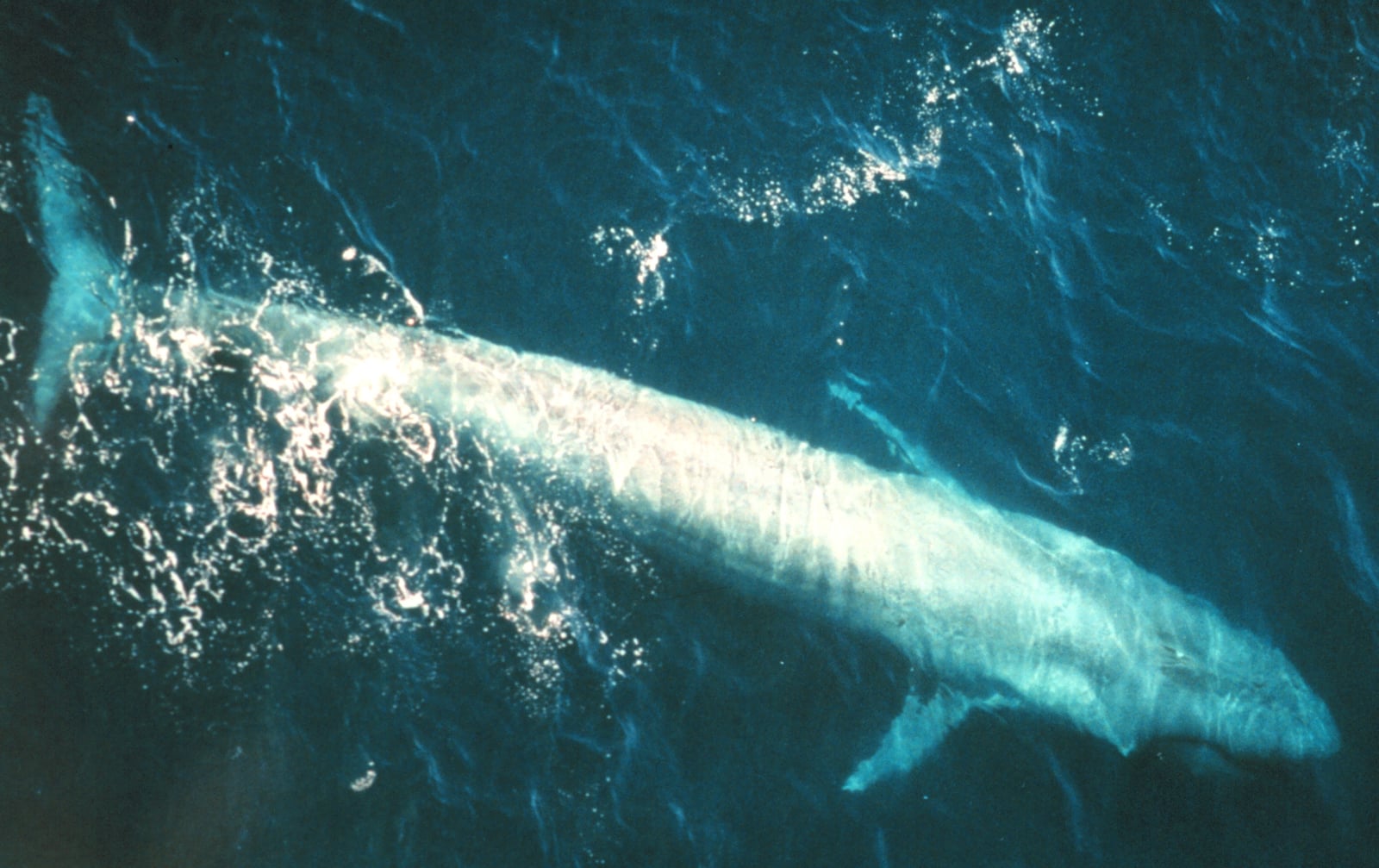
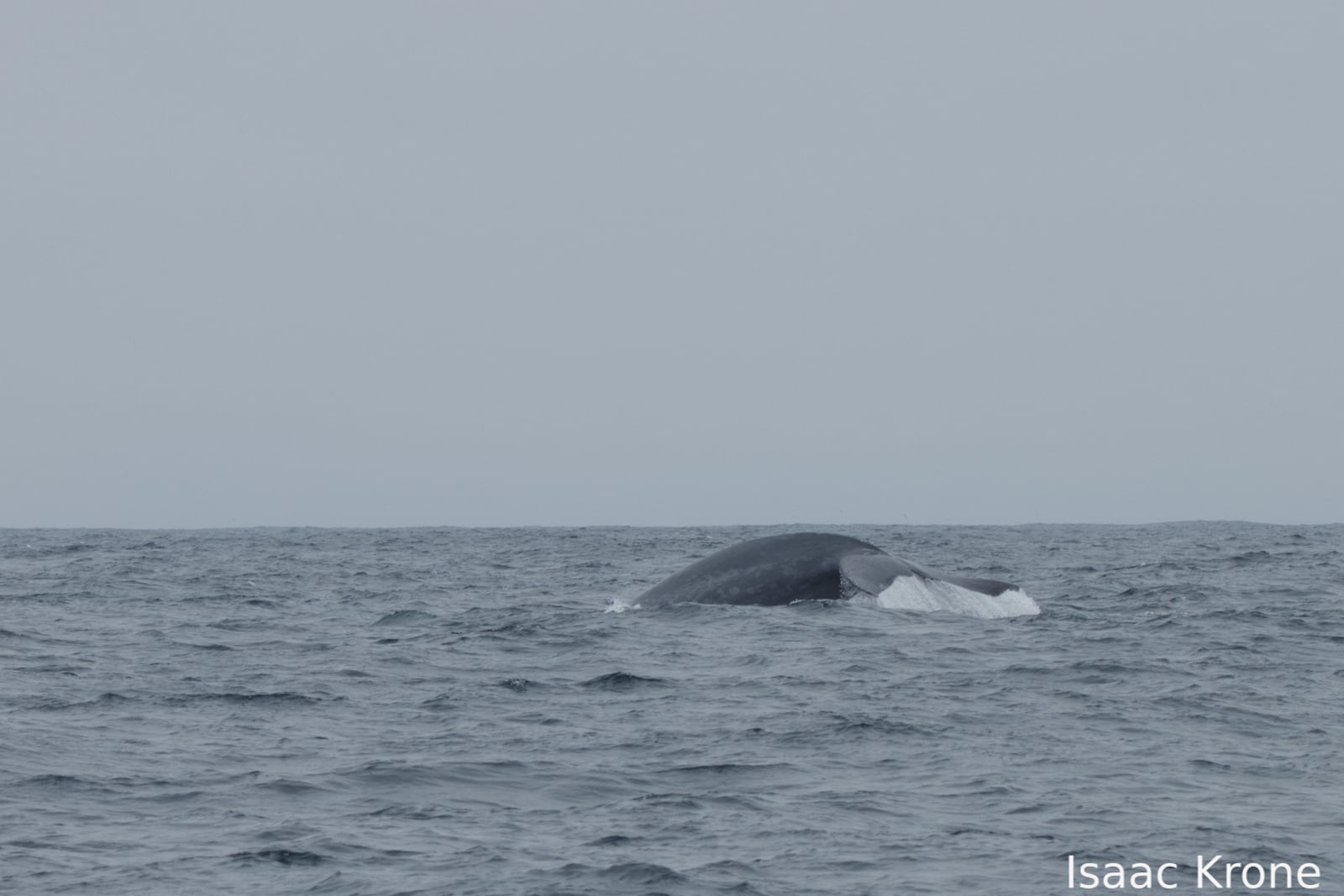
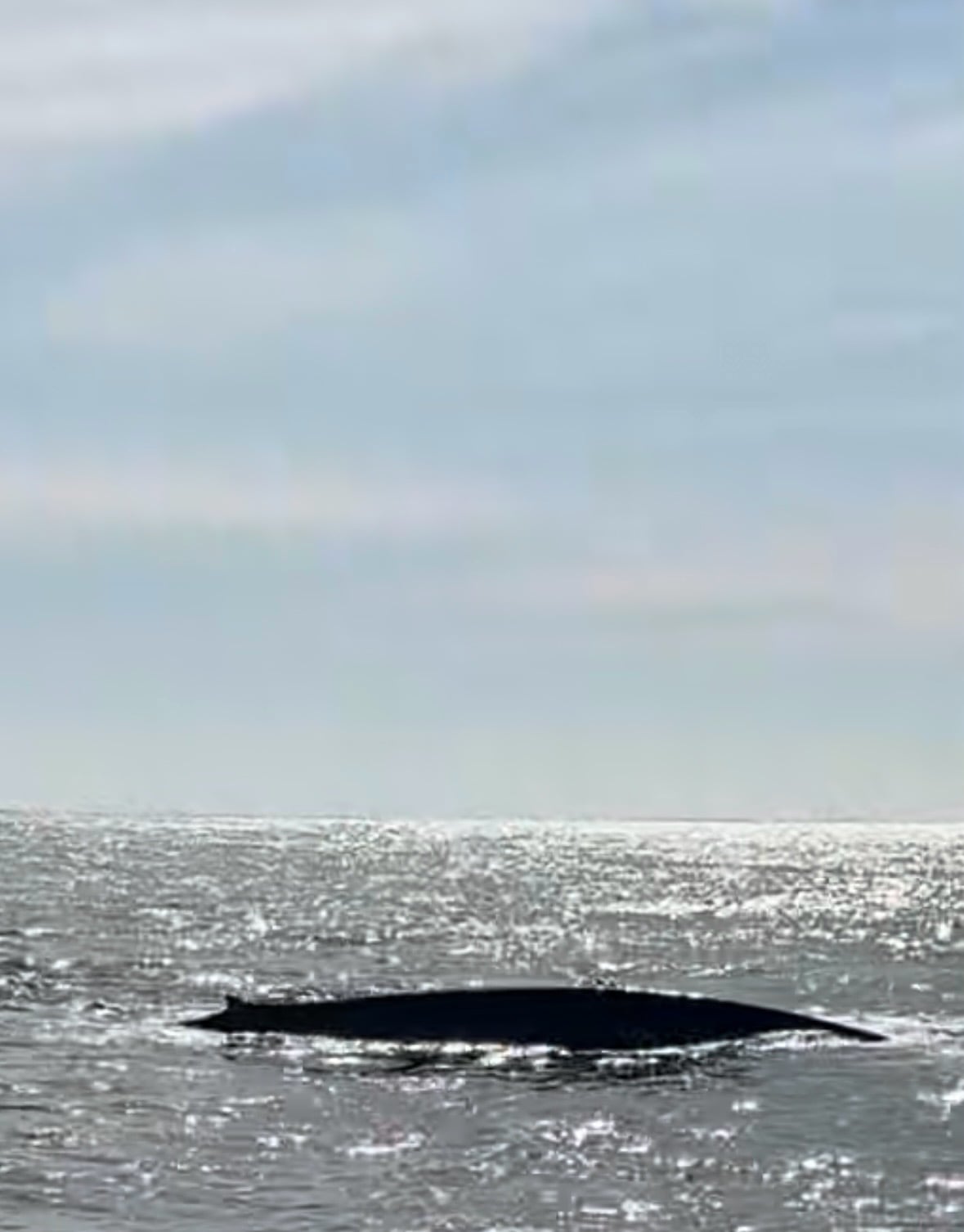
Blue whales are a summer event off California. The state’s 429 records barely register from December through April, with February logging a single report. Then they leap to 68 in May, climb to a July high of 89, and stay busy through August before tapering in the fall. That swing tracks the krill blue whales come to eat, which swarm in cold, upwelled water along the coast through the warm months.
Seldom seen from shore
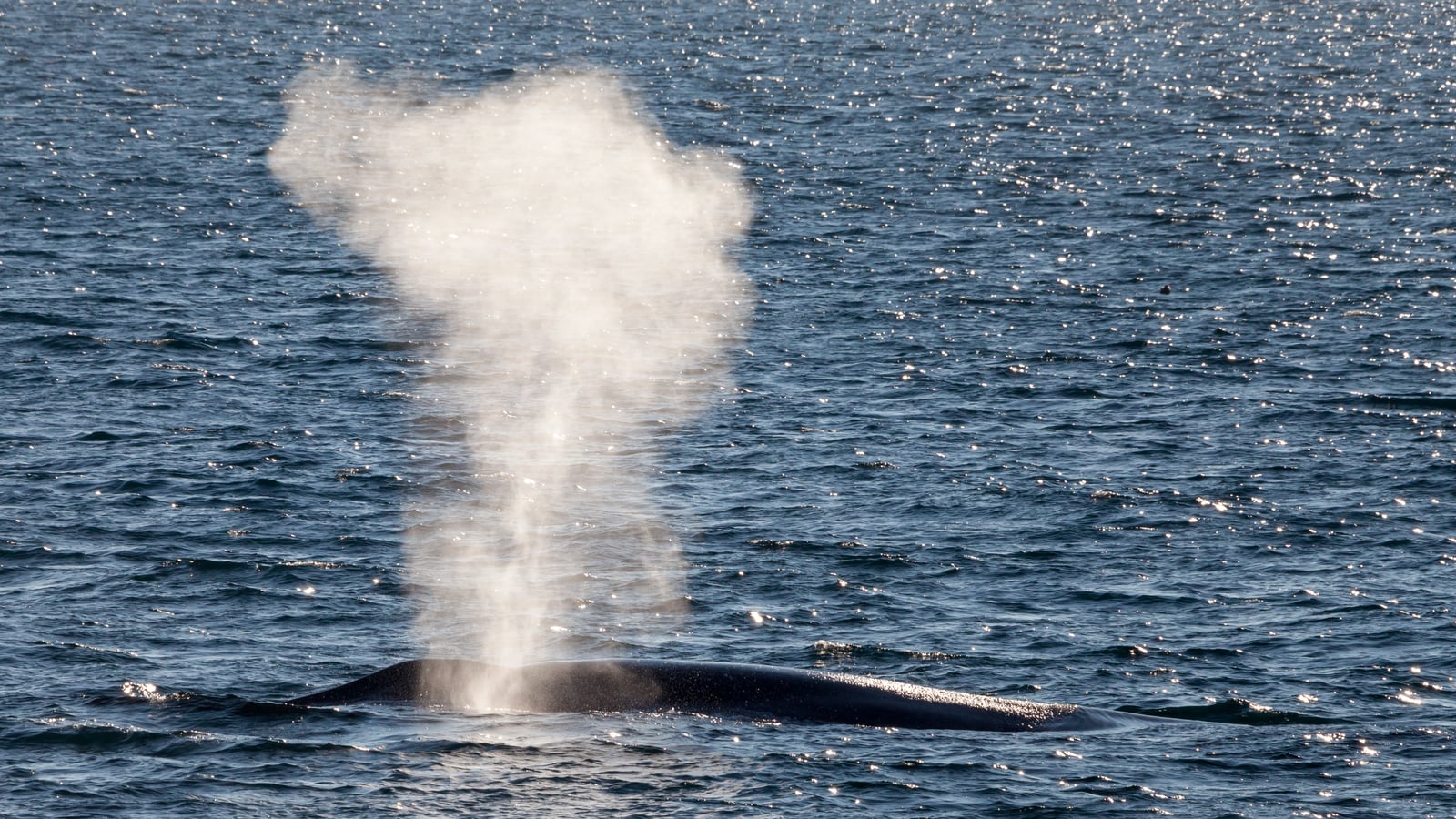
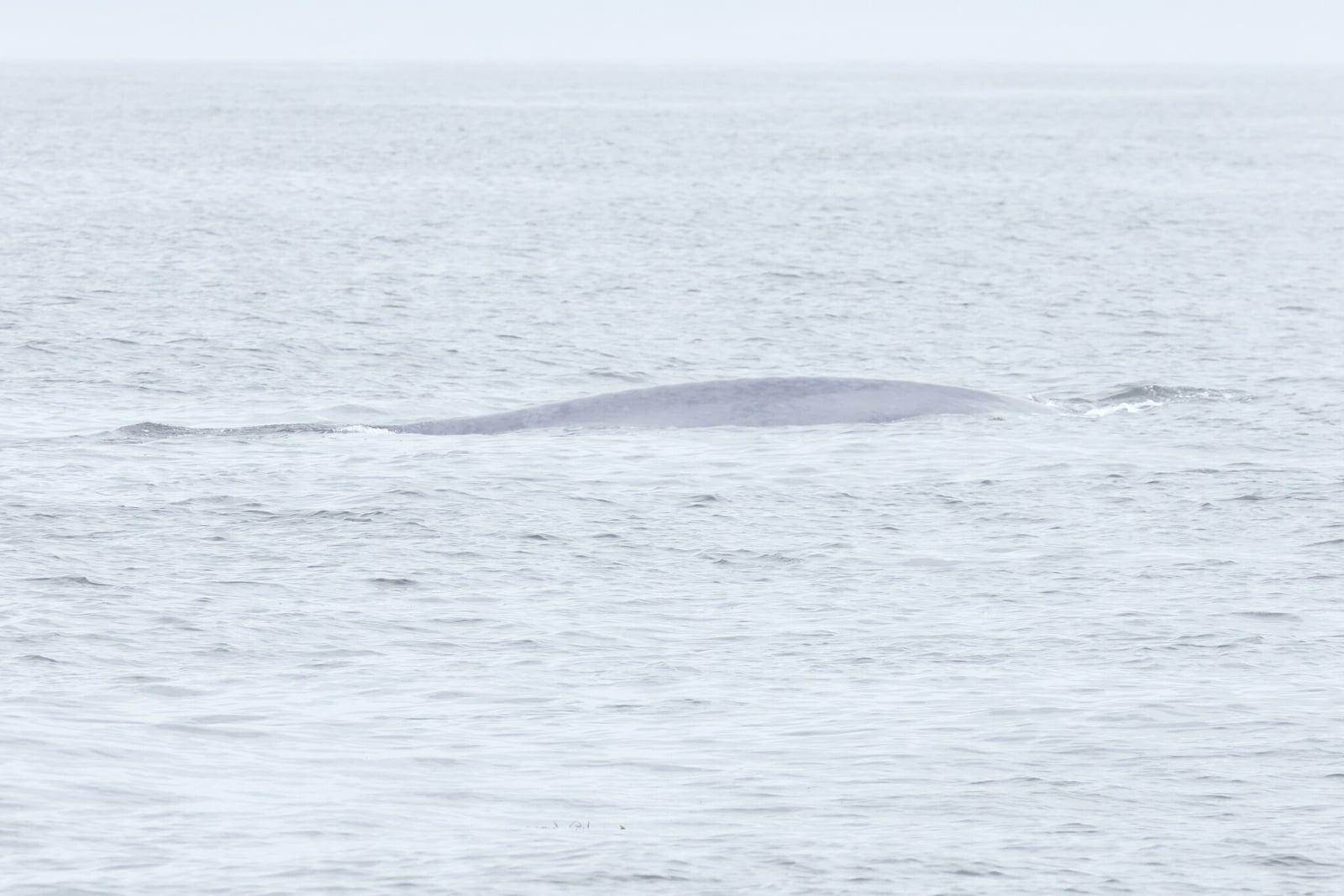
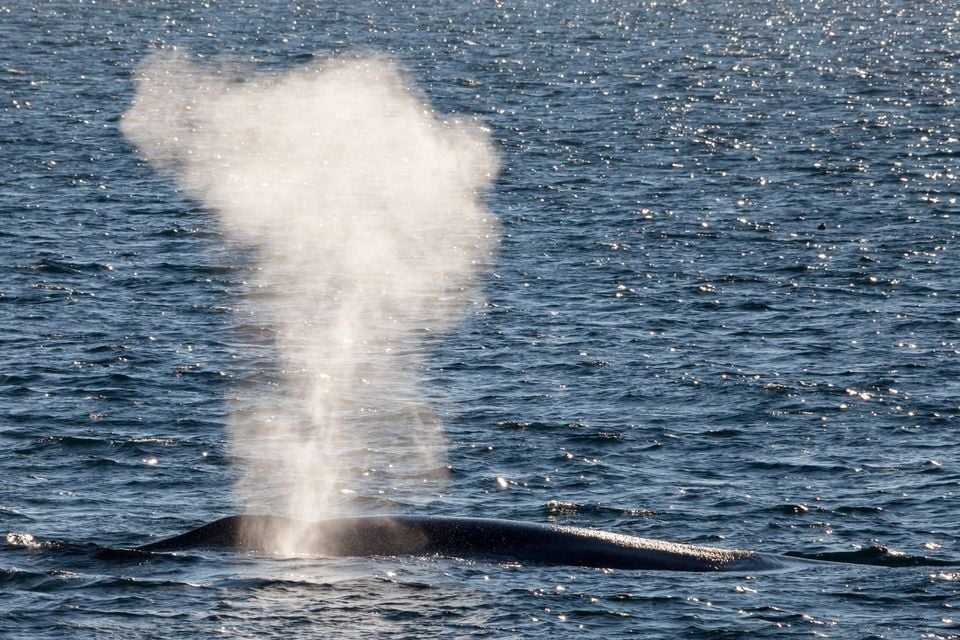
Only one named place turns up in the records, Bean Hollow State Beach on the San Mateo coast, with 2. It sits above open water where a tall, straight blow can carry far enough to be spotted from land. Most records come from boats instead, and 420 are iNaturalist photos. The ones that do land in a county spread surprisingly evenly down the coast. San Diego, Monterey, Santa Barbara and Orange have 16 each, all counties whose harbors run summer whale-watch trips. Records like these show when and where people saw blue whales, not how many use the state’s waters.
The IUCN lists blue whales as Endangered, a lasting effect of twentieth-century whaling. NatureServe gives this native species no California rank.
 Full species profile