
Dromedary Camel

Domesticated

Camelus dromedarius

Also known as: One-humped Camel, Dromedary

NENot Evaluated

The dromedary camel is the one-humped camel, domesticated so long ago that a truly wild population no longer exists anywhere on earth. It has no native range in the United States. Submitted Texas records are consistent with ranches, private collections, managed animals, or escapes; they document reports, not an established wild population.

IUCN Red List status

NE – Not Evaluated

Not yet assessed against IUCN Red List criteria.

Trophic relationshipsFood web What a Dromedary Camel eats, and what eats it.
This speciesDromedary Camel

Grazes on plants

Eats

A sample of documented feeding relationships, filtered to species that also occur in the US. Diet and predators vary by region and season, and this is not a complete list, many animals eat, and are eaten by, more than what has been formally recorded here.

Life history

The Dromedary Camel (434 kg956.8 lb) is a herbivore that first breeds around 3 years, carries a 405-day gestation, and bears about 1 young per litter. Maximum recorded longevity is 28.4 years.

Life cycle

  1. Gestation1.1 years (≈13.3 months)
  2. Birthlitter of 1 young
  3. Sexual maturity3 yr (female) · 6 yr (male)
  4. Typical lifespan28.4 years
  5. Maximum recorded longevity28.4 years

Reproduction

Gestation
405days≈13.3 months
Litter size
1youngaverage
Litters / year
0.7littersabout one every 1.4 years
Age at first breeding
3years♀ 3 · ♂ 6 yr

Diet composition

Herbivore

By foraging composition: 100% plant material.

  • Plant material100%

Most active during the day.

Typical values for the species, not local measurements. Maximum longevity is the longest lifespan on record; most individuals live far less.

Commonly confused with

Animals people sometimes mistake for the dromedary camel, and how to tell them apart.

One hump, built for storing energy

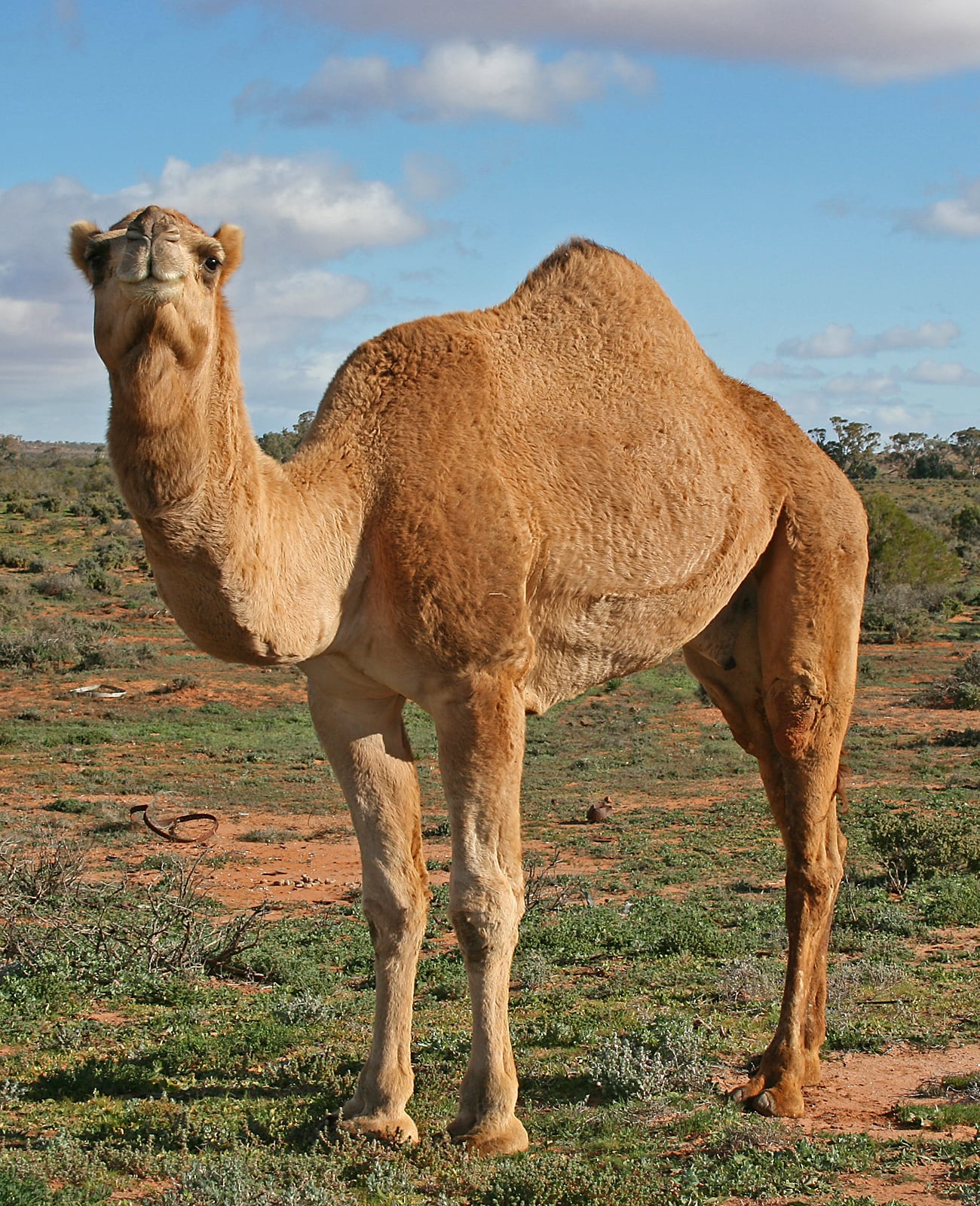
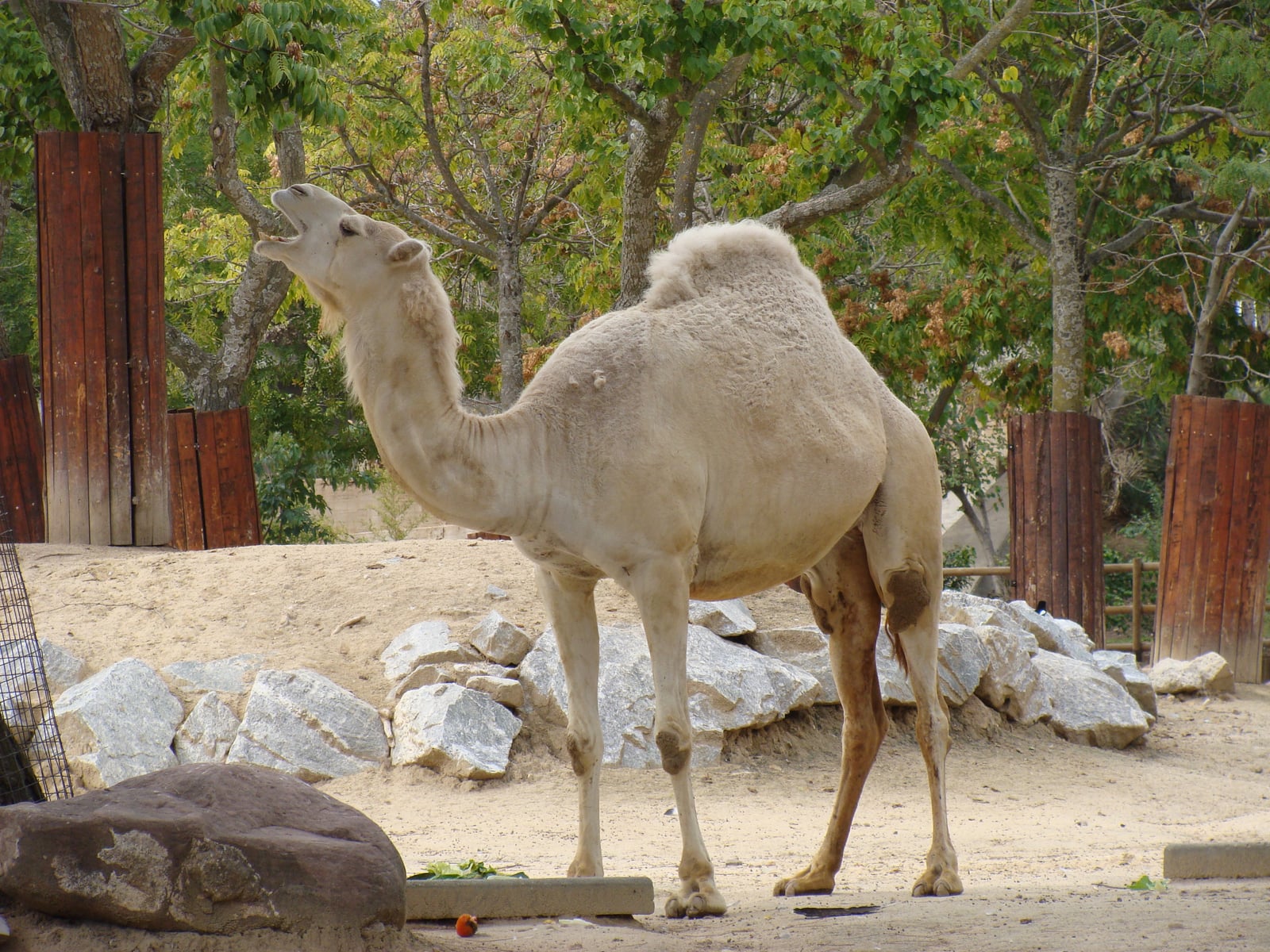
A single hump on the back is the fastest way to separate this camel from its two-humped Bactrian relative. That hump doesn’t store water, despite the popular myth. It stores fat, a reserve the animal draws down when food is scarce, alongside a set of other traits that limit how much water it loses in the first place. Those traits, more than the hump itself, are what let a dromedary camel go long stretches through hot, dry country without drinking.

A species people carried far past its original range

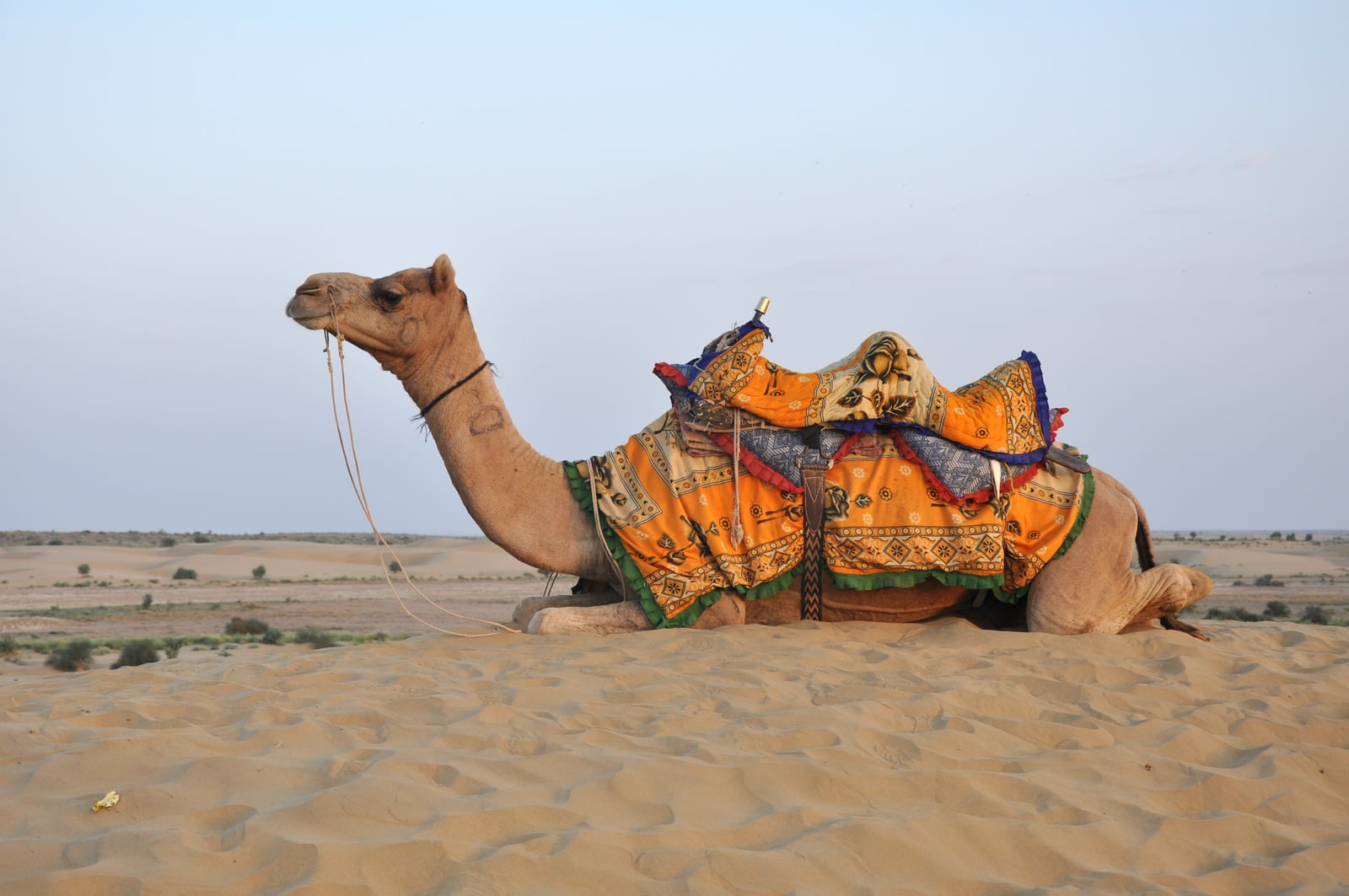
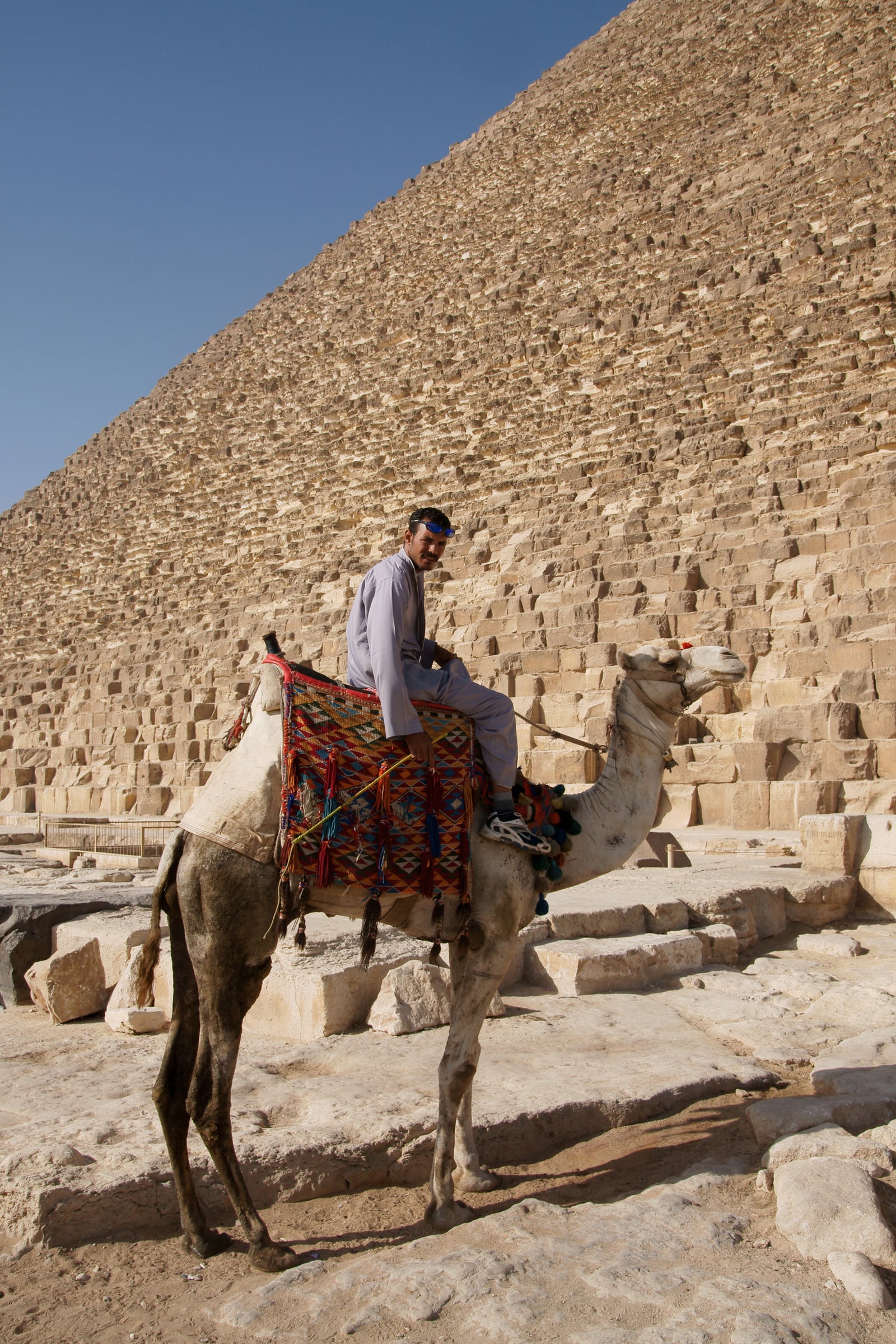
Long before it ever reached Texas, people had already carried this camel well outside the deserts where it first evolved. Photographs tied to this record come from Egypt, from Pakistan’s Thar Desert, and from the Australian outback, where escaped and released camels built a large feral population of their own. That spread has little to do with the animal finding new habitat on its own. It has everything to do with people moving a useful pack animal wherever dry country and a need for transport happened to overlap.

Texas reports do not establish wild range

The submitted US records in this dataset come from Texas and are consistent with ranches, private collections, managed animals, or escapes. They do not establish a wild dromedary population or naturally occurring range. Gaps in reporting likewise say nothing reliable about habitat suitability or where camels are kept.

A story of husbandry, not wildlife management

The IUCN has not evaluated the dromedary camel’s conservation status, since a domesticated animal with no wild population doesn’t fit the usual wildlife categories. Its story in Texas belongs to husbandry and history rather than to the kind of population monitoring wild species get. Tracking where these camels live still matters, just less as a conservation question and more as a record of how far one domesticated species has traveled from home.


Data & sources

The data and visualizations on this page draw on these open sources:


