
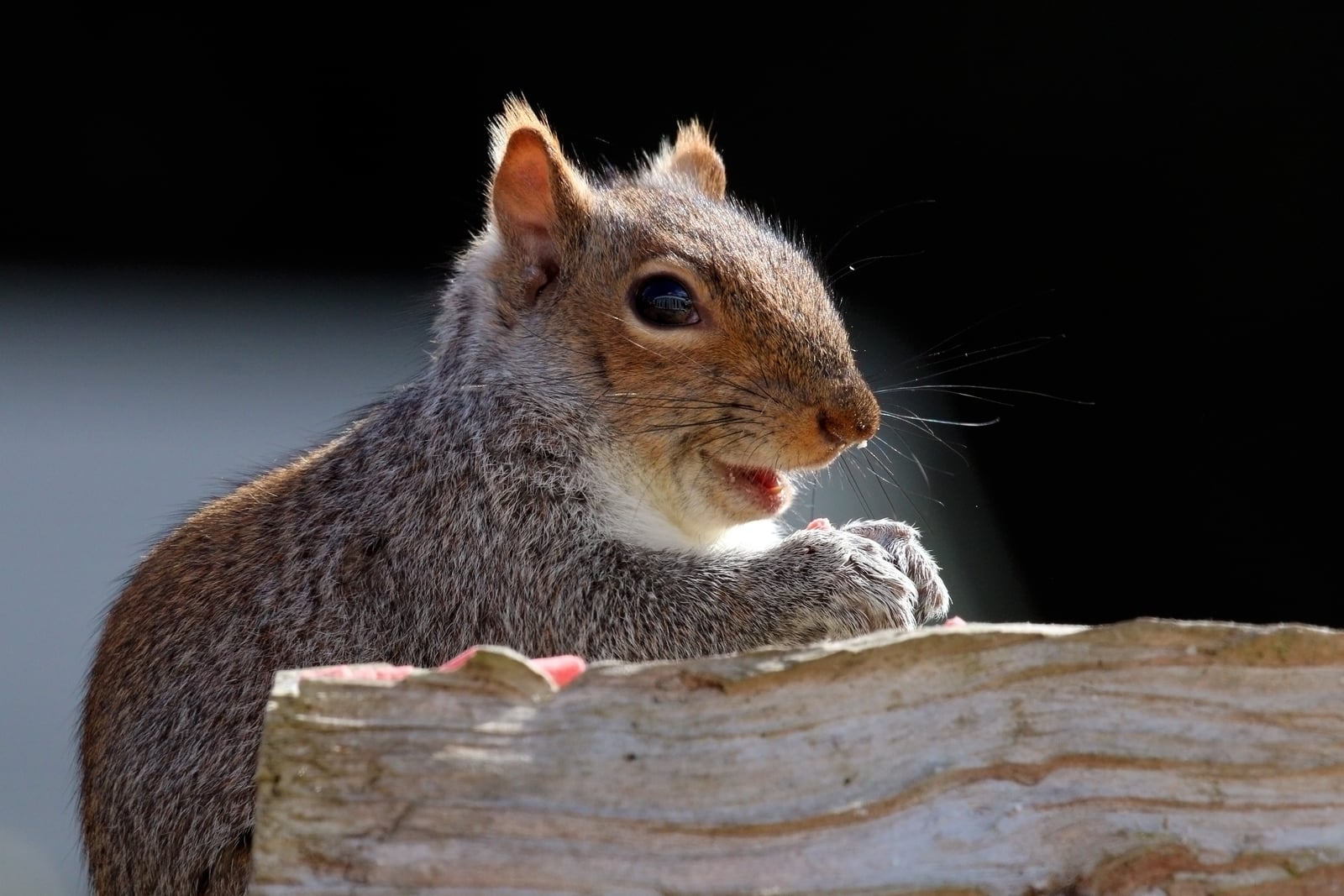
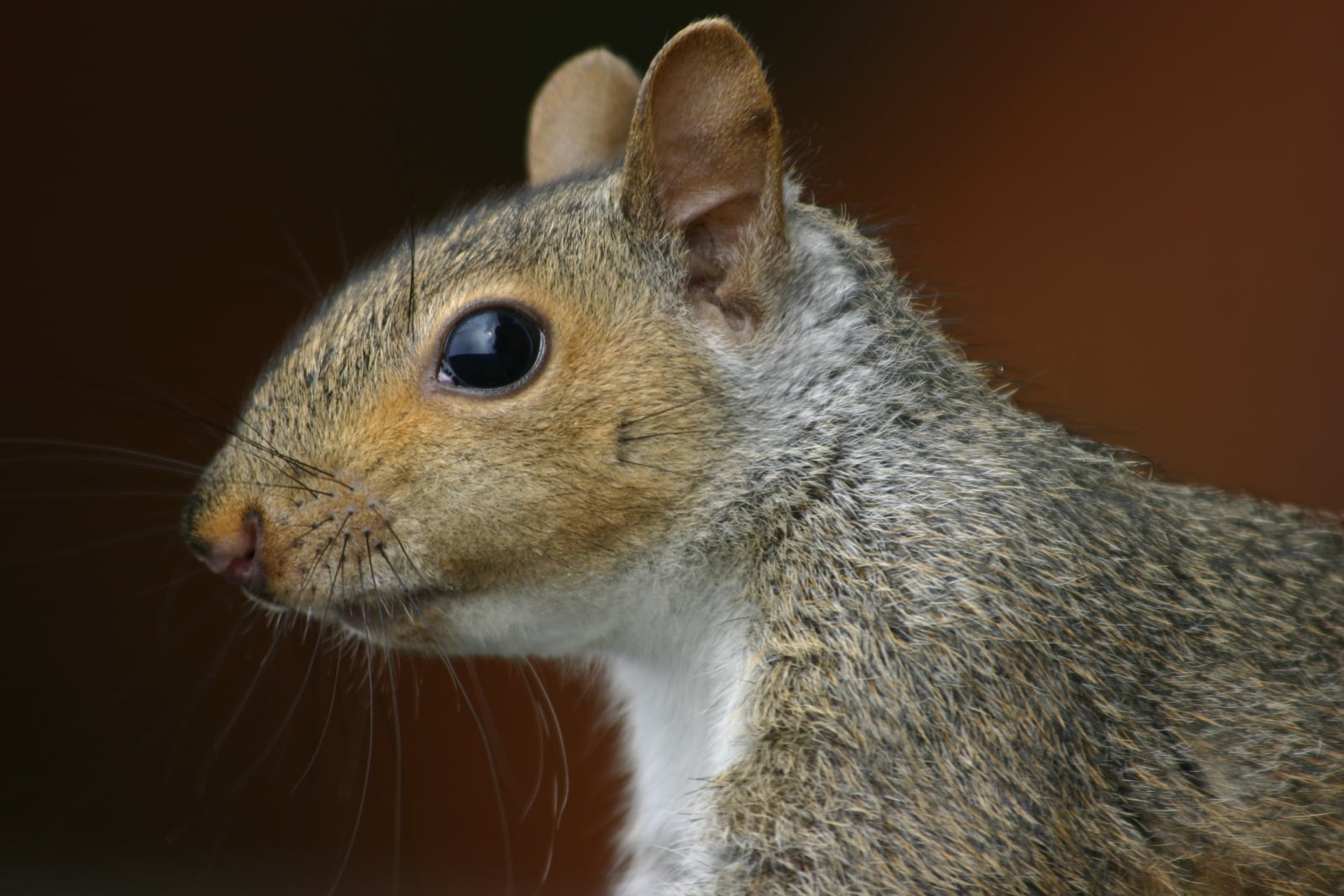
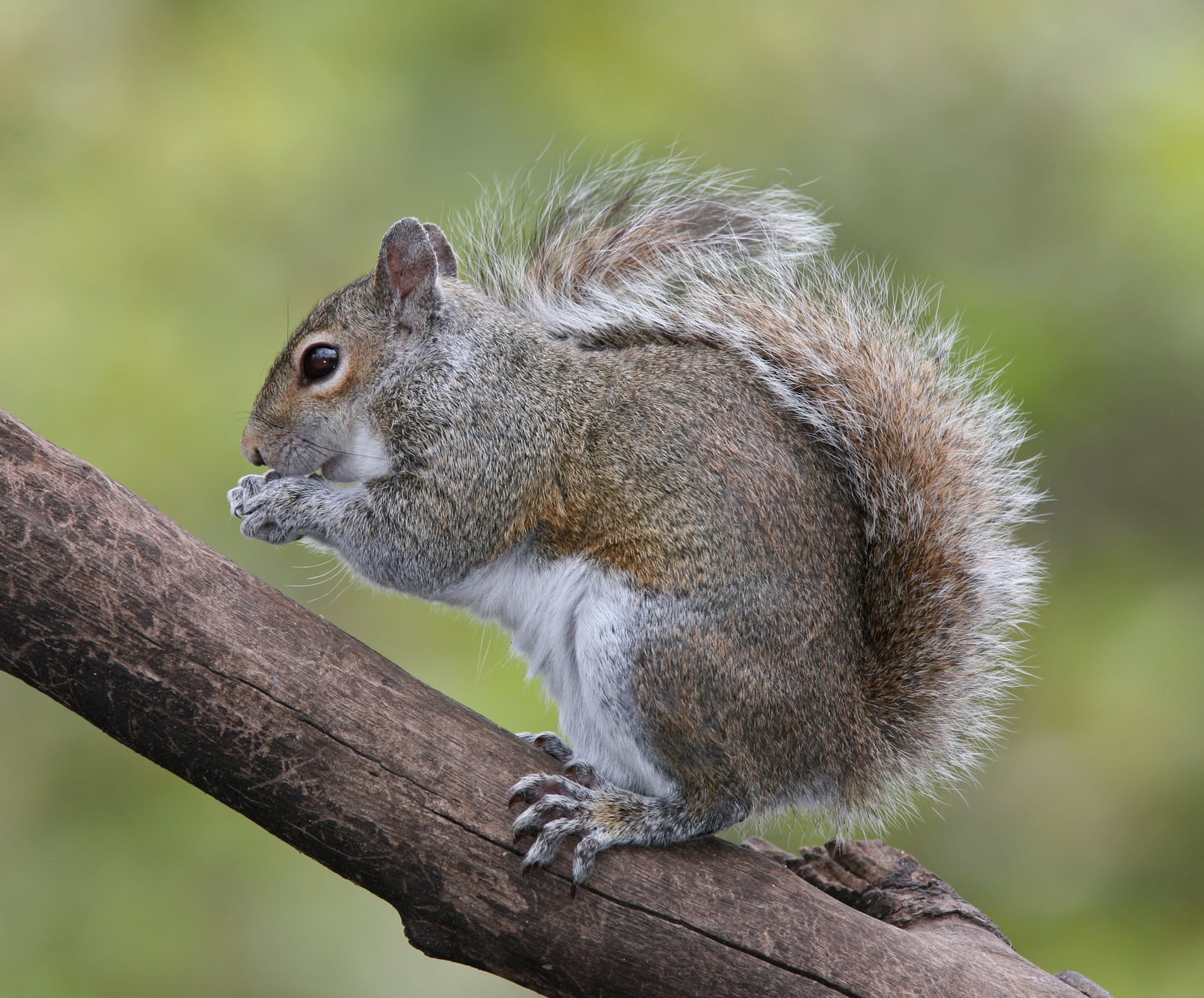
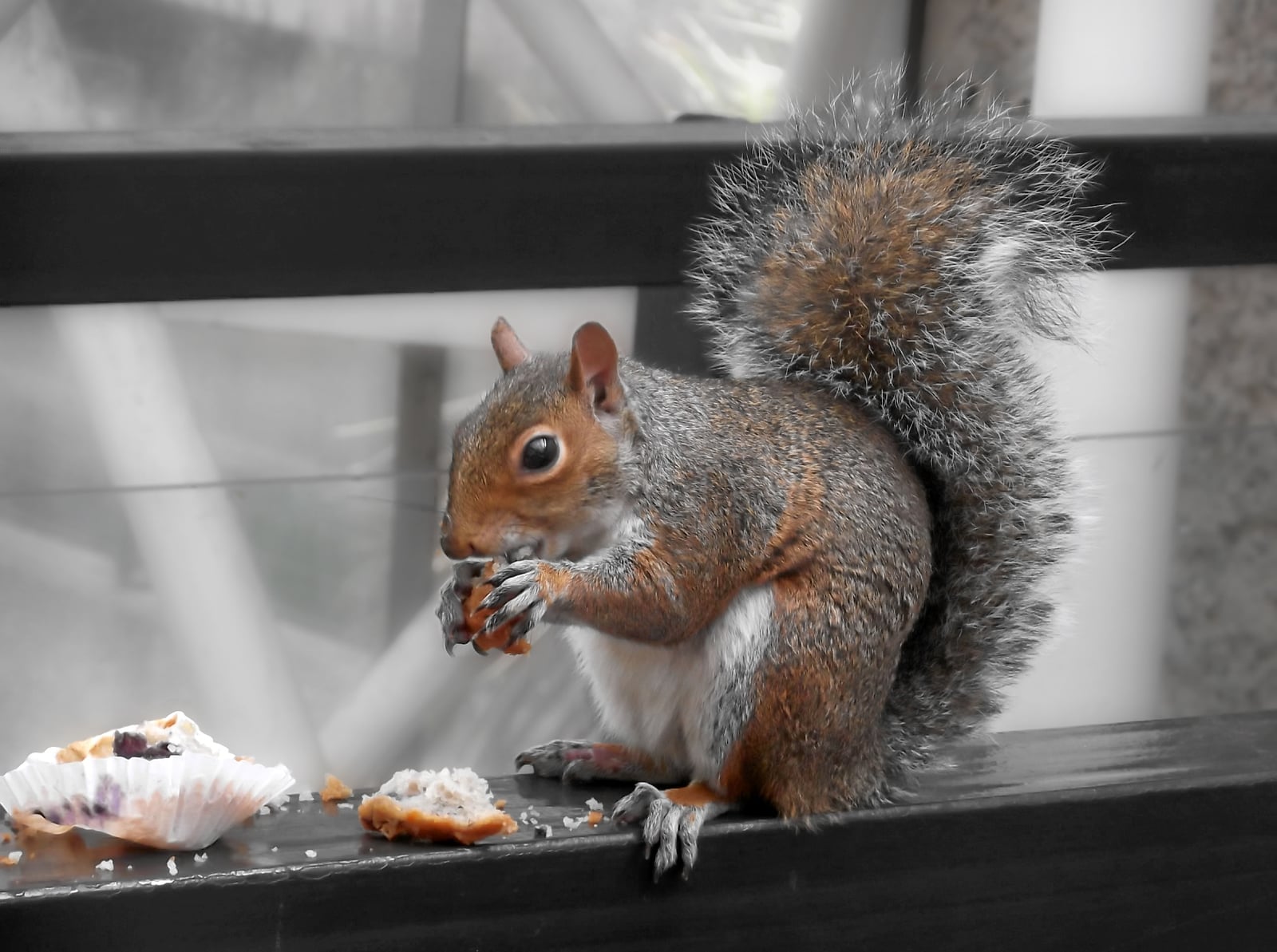
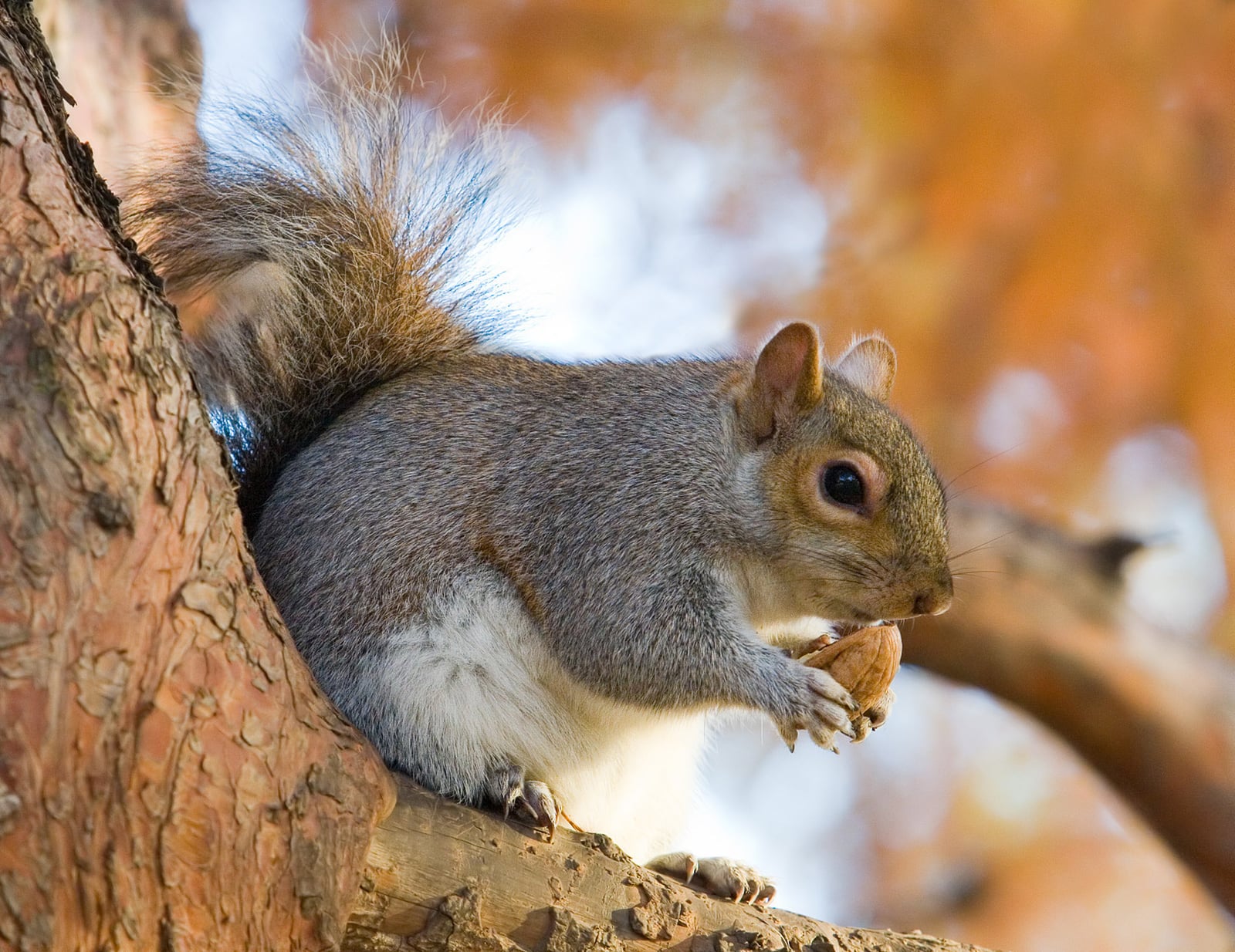
No mammal shows up in New Jersey’s atlas more often than the eastern gray squirrel. Its 10,465 records blanket all 21 counties, led by Bergen, Essex, and Morris, and reach from the oak ridges above the Delaware Water Gap to the shade trees of Liberty State Park.
Built for oak and hickory country
The gray squirrel is a hardwood animal, and New Jersey’s mat of oak and hickory forest, suburban canopy, and wooded parkland suits it end to end. Acorns, hickory nuts, and beechnuts anchor its diet, and in autumn it scatter-hoards them one by one across its territory, finding many again months later by smell. Great Swamp National Wildlife Refuge, Brendan T. Byrne State Forest, and Wharton State Forest all hold records, but so do the state’s most developed neighborhoods, where mature street trees do the same work as a forest.
Two busy seasons in the canopy
Reports rise sharply in April and again in September, and both peaks fit the squirrel’s calendar. Spring finds it digging up cached nuts and raising the year’s first litters, while early fall sends it to the ground constantly to bury the new mast crop. Between bouts it shelters in tree cavities or in the leaf nests called dreys that stay visible along winter branches long after the squirrel has passed.
Status in New Jersey
NatureServe ranks the eastern gray squirrel S5, Secure, in New Jersey, and the species is native across the state. USGS NAS does not list it as nonindigenous.
 Full species profile




