
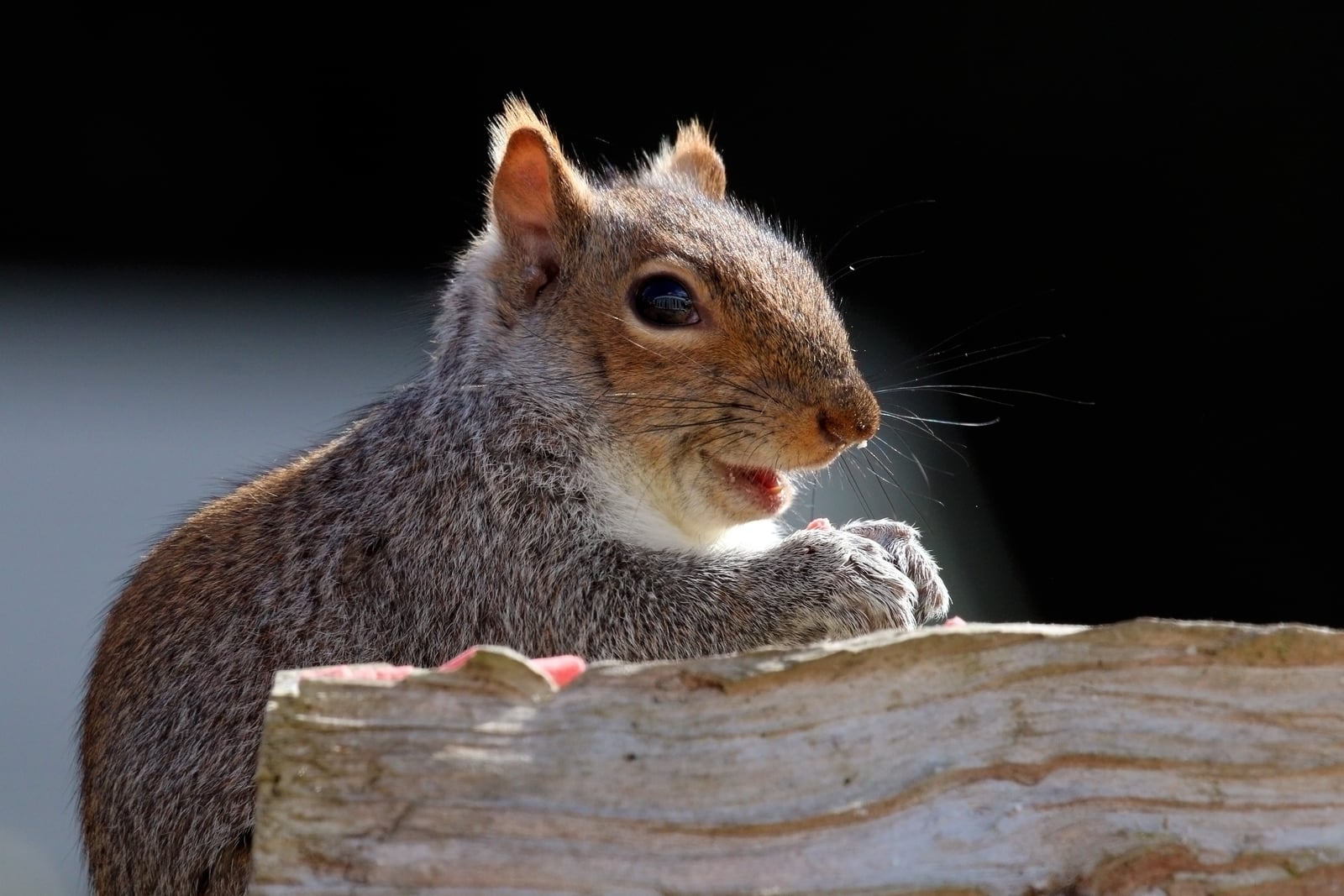
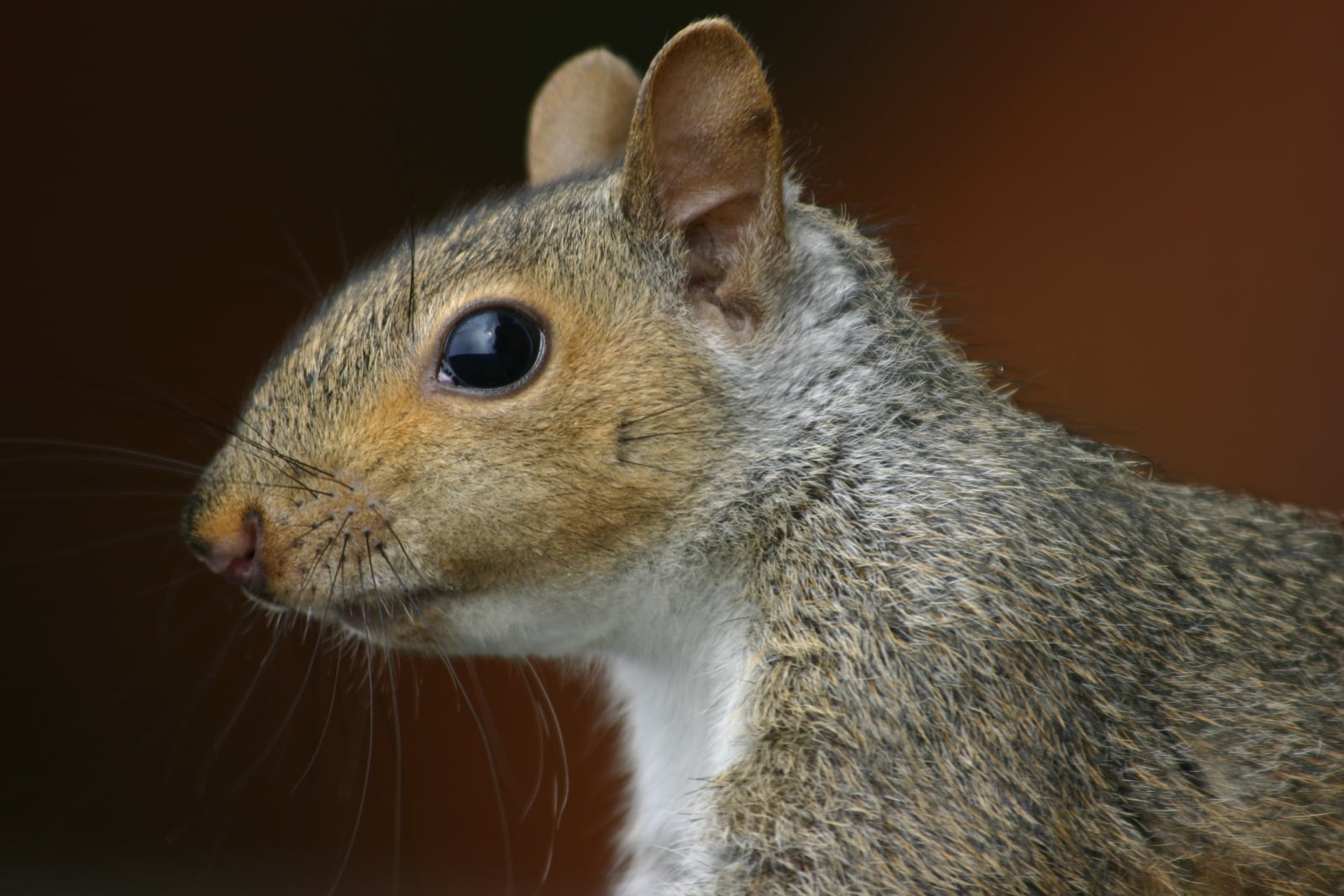
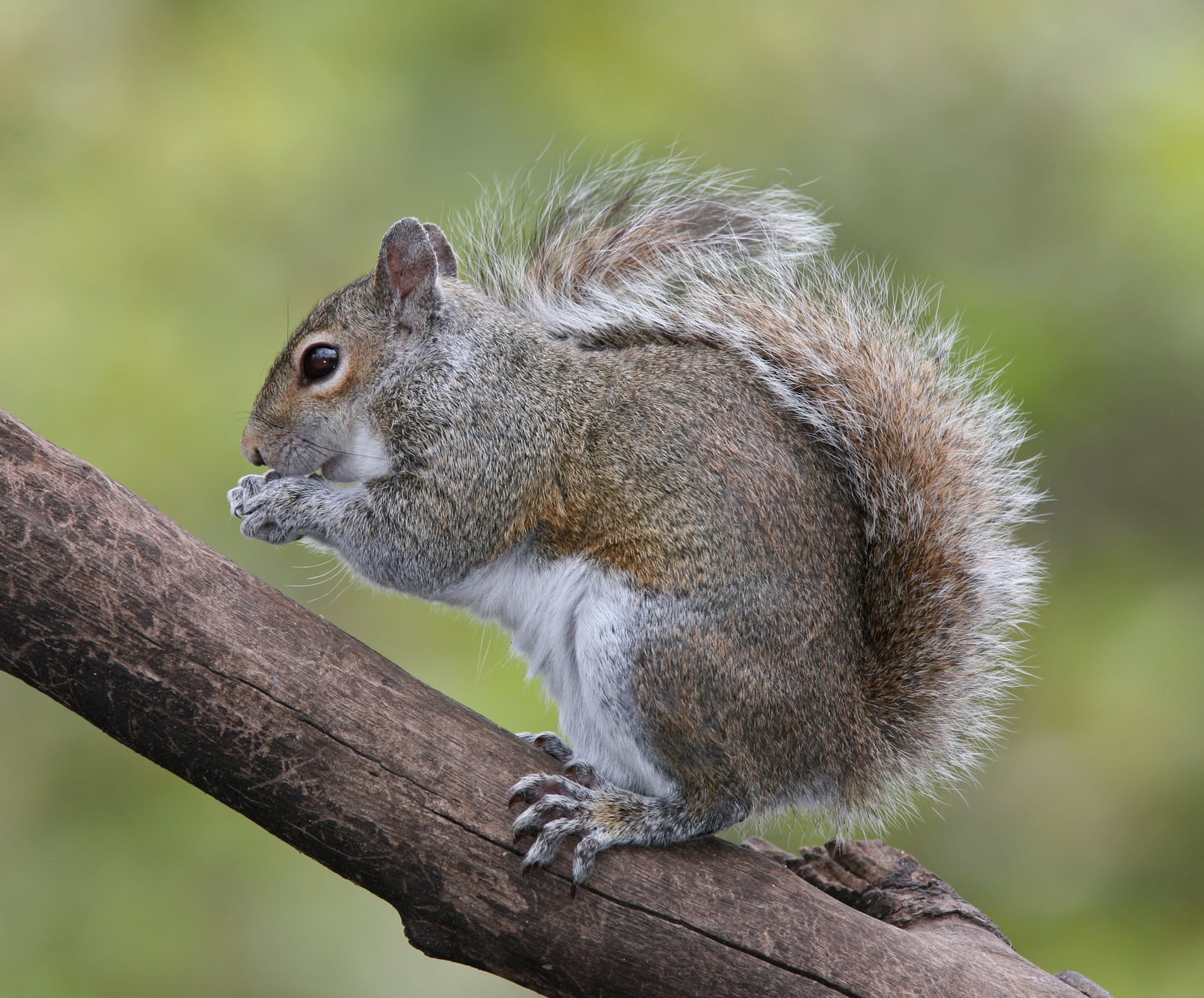
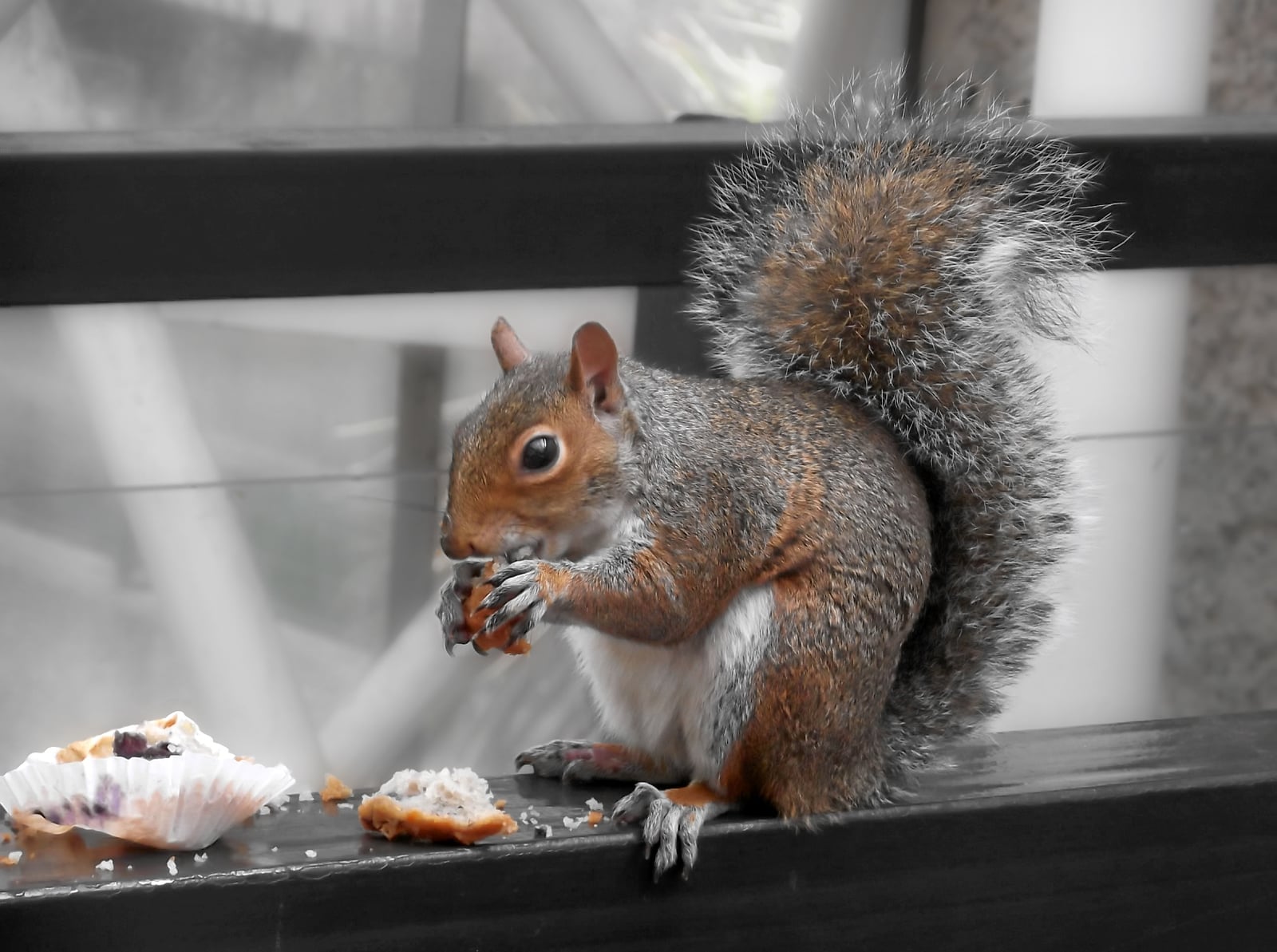
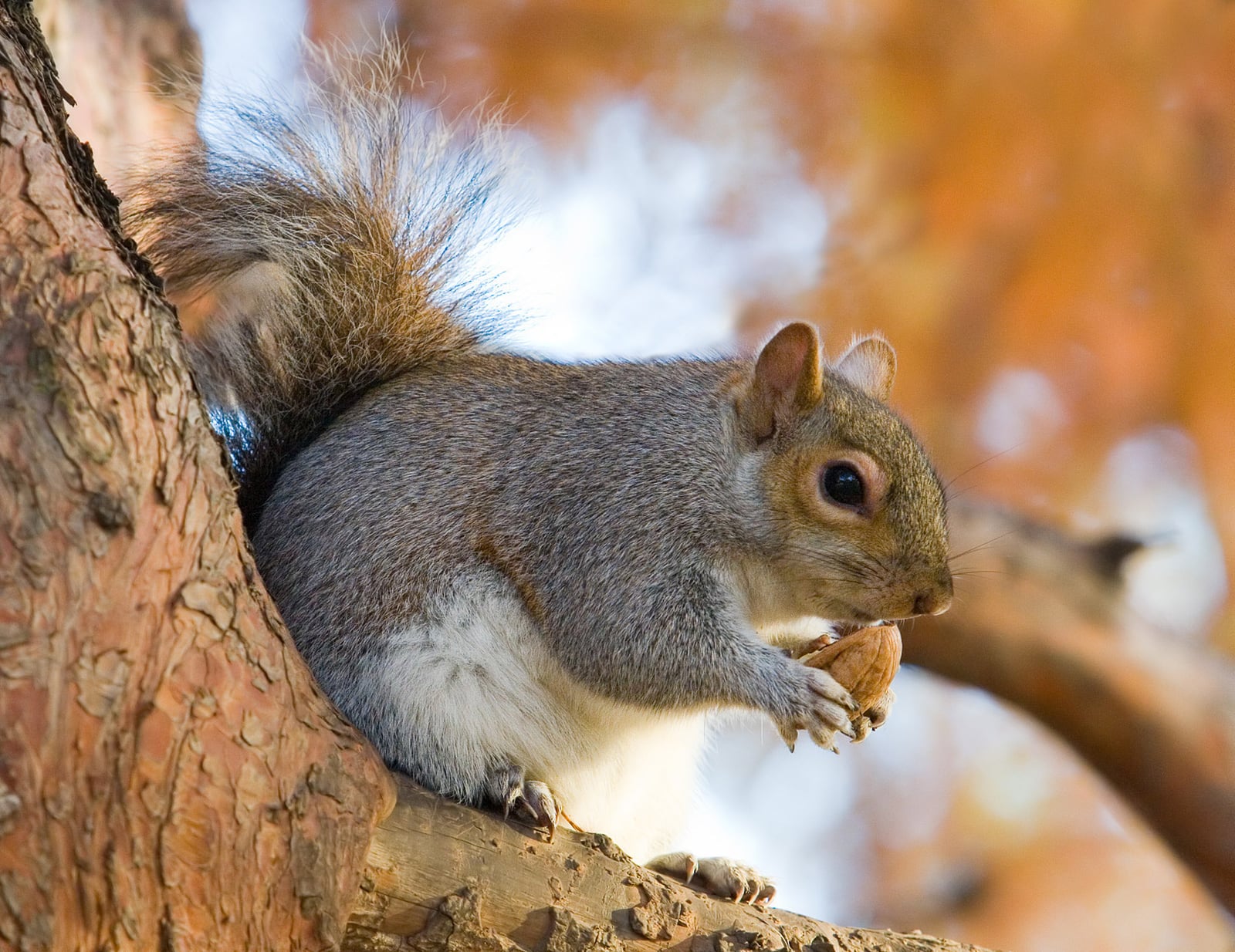
At 26,744 records, the eastern gray squirrel is the most-reported mammal in New York’s atlas by a wide margin. New York County alone accounts for 8,066 of them, with Kings, Queens, the Bronx, and Monroe next in line, proof that this forest animal has made itself entirely at home in the city, from Central Park and Prospect Park to Green-Wood Cemetery.
A mast eater that plants its own forest
Gray squirrels live on tree seed: acorns, hickory nuts, beechnuts, and walnuts. Each fall they bury thousands of them one at a time, and the caches they fail to recover sprout, making the squirrel a quiet agent of hardwood regeneration. That diet ties the species to mature deciduous woods, whether an oak stand in Harriman State Park or a street of old maples, and it is far less at home in the Adirondacks’ conifer-dominated high country. They nest in tree cavities when they can and in bulky leaf dreys when they cannot.
Two peaks on the calendar
Sightings top out in April, when bare branches make foraging squirrels easy to follow and the year’s first litters leave the nest. A second surge arrives in September and October as caching goes into full swing, the season when one squirrel can be watched burying nuts across a whole park lawn.
Status in New York
NatureServe ranks the eastern gray squirrel S5, Secure, and the species is native to New York. USGS NAS does not list it as nonindigenous here.
 Full species profile




