
Built to hunt in cold streams
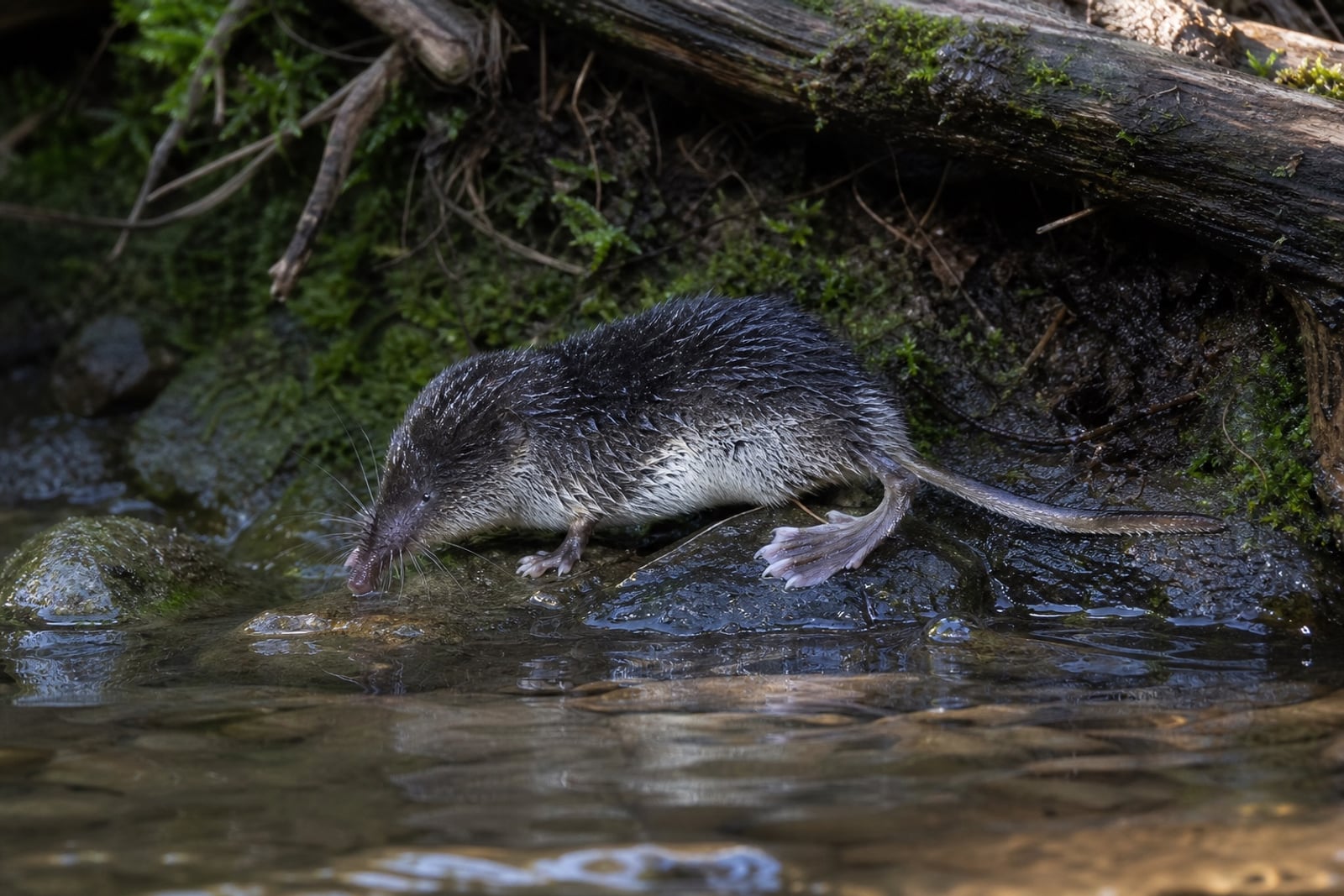
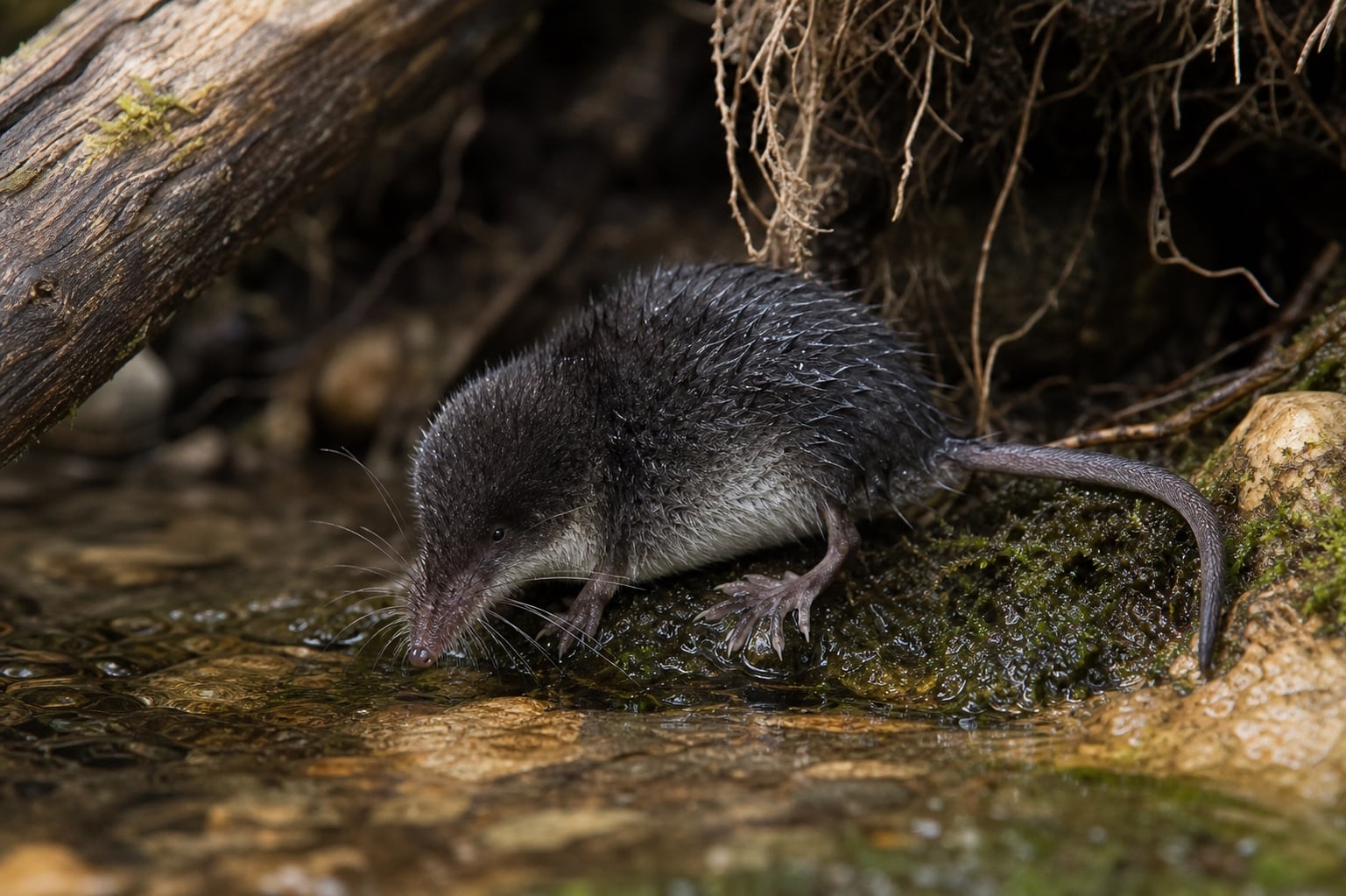
Eastern water shrews are dark above, paler below, and longer-tailed than many shrews. Their most unusual feature is underfoot. Stiff hairs fringe the broad hind feet and help spread each step against the water. Air trapped in the fur also adds lift.
That equipment lets a shrew swim strongly and make brief dashes across the surface. It can dive among stones and submerged roots, where it searches for insect larvae, small crustaceans, worms, and other animal prey. It must feed often because a shrew’s small body loses heat quickly.
Where clear water meets cover
The species is tied to cool streams, springs, and the wet edges of northern forests. Overhanging banks, mossy rocks, logs, and root tangles create hiding places beside the water. Clean, well-oxygenated streams also support the small creatures it eats.
Records are thin and uneven. A water shrew may remain hidden under a bank, move mostly in dim light, and leave little sign that a casual observer will notice. Few reports don’t necessarily mean few animals, and a blank area on a record map isn’t proof of absence.
A fast life in a narrow corridor
Water shrews travel along the same narrow strips used by fish, salamanders, mink, and stream insects. They can hunt in water but still need dry shelter for resting and nesting. Floods may rearrange banks and woody cover, while drought can break a stream into isolated pools.
Young are born in a concealed nest and grow quickly. Predators include owls, snakes, fish, and small meat-eating mammals. Speed, cover, and the ability to switch between land and water are the shrew’s main defenses.
Why stream condition matters
Because the eastern water shrew depends on both aquatic prey and sheltered banks, changes on land can reach it through the water. Heavy sediment can fill spaces between stones. Loss of shade can warm a stream, and channel work can remove the root tangles and undercut banks it uses.
Protecting wooded headwaters and natural stream edges benefits far more than one hard-to-see mammal. Continued surveys also matter. The species has undergone taxonomic changes, so older records may sit under a broader water-shrew name and shouldn’t be compared casually with newer reports.




