
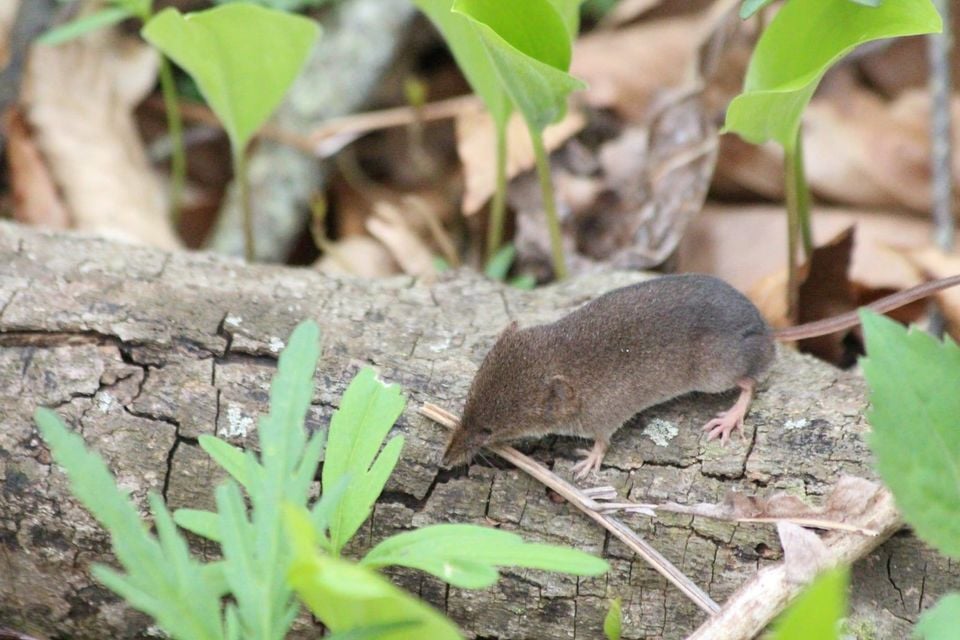
Pribilof Island Shrew

Sorex pribilofensis

Also known as: Priilof Island Shrew

ENEndangered
Range through the year

Where Pribilof Island Shrew is seen

Pribilof Island Shrew is recorded in 1 US state from 53 occurrence records, most heavily in Alaska (53 records).

Current range53 records · 1 states
AlabamaArizonaArkansasCaliforniaColoradoConnecticutDelawareDistrict of ColumbiaFloridaGeorgiaIdahoIllinoisIndianaIowaKansasKentuckyLouisianaMaineMarylandMassachusettsMichiganMinnesotaMississippiMissouriMontanaNebraskaNevadaNew HampshireNew JerseyNew MexicoNew YorkNorth CarolinaNorth DakotaOhioOklahomaOregonPennsylvaniaRhode IslandSouth CarolinaSouth DakotaTennesseeTexasUtahVermontVirginiaWashingtonWest VirginiaWisconsinWyomingAlaska · 53 records · view state pageAKHawaiiHIPuerto RicoPR
Occurrence data by state and month
Pribilof Island Shrew – occurrence records by US state and month (53 total across 1 states)
StateJanFebMarAprMayJunJulAugSepOctNovDecYear
Alaska··1··1213791153

Based on 142 georeferenced US records. Shading is observation density (where people record sightings), not true abundance. Alaska, Hawaii & Puerto Rico shown as insets.

Explore by state

Pribilof Island Shrew across 1 state

Occurrence records, conservation status, and the places it turns up, state by state. Open a state for detail, or visit its full page.

IUCN Red List status

  1. LC
  2. NT
  3. VU
  4. EN
  5. CR
  6. EW
  7. EX

EN – Endangered

Very high risk of extinction in the wild.

SizePribilof Island Shrew beside a 1.8 m adult, drawn to scale
Created by potrace 1.16, written by Peter Selinger 2001-2019 Created by potrace 1.16, written by Peter Selinger 2001-2019
Body length
9–10 cm4 in–4 in
Weight
4–5 g0.1–0.2 oz

Silhouettes drawn to scale against a 1.8 m5 ft 11 in adult.

Elevation

From 170 georeferenced records, the Pribilof Island Shrew is recorded from sea levelsea level to 88 m289 ft, with half of sightings below 12 m39 ft.

Each band shows the share of georeferenced sightings that fall within it. Records cluster where people live and hike, so low, populated elevations are over-represented. Read this as observation density, not true abundance.

Observation peakOctober4 recordsBased on a small number of dated records; the seasonal pattern may not be representative.

Seasonality from research-grade observation dates across the US (4 records, all years). Reflects when the species is recorded, not a guarantee of presence.

Best encounter

Where and when to see a Pribilof Island Shrew

Your best chance: Alaska, in October.

Where
AlaskaAK
When
October

Life history

The Pribilof Island Shrew (4–5 g0.1–0.2 oz) is a carnivore.

Diet composition

Carnivore

By foraging composition: 70% invertebrates, 30% scavenged.

  • Invertebrates70%
  • Scavenged30%

Most active around the clock.

Typical values for the species, not local measurements.

Commonly confused with

Animals people sometimes mistake for the pribilof island shrew, and how to tell them apart.

A shrew that exists nowhere else on Earth

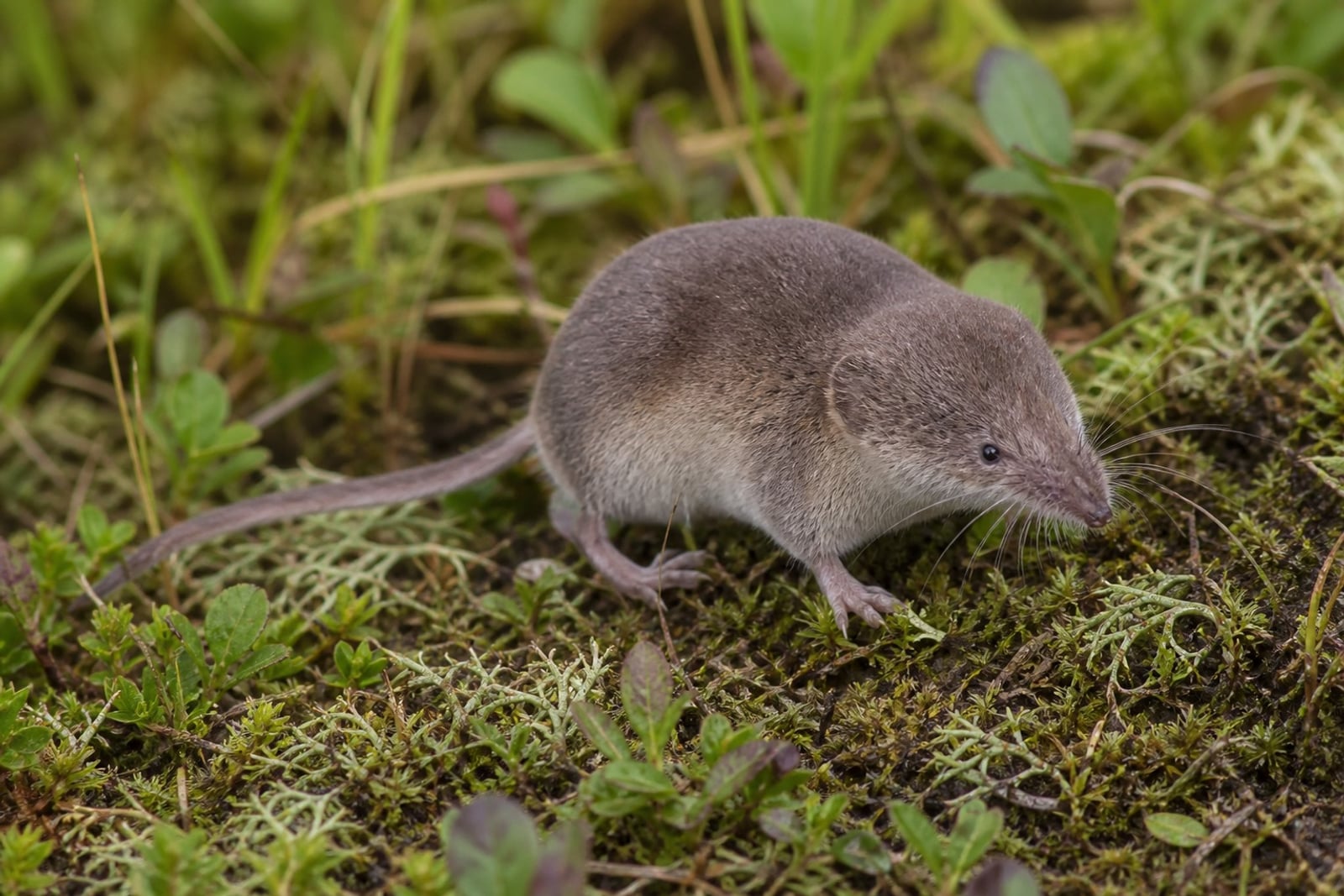
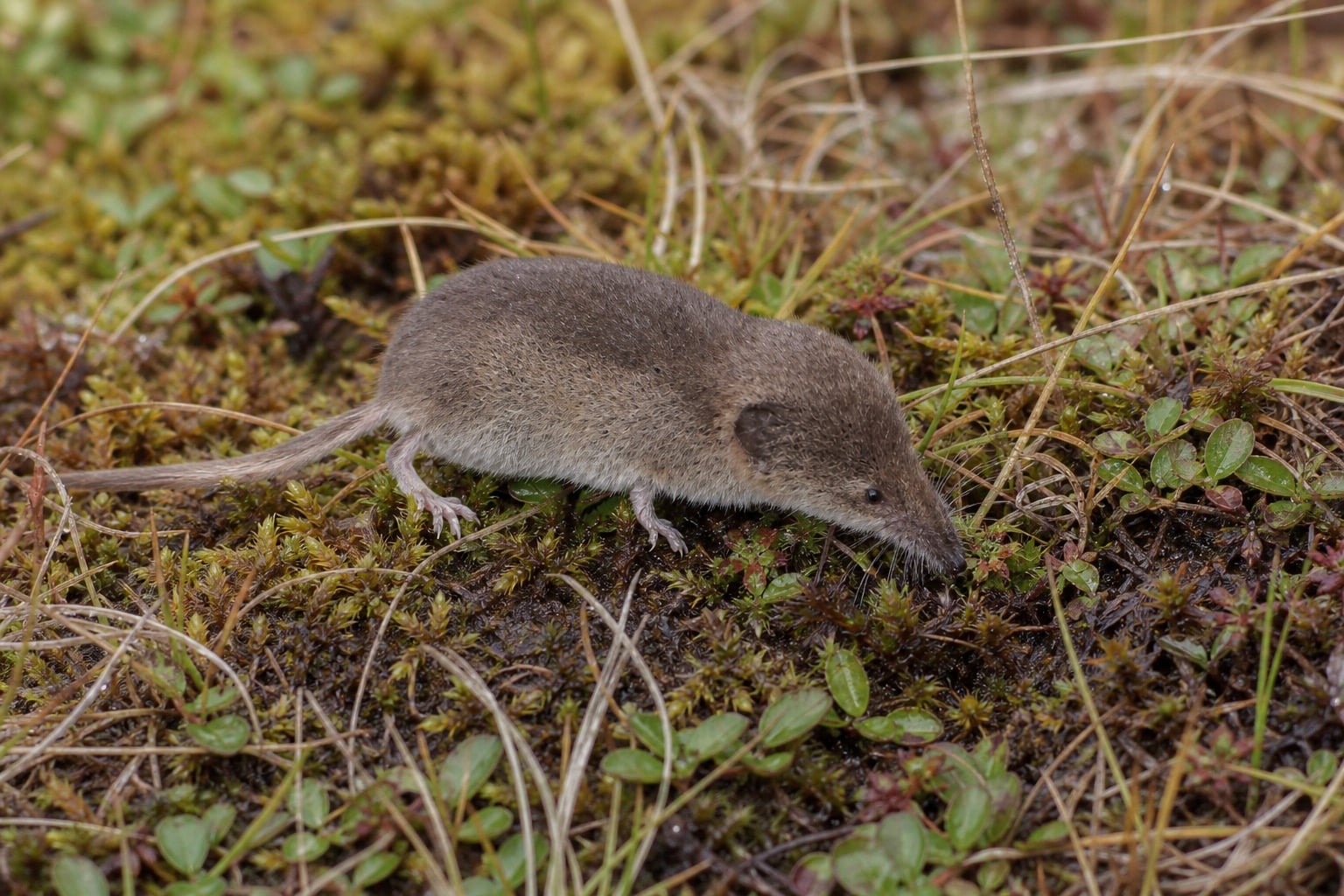
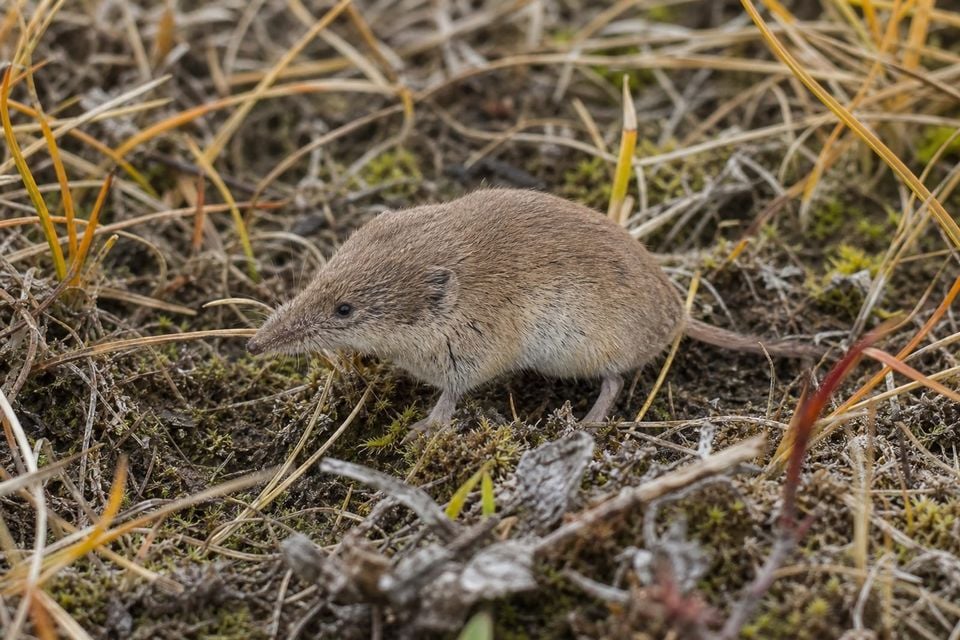
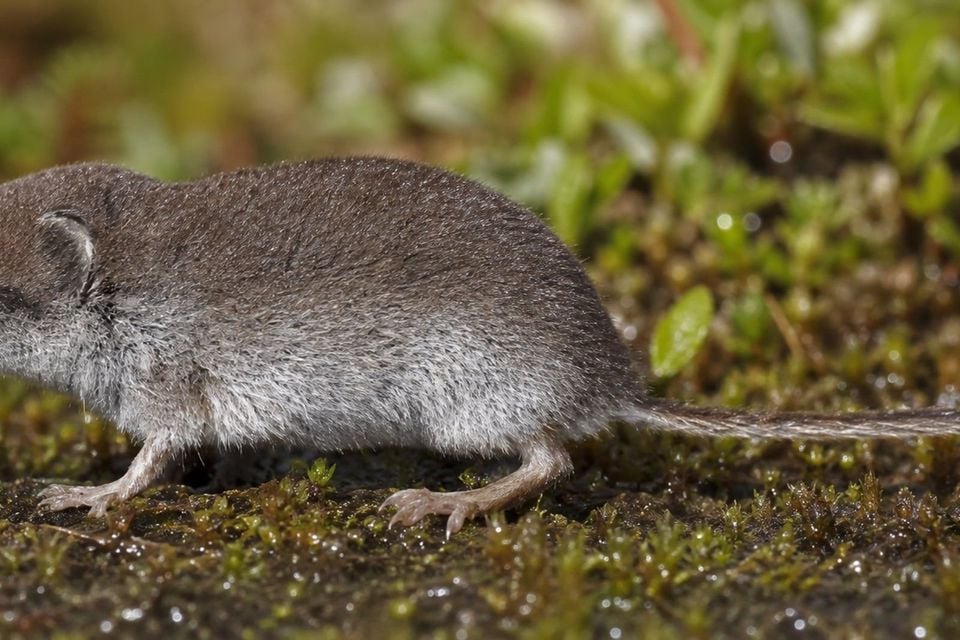
The Pribilof Island shrew lives up to its name in the strictest possible sense. It’s found only on Alaska’s Pribilof Islands, a small, remote group in the middle of the Bering Sea, hundreds of miles from the nearest mainland shrew population. That total isolation is exactly why the IUCN lists it as Endangered rather than the Least Concern status most Sorex shrews carry. A species confined to one small island group has nowhere to retreat if conditions turn against it there. It’s larger than many mainland shrews, too, running close to 3.75 inches nose to tail. That size may reflect the usual island tendency for small mammals to grow a bit bigger once mainland competitors and predators drop out of the picture.

Life at the edge of the Bering Sea

Every documented record of this shrew comes from the Pribilofs themselves. Nearly all detections sit under 165 feet in elevation, with the rest barely climbing past 330, confirming just how low-lying that home is. These are wind-scoured, treeless islands shaped by the sea on every side. The shrew makes its living in tundra vegetation, damp meadow, and the vegetated margins near the coast, not in any kind of forest. Reports concentrate heavily in September, with a smaller pulse in October. That pattern likely reflects seasonal fieldwork on the islands as much as anything about the shrew’s own year-round activity.

An opportunist on a treeless island

Diet leans on invertebrates, with scavenged carrion filling out the rest, the same flexible strategy every Sorex shrew relies on to survive a demanding metabolism. Activity records show it moving at all hours rather than favoring day or night. That fits a small mammal that has to keep feeding constantly regardless of the clock. This shrew has no tree cover, deep leaf litter, or dense understory to hide in, unlike its mainland relatives. It depends instead on tundra vegetation and whatever ground cover the islands offer, staying hidden from predatory birds working the same open landscape.

Why an endangered status matters here

Being endemic to a single small island group is precisely what makes a species vulnerable, regardless of how stable its population looks today. An introduced predator, a disease outbreak, or a shift in the islands’ vegetation could affect the entire species at once. There’s no second population elsewhere to buffer the loss. Documented records remain few, a function of how small and remote the Pribilofs are as much as how rare the shrew truly is there. That scarcity of data is itself part of the conservation picture. A species this narrowly confined needs careful, continued monitoring, precisely because so little land stands between it and real risk.


Data & sources

The data and visualizations on this page draw on these open sources:

  • GBIFCC-BY 4.0occurrence records behind the range map, elevation, and record counts
  • iNaturalistCC0 / CC-BY / CC-BY-SAobservations, photos, and audio recordings
  • PhyloPicCC0 / CC-BY per itemthe to-scale silhouettesBecky Barnes (Sorex) · Andrew A. Farke (human silhouette, CC-BY 3.0)
  • AnAge (HAGR)CC-BY 3.0longevity, maturity, and gestation figures
  • IUCN Red Listattributed factthe global conservation status
  • Amniote Life-History DatabaseCC0 · public domainreproduction figures
  • EltonTraitsCC0 · public domaindiet and foraging-activity data


