
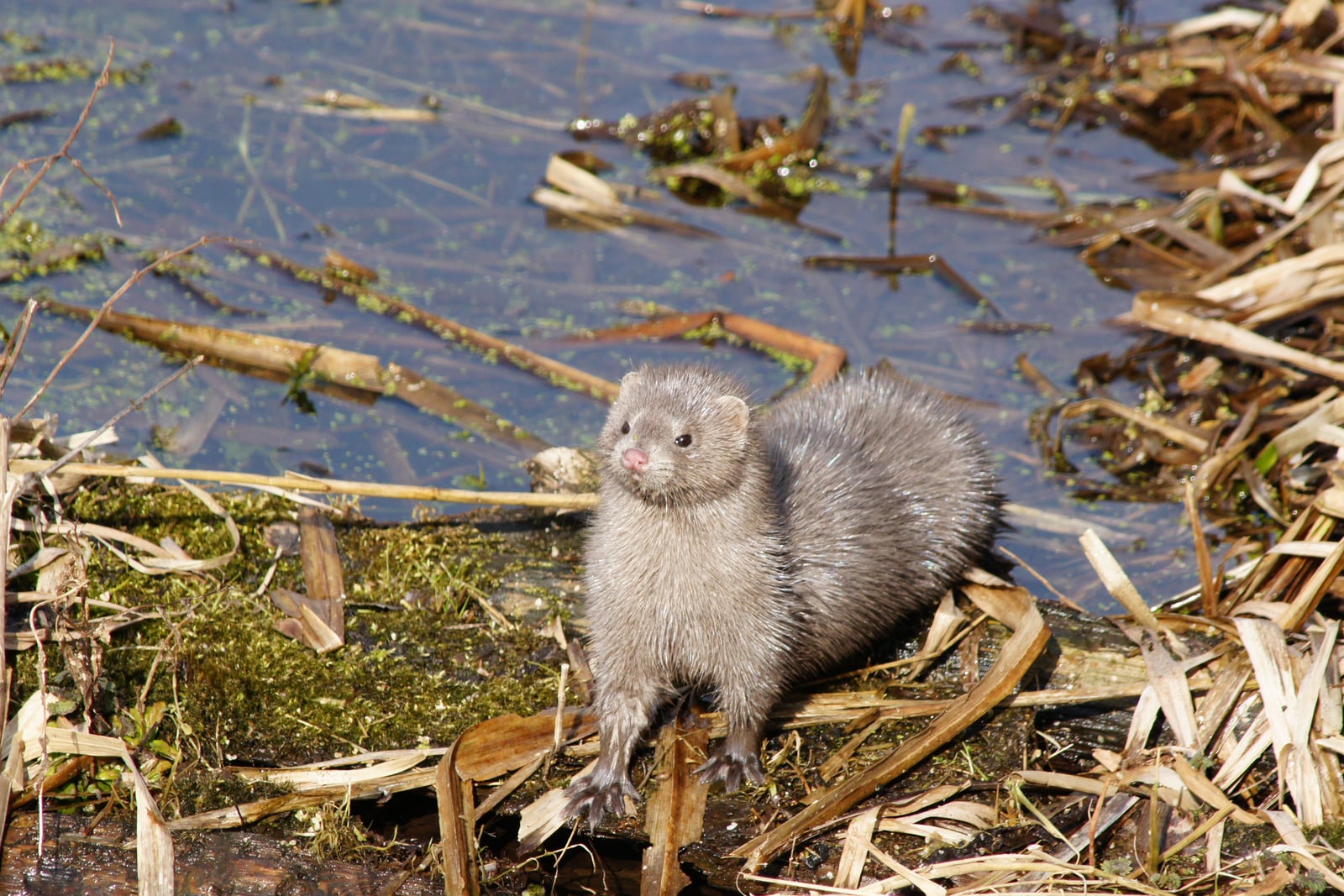
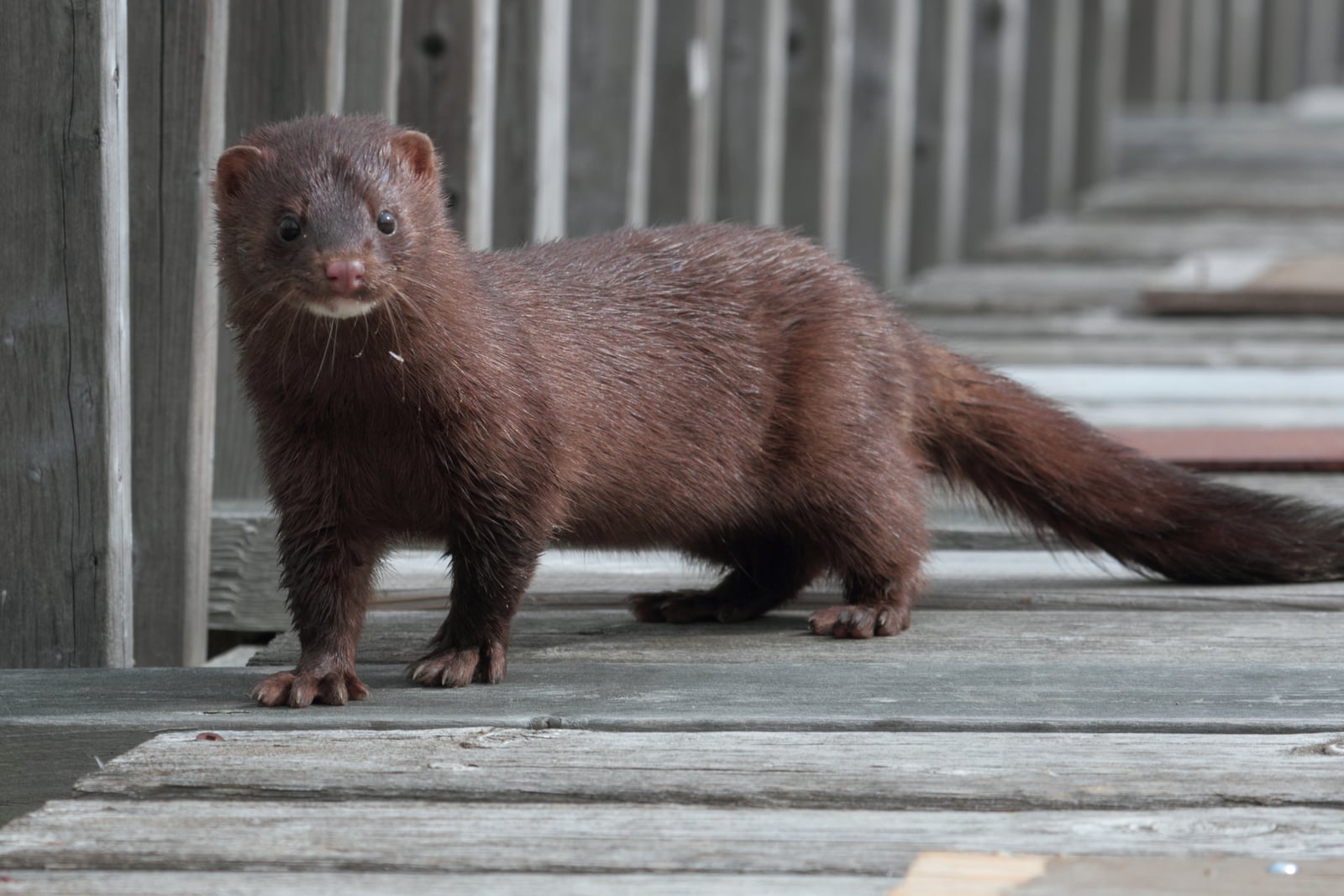
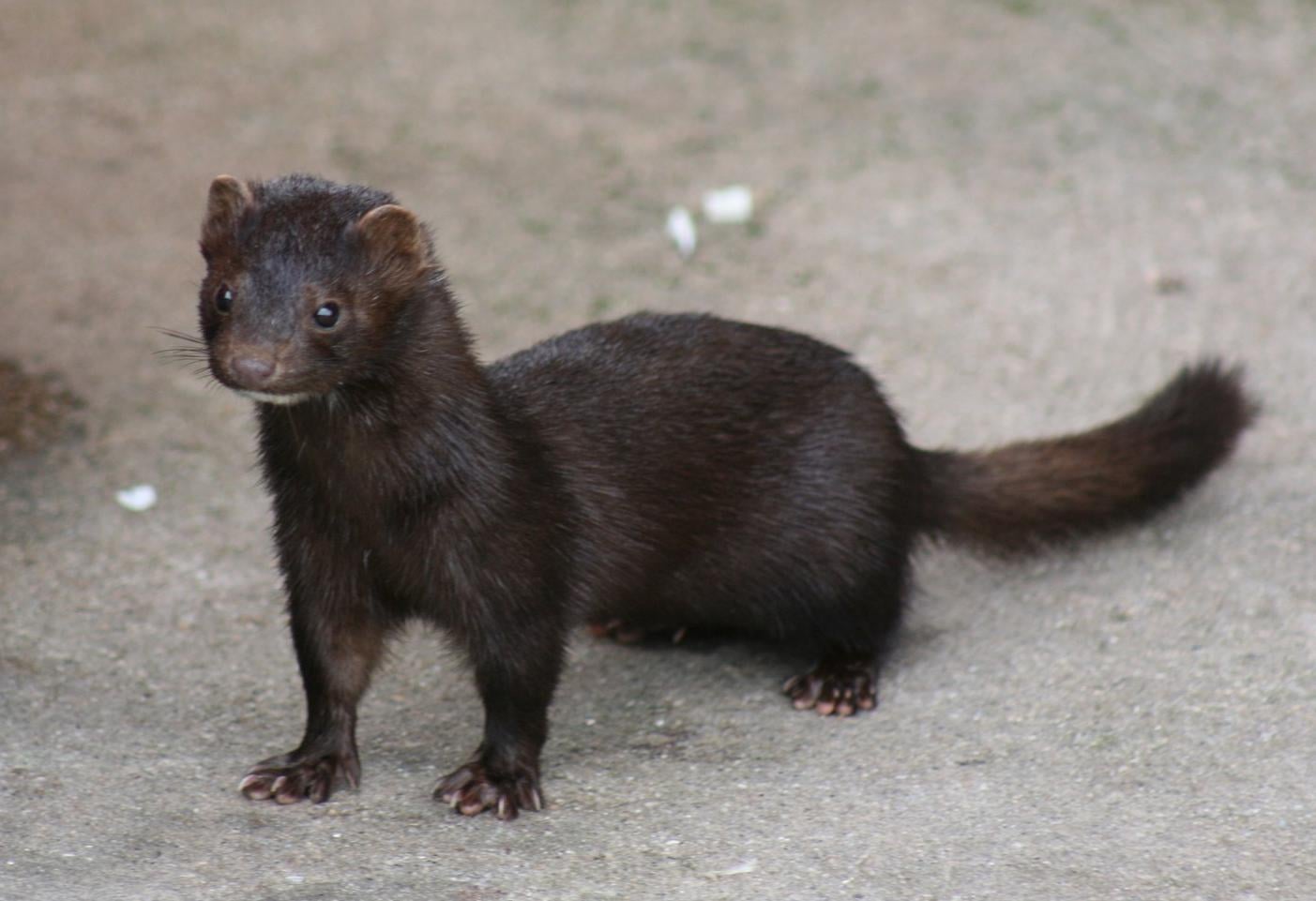
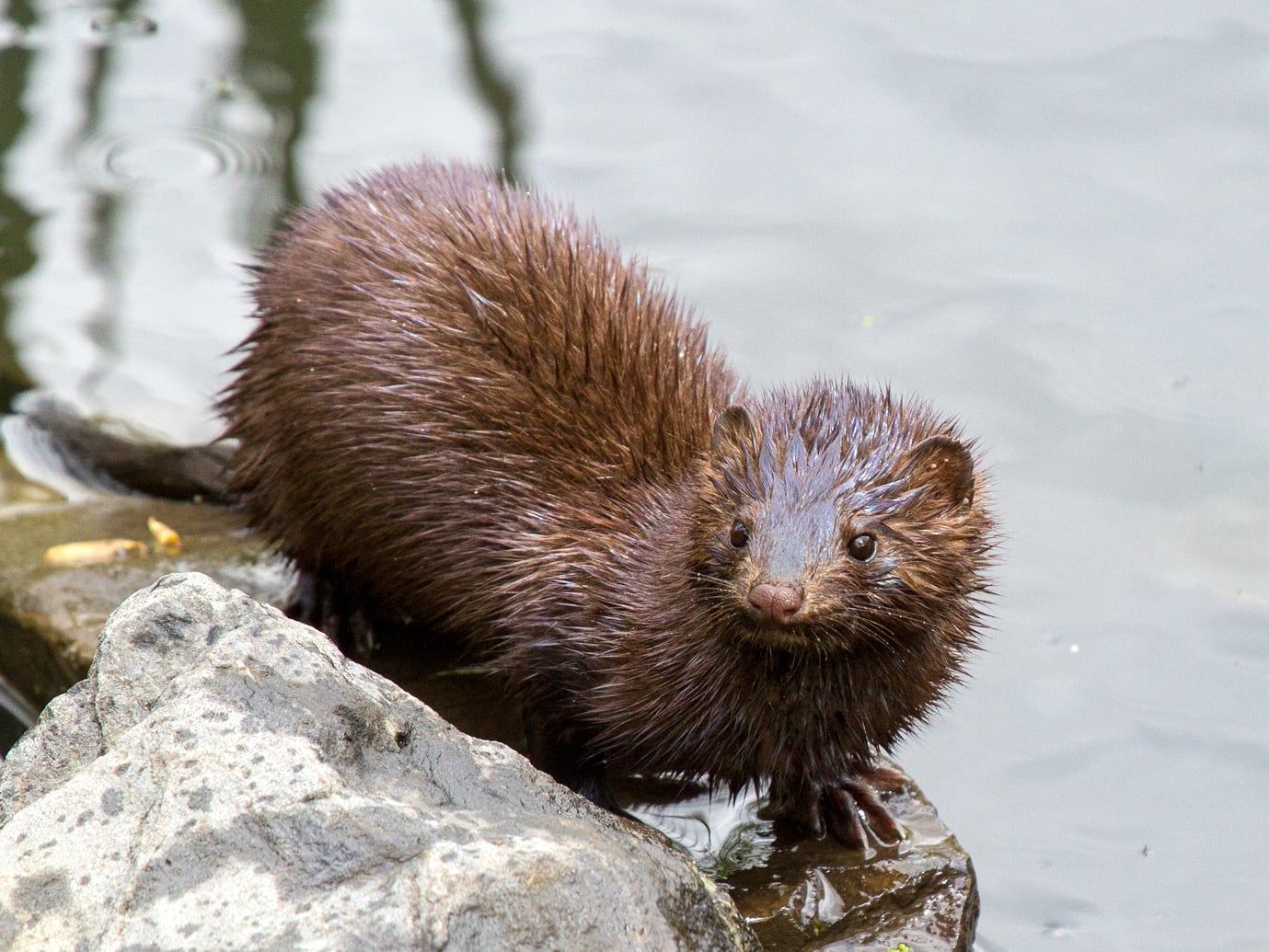
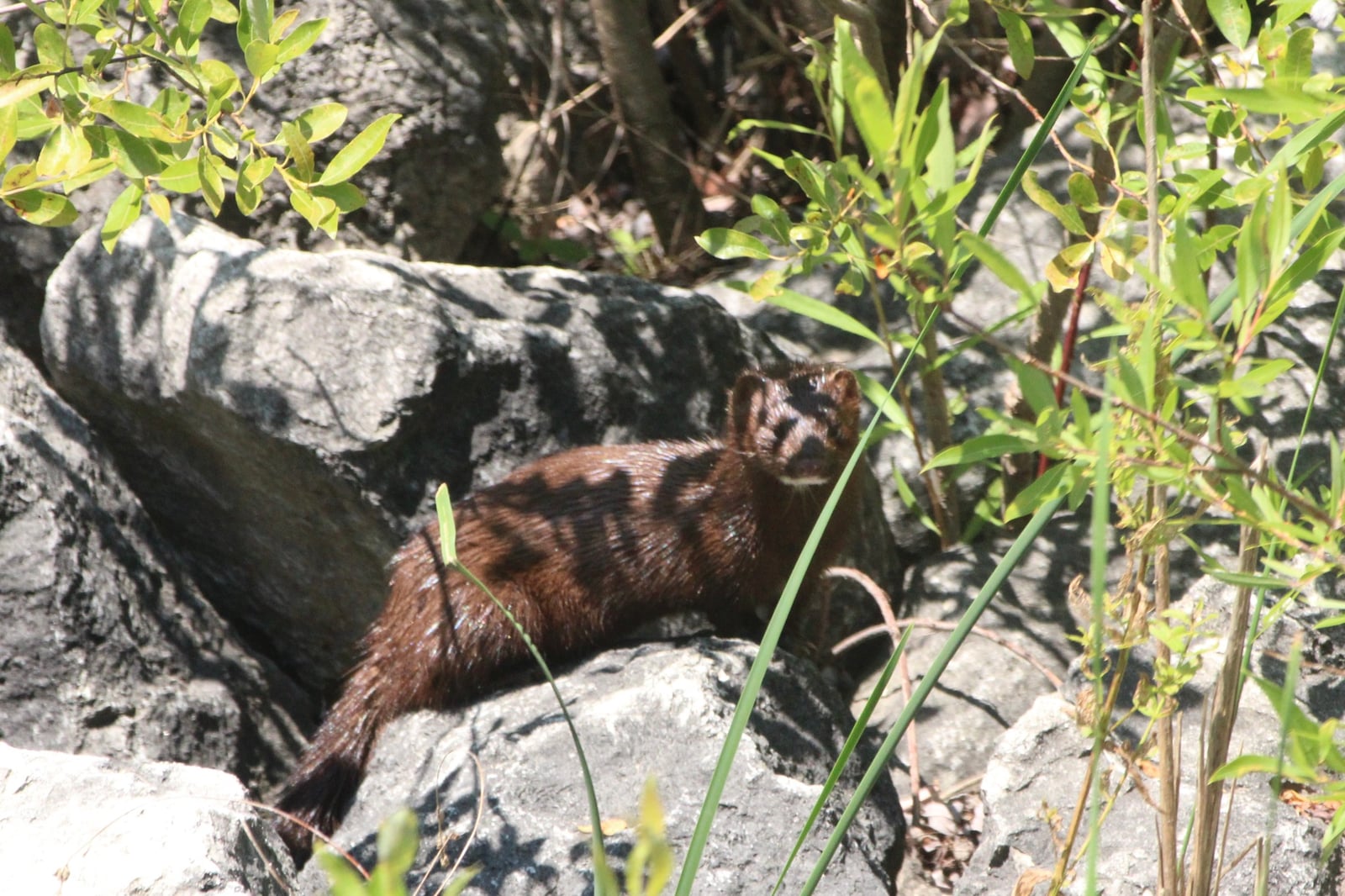
Ohio’s mink records gather most thickly along the Cuyahoga River. Cuyahoga Valley National Park, the green corridor between Cleveland and Akron, holds 39 of them, more than any other named site, and Summit County leads the state with 120 records while Cuyahoga County follows with 79. Slow water, wooded banks, marshes, and the old canal towpath give a mink plenty of edge to hunt, and the same trails put a steady stream of walkers within sight of it.
A second cluster runs along the western Lake Erie shore. Metzger Marsh Wildlife Area and Sheldon Marsh sit among the coastal wetlands of Lucas, Ottawa, and Erie counties, where cattail edges and diked pools hold fish, frogs, and muskrats. Inland, Coshocton County’s 41 records and a handful from Wayne National Forest in the hilly southeast show the animal following rivers far from the lake.
Reports build through late winter to an April high of 104, stay near 99 a month into June, then drop to roughly a third of that from September through December. That curve tracks when Ohioans are out on trails as much as what mink are doing. Nearly all 810 records are iNaturalist photos, with only a handful from other collections. NatureServe hasn’t assigned the mink a state rank in Ohio, where it’s a native predator recorded across much of the state.
 Full species profile




