
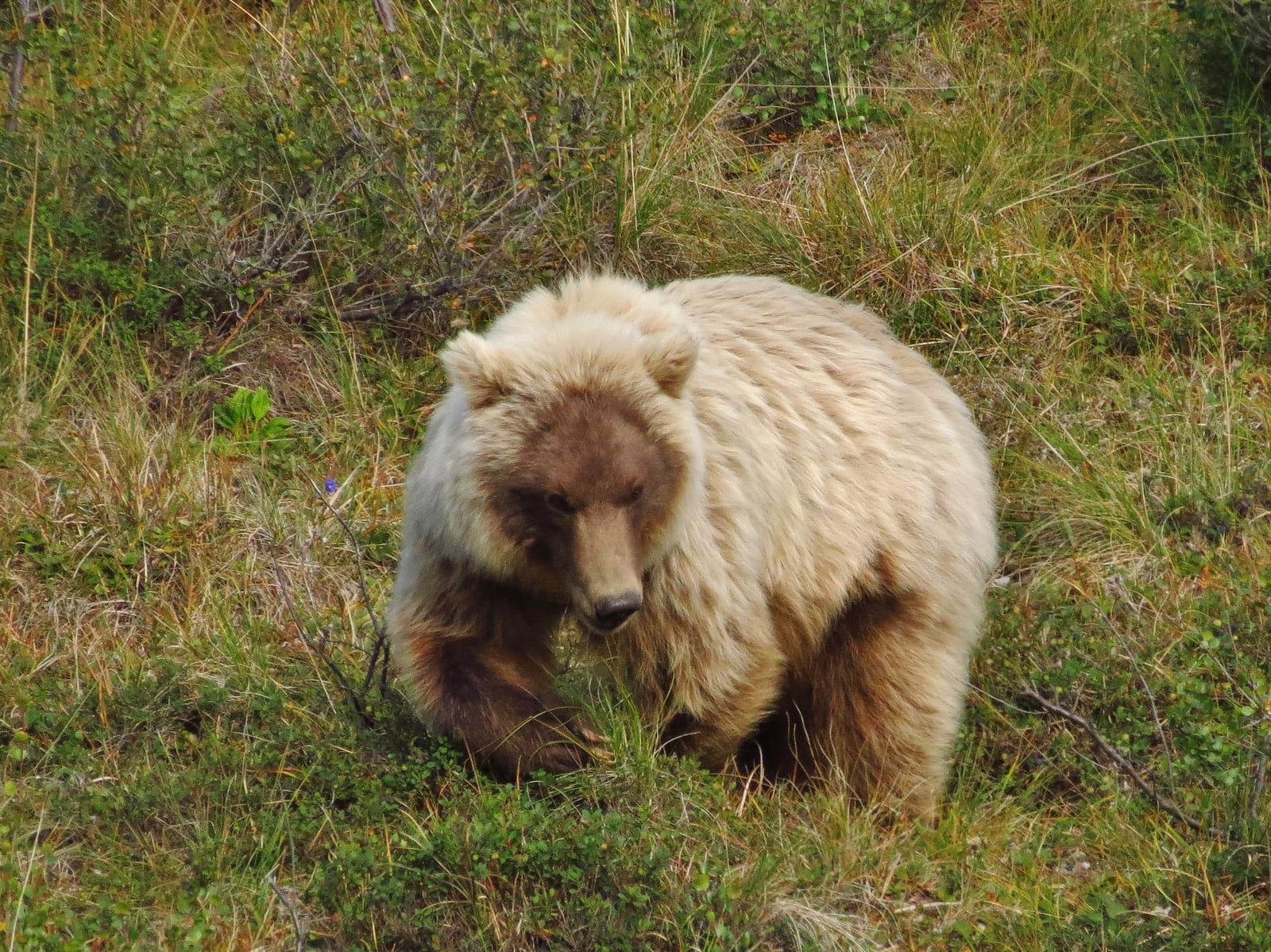
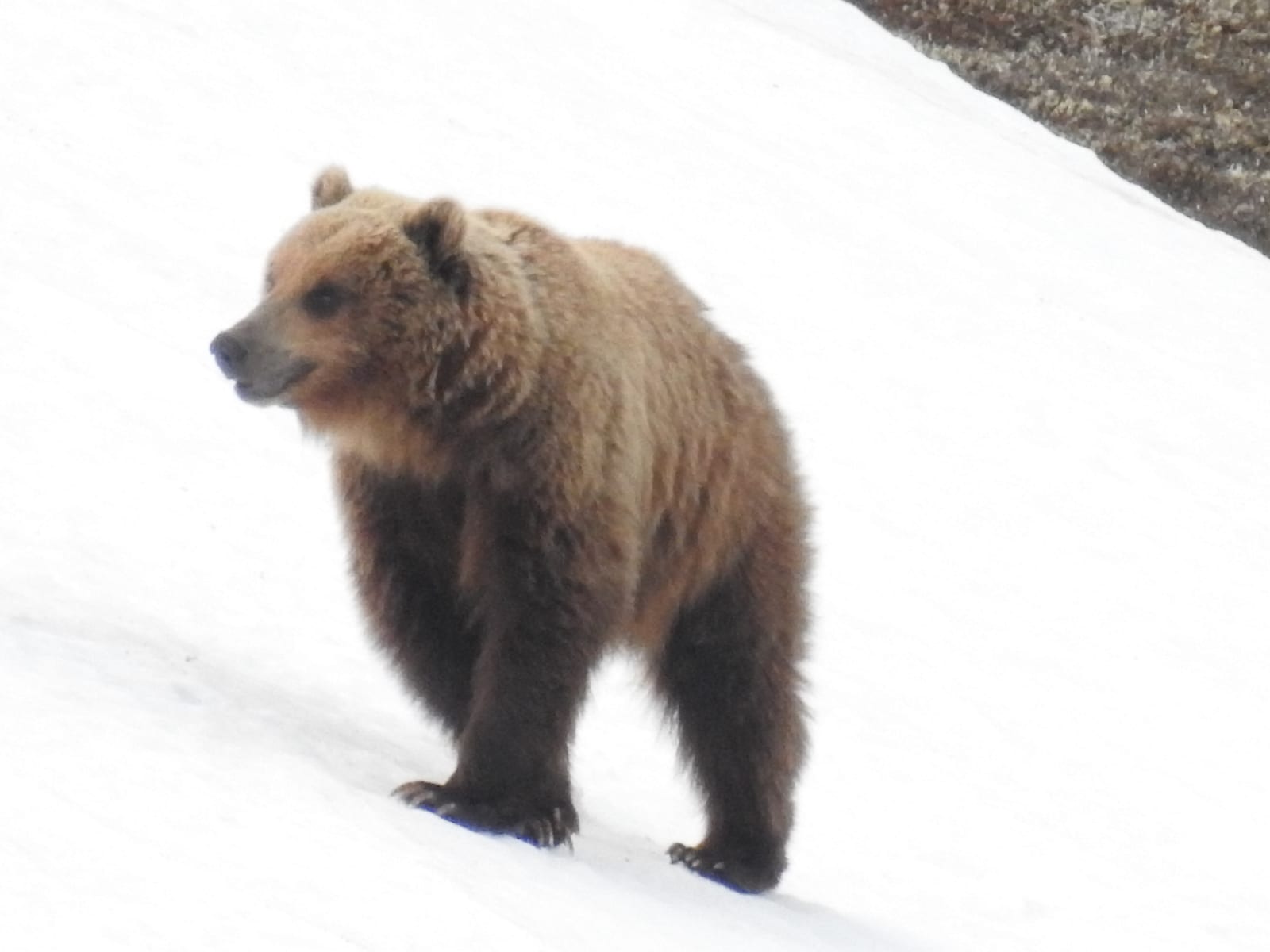
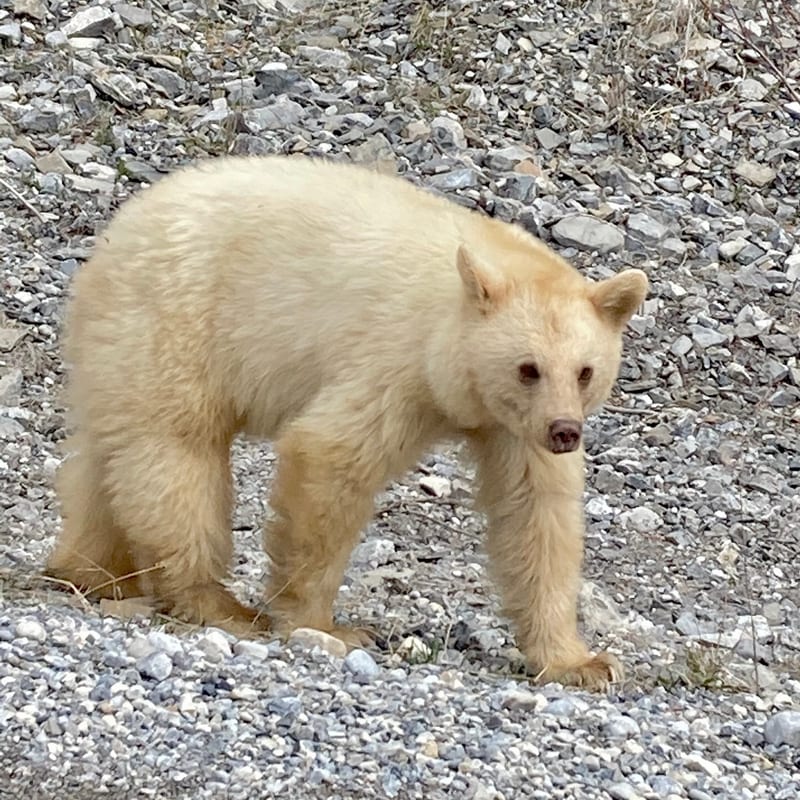
Grizzly, brown bear, same animal
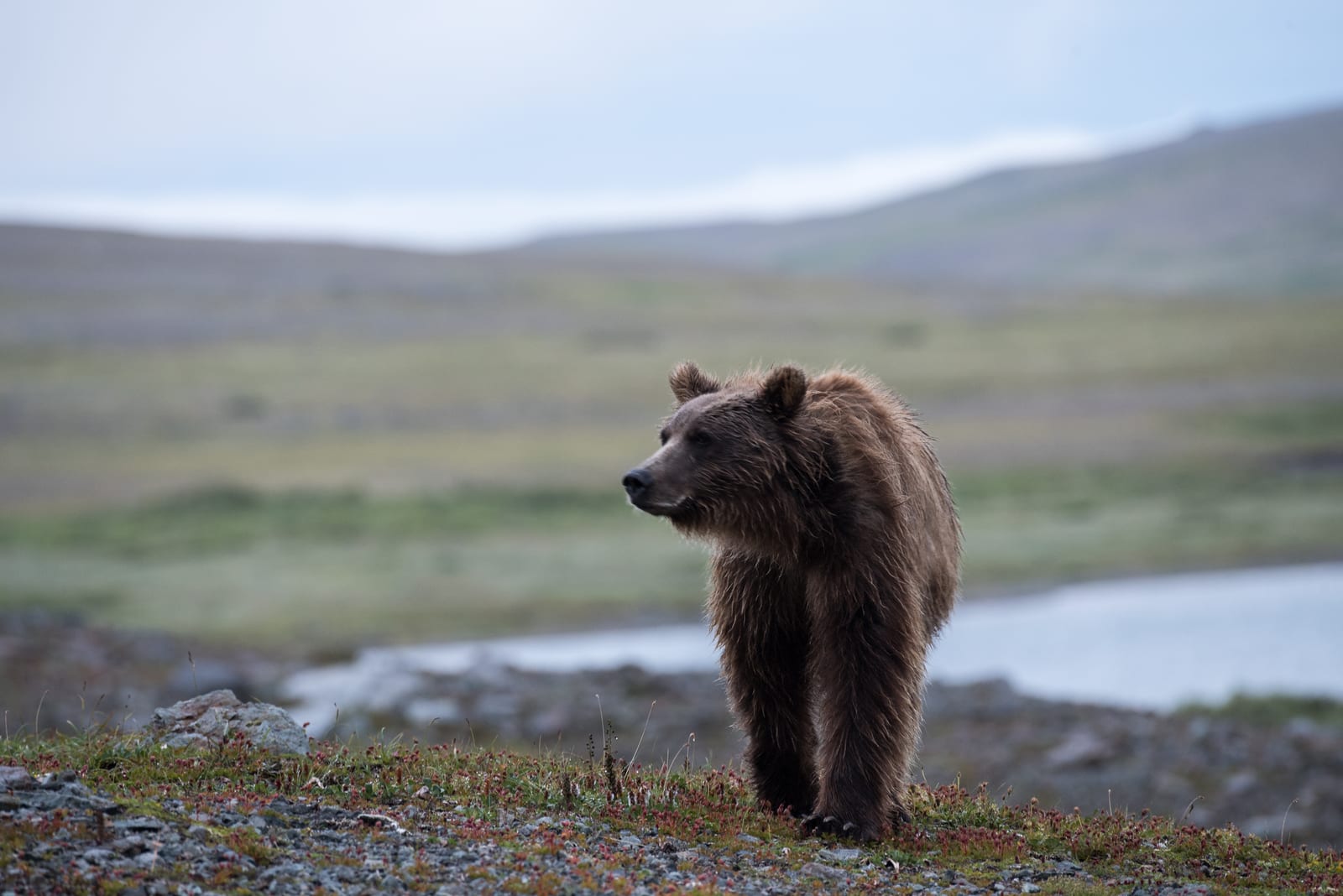
“Grizzly” and “brown bear” describe one species, not two. The name split by geography and habit more than biology. Early naturalists called the pale-tipped bears of the northern Rockies and interior Alaska grizzlies, for the silvery, or grizzled, sheen their guard hairs take on in certain light. Coastal Alaska bears, fed well enough to grow much larger and darker, kept the plain name brown bear. Genetic studies since have found the two labels don’t line up cleanly with any real split in ancestry. Interior and coastal populations blur into each other. A handful of old subspecies names, including the Kodiak bear and the Alaska Peninsula’s giants, describe geography and body size more than distinct lineages.
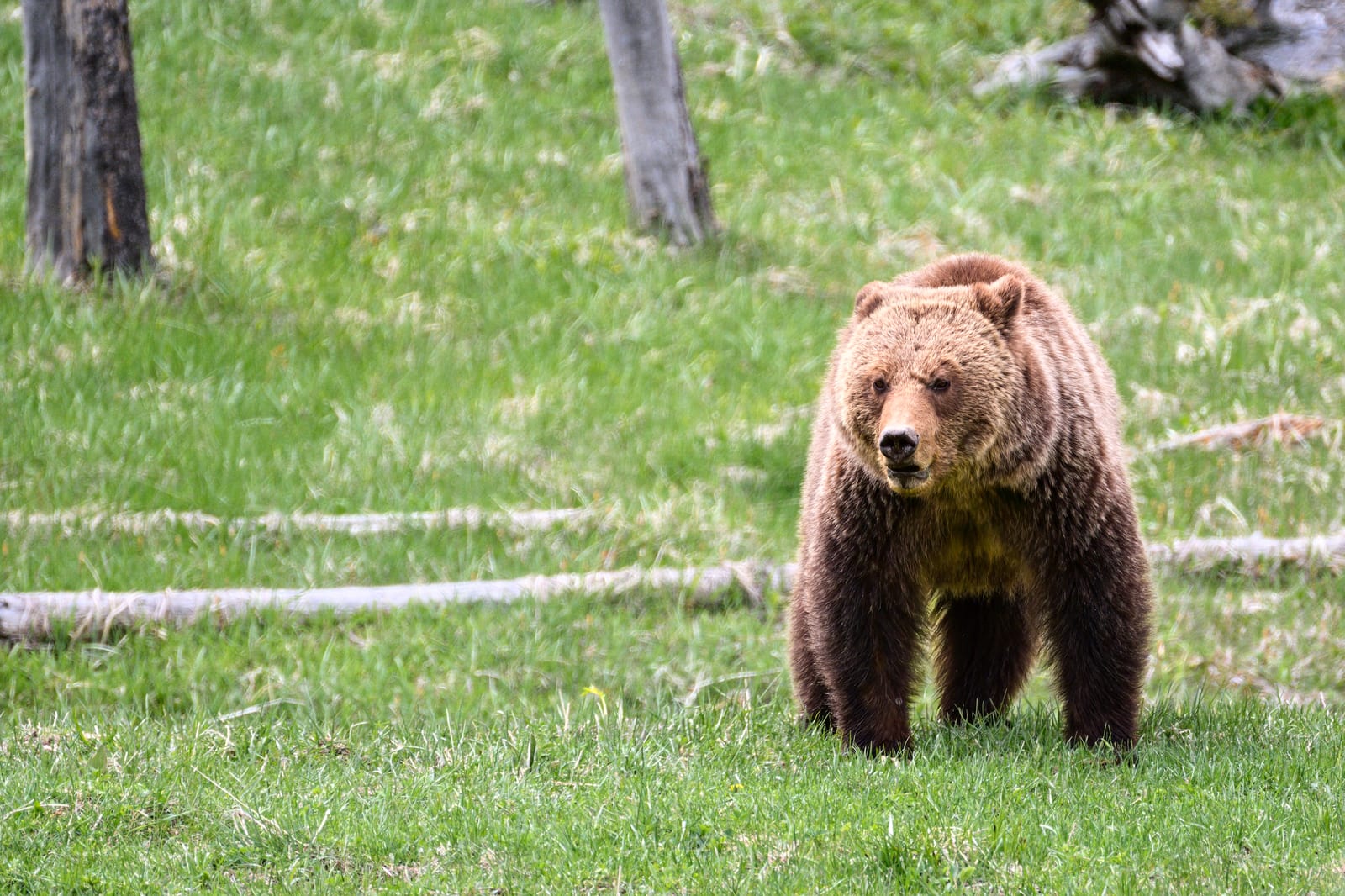
Telling one from a black bear matters more in the field than telling a grizzly from a coastal brown bear. Look for the shoulder hump of solid muscle built for digging, a face that dishes in sharply between the eyes and nose, and foreclaws that run long, pale, and only slightly curved. A black bear’s shoulders sit level with or lower than its rump, its profile runs straighter from forehead to nose. Its claws stay short, dark, and sharply curved for climbing. Color is close to useless for this call. Brown bears range from blond to nearly black, and black bears often turn out cinnamon or brown in the West, exactly where the two species overlap.
Coastal giants and lean interior bears
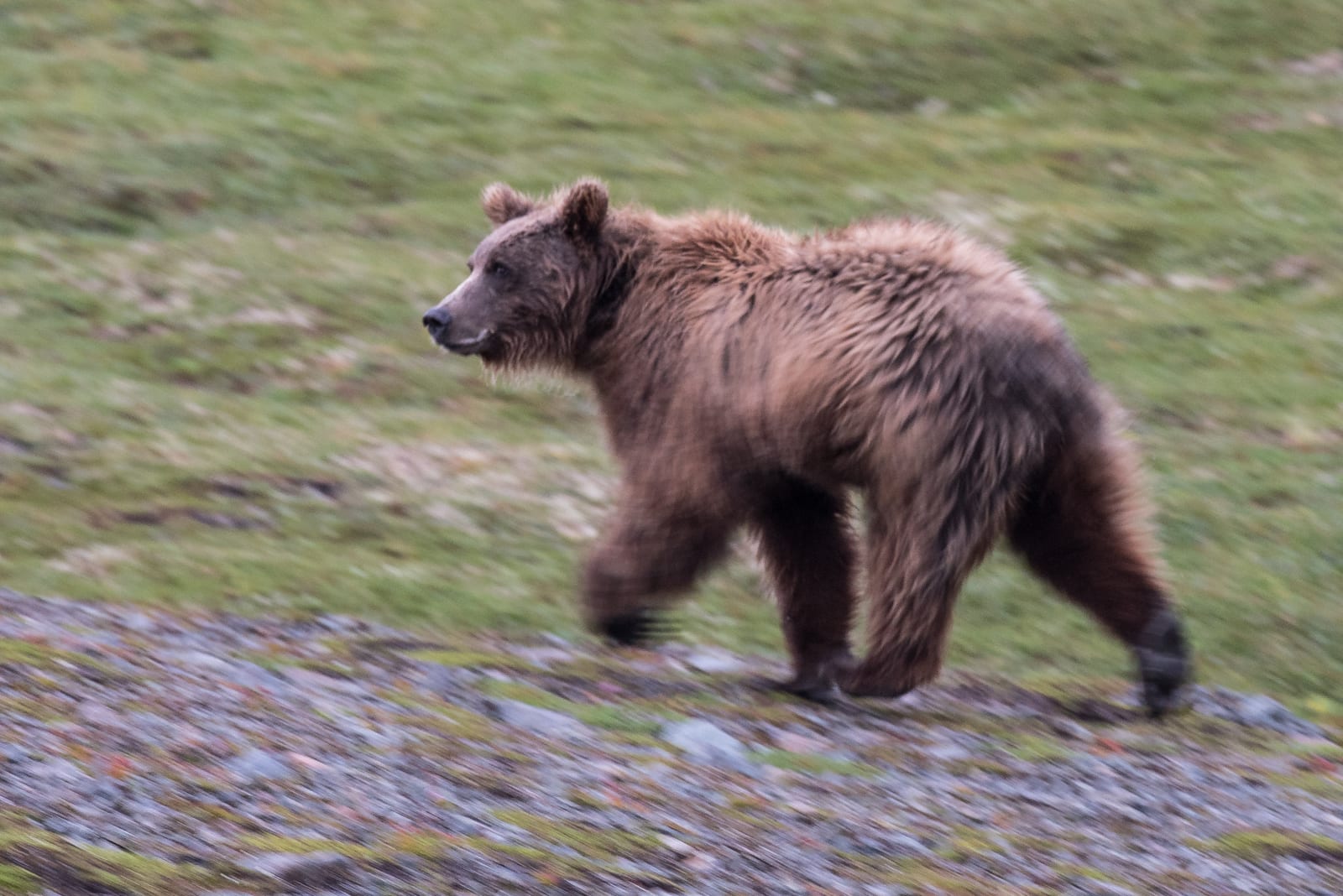
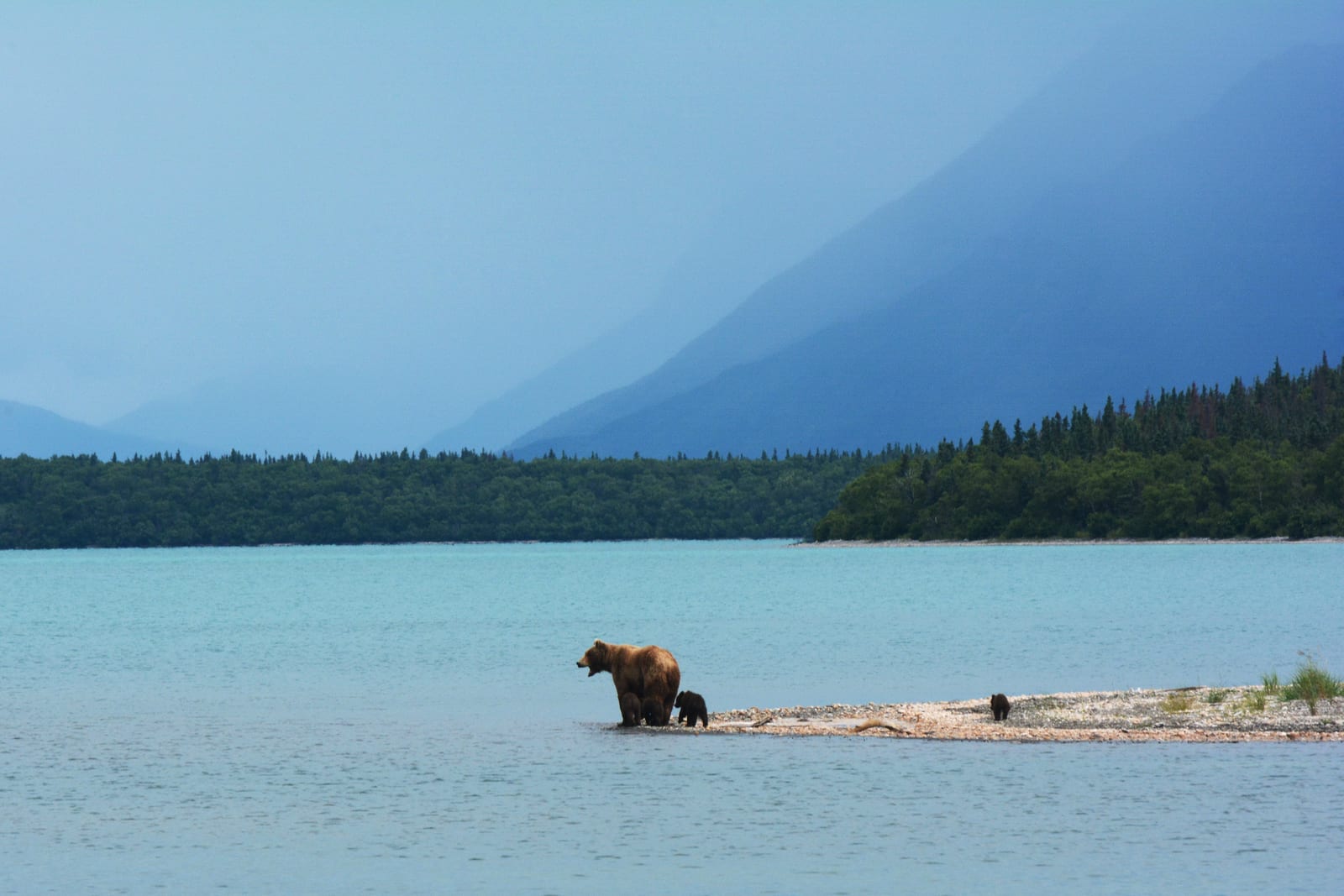
Alaska holds the largest brown bear population in the country by a wide margin. Its bears show what unlimited protein can do to a bear’s frame. Coastal populations around Kodiak Island and the Alaska Peninsula gorge on salmon runs that arrive predictably every summer, and their males can top 1,000 pounds by autumn. Move into interior Alaska, or south to Yellowstone and the Northern Rockies, and the picture changes fast. Interior grizzlies rely on a leaner menu of ungulates, roots, and seasonal berries, and adult males there often weigh half what a well-fed coastal bear does. Washington’s North Cascades tell the extreme version of that story. A population once spread across the range has fallen to a scattering of animals, and federal and state agencies have approved a plan to begin reintroducing bears there to rebuild something closer to a real population.
A salmon run that carries the whole year
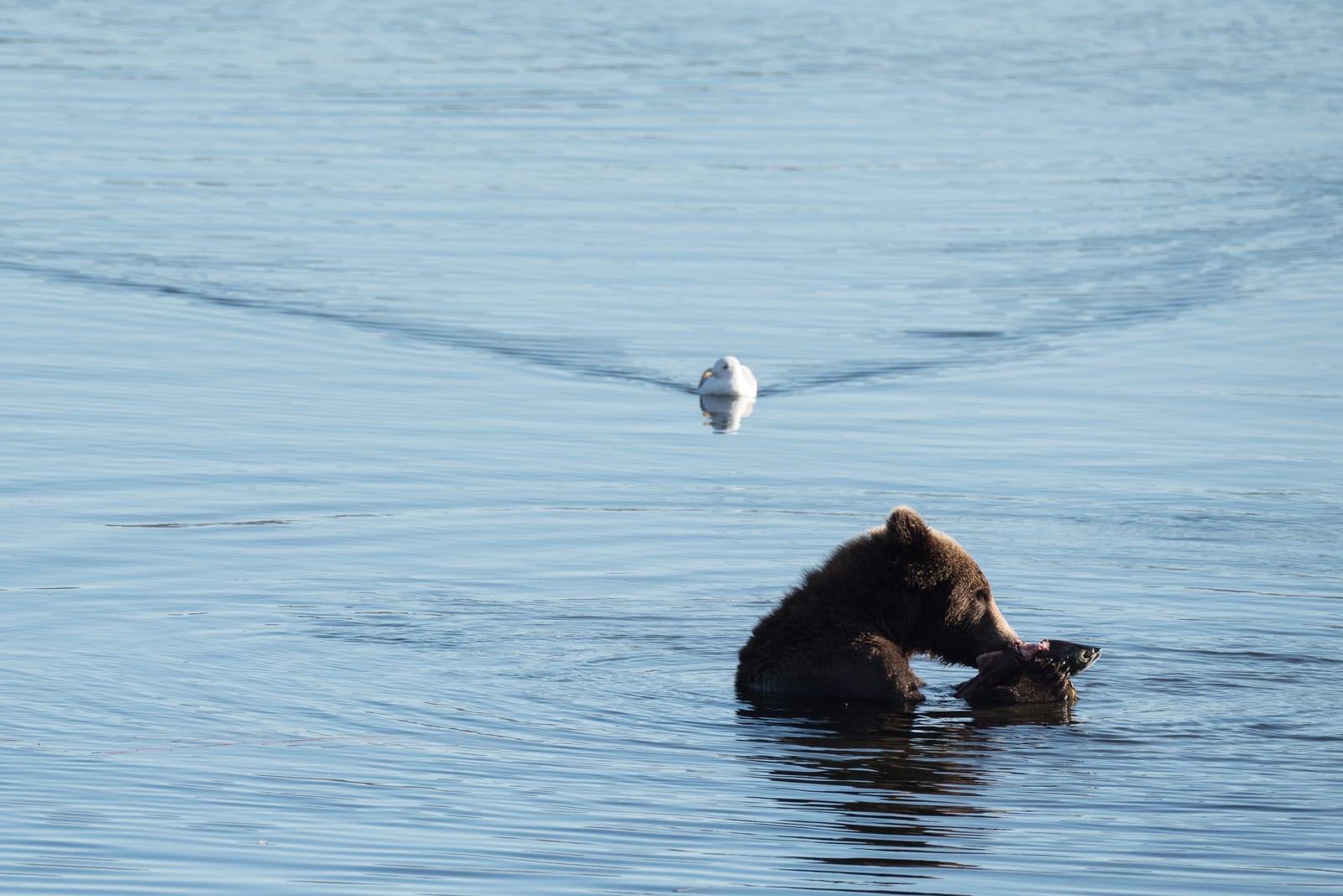
Brown bears are usually cast as fish specialists, but plants make up the bulk of what one actually eats over a year, mostly grasses, sedges, roots, and berries gathered through spring and summer. Salmon change the math where they’re available. A coastal bear timing its year around a sockeye or pink salmon run can take in more digestible protein and fat in a few weeks of fishing than months of grazing would supply. That surplus becomes the fat layer a bear lives on all winter. Where salmon runs are thin or absent, as across most of the Lower 48 range, bears fall back on moose and elk calves, carrion, wild boar, and whatever else the season offers. They simply carry less fat into the den. Wolves and brown bears cross paths more over carcasses than as predator and prey. A wolf pack will contest a bear for a fresh kill. A bear will just as readily push wolves off theirs, but a wolf attacking a healthy adult bear is rare. Unattended cubs are a different story, and mother bears keep cubs close for exactly that reason.
Denning through winter without eating or drinking
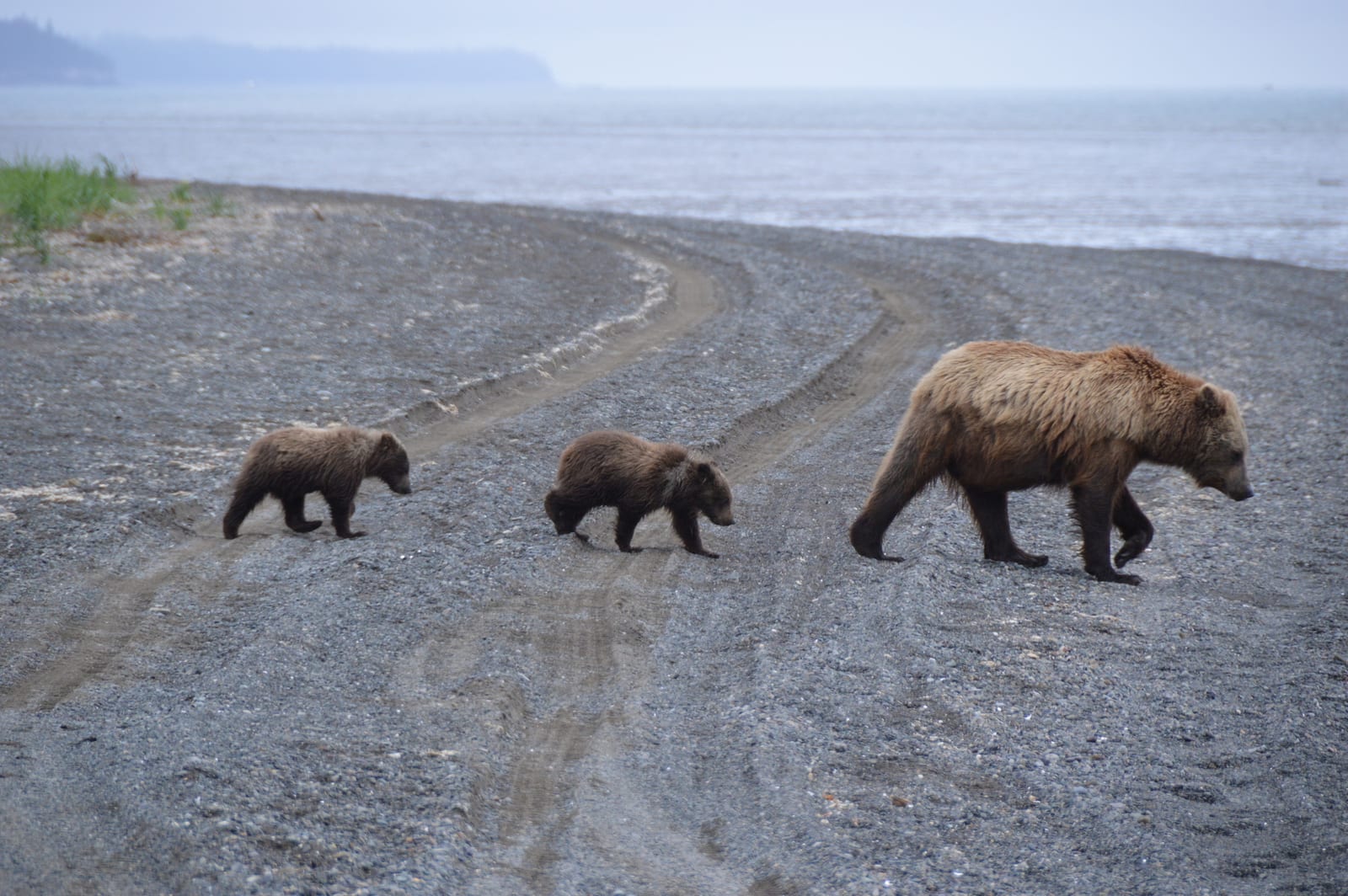
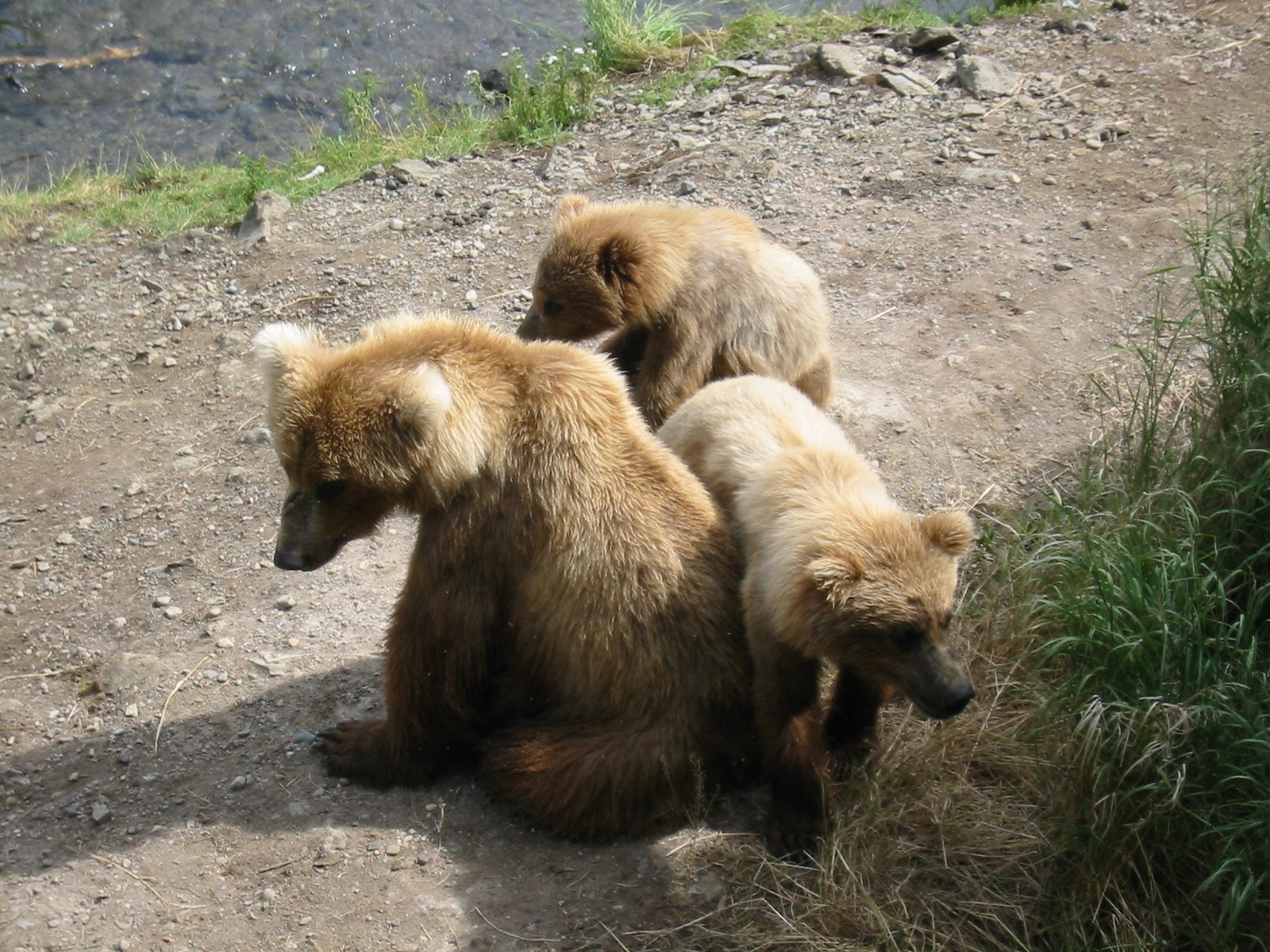
What a brown bear does from roughly October through April isn’t hibernation in the strict biological sense, but it comes close enough to serve the same purpose. Heart rate can drop from around 40 beats a minute to somewhere in the teens, while body temperature falls only a few degrees. The bear goes that whole stretch without eating, drinking, urinating, or defecating. Pregnant females do something even stranger inside the den: implantation of the fertilized embryo is delayed until autumn, and the actual pregnancy compresses into just the weeks before birth. Cubs, usually two or three of them, arrive in the den in midwinter, blind and nearly hairless and weighing barely two pounds each. They nurse through the rest of the den season while their mother’s own metabolism stays suppressed. By the time she leads them out in spring, they’ve already tripled or quadrupled in size on nothing but her stored fat.
From near extermination to a fragile comeback
Brown bears once ranged across most of the American West, into the Great Plains and down into Mexico and California, the animal on that state’s own flag. Trapping, poisoning, and habitat loss through the nineteenth and early twentieth centuries erased them from nearly all of it. South of Canada, the species has carried federal protection as a threatened animal since 1975. The Yellowstone ecosystem is the clearest sign the listing worked: a population reduced to a few hundred animals by the 1970s has rebuilt itself across the mountains of Wyoming and Montana. Alaska’s bears were never in that kind of trouble. The state’s population has stayed large enough that the species carries a Least Concern global listing. Even so, the Lower 48 population remains a conservation project decades in the making.
Sharing ground with people
Brown bears now turn up in habitat that ranges from remote coastal wilderness to the edges of mountain towns, and that overlap is where most conflict starts. A bear that finds food in a dumpster, a cooler, or an unsecured campsite learns the lesson fast and comes back for more. That’s why park and wildlife agencies across bear country require food storage in bear-resistant containers and enforce clean-camp rules rather than leaving it to chance. A food-conditioned bear is a genuinely harder problem to manage than a wild one, since the behavior that gets it in trouble rarely reverses on its own. The bears drawing summer crowds to Katmai’s Brooks Falls, weighed and tracked every autumn during the park’s Fat Bear competition, are the visible, well-managed end of that relationship. The animals still working out how to live near expanding towns in Montana and Wyoming are the harder, ongoing one.




