
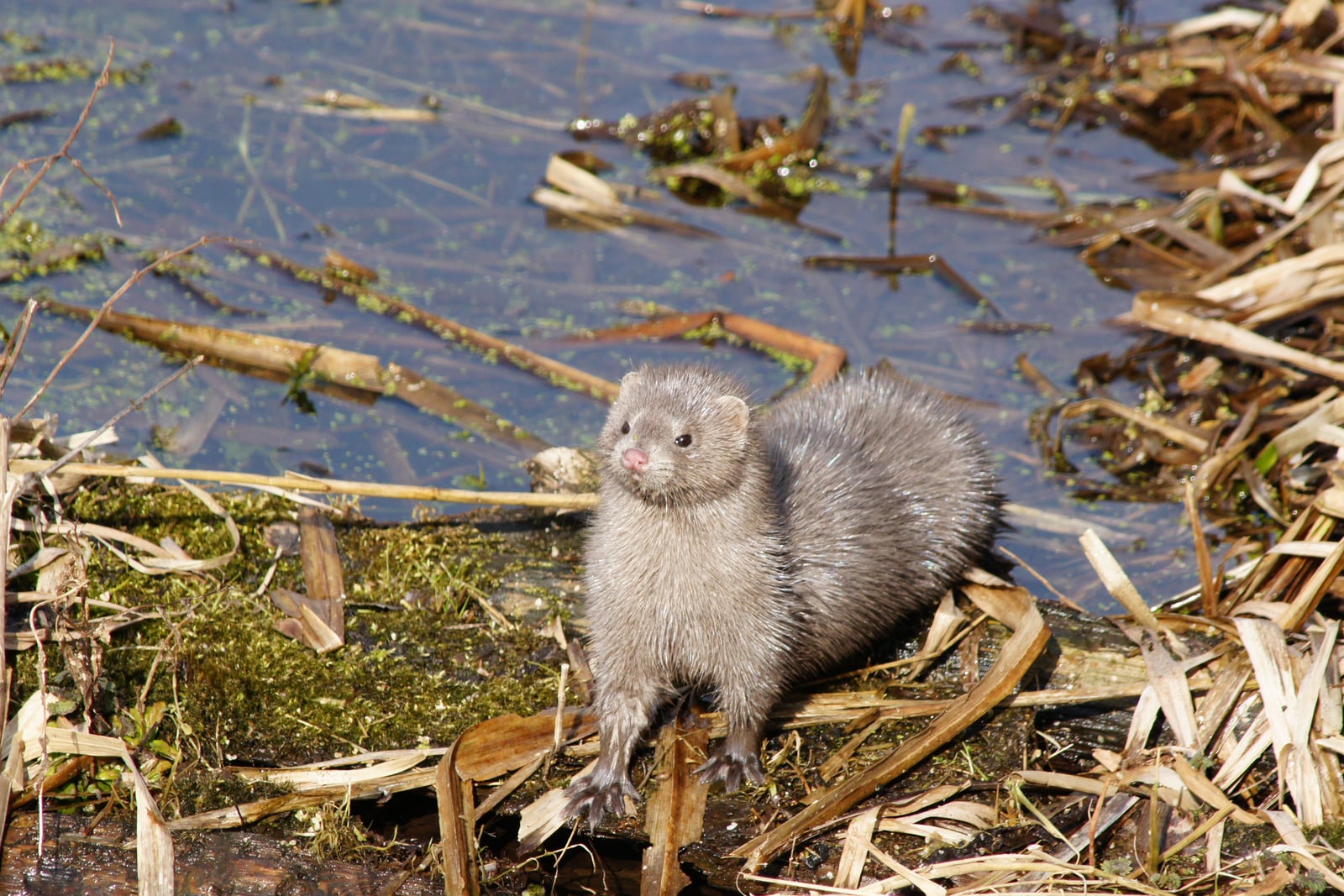
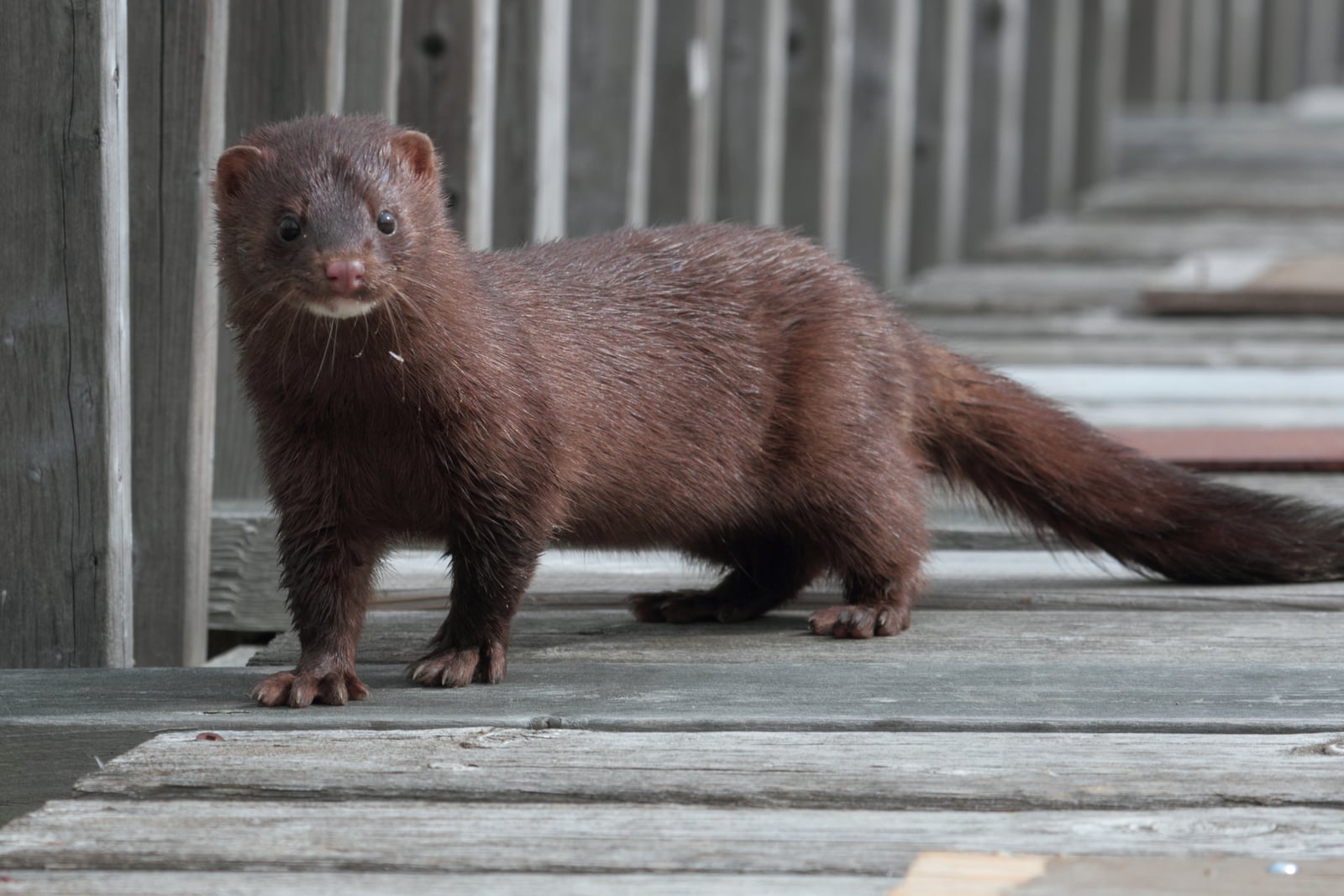
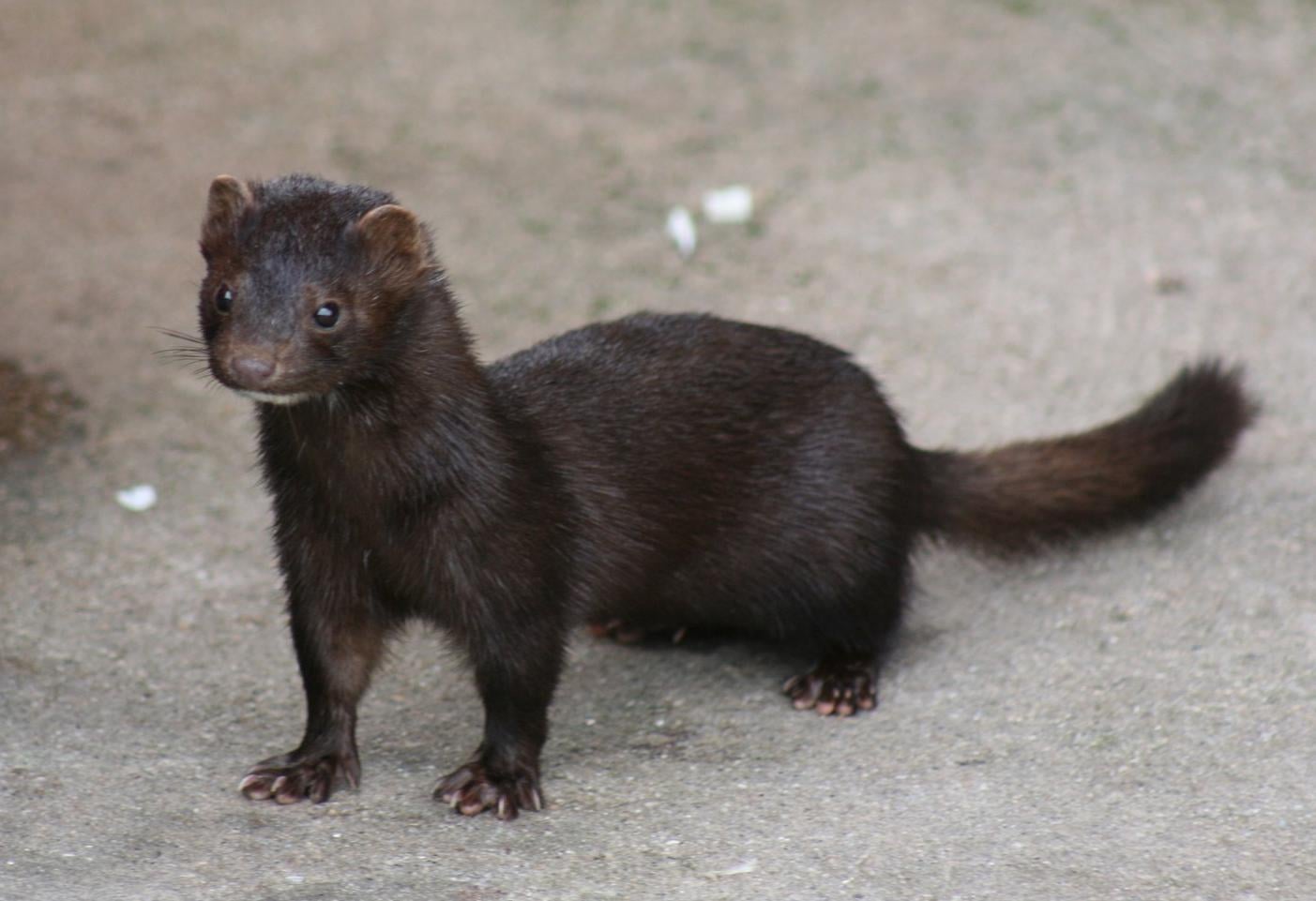
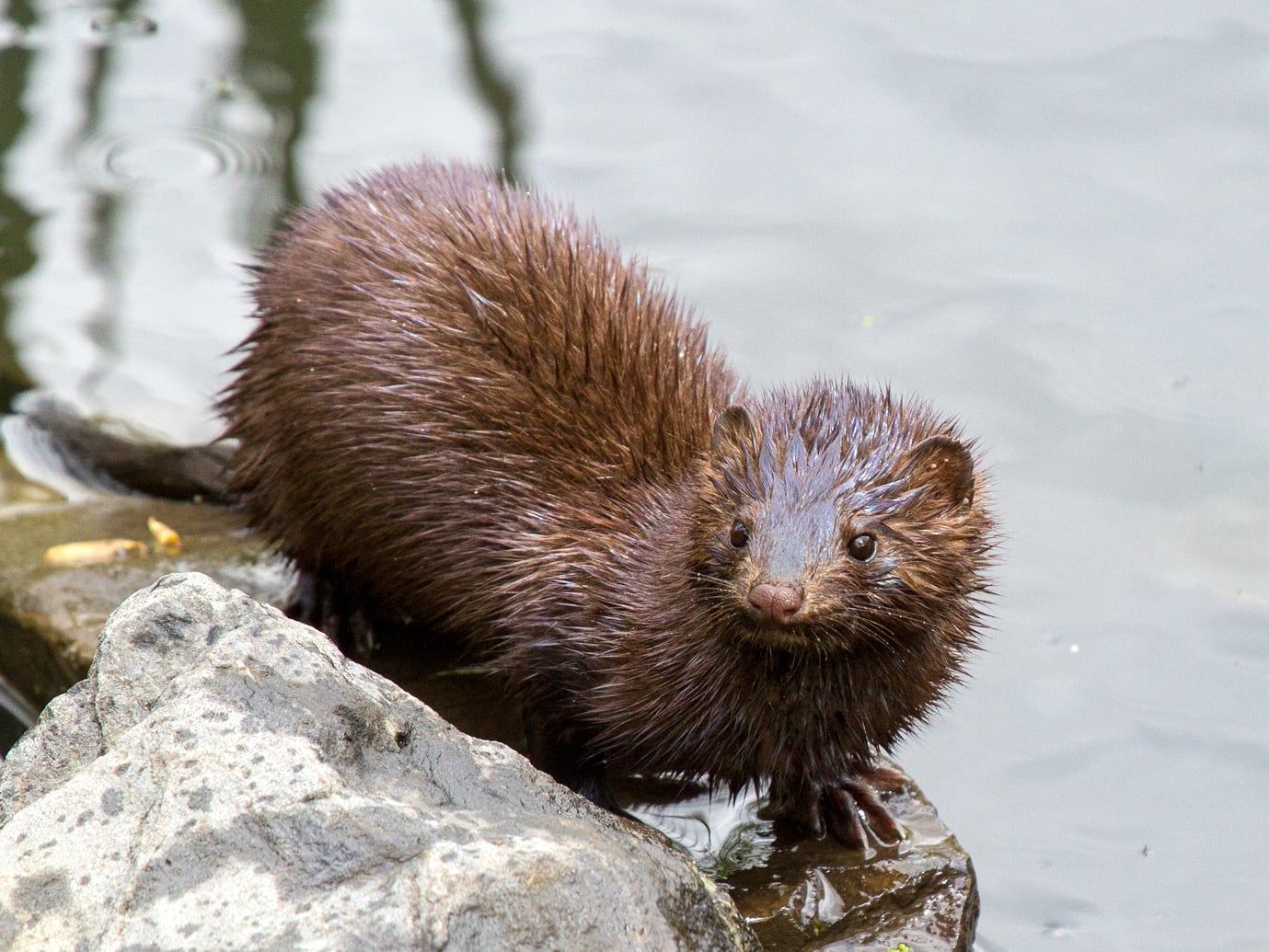
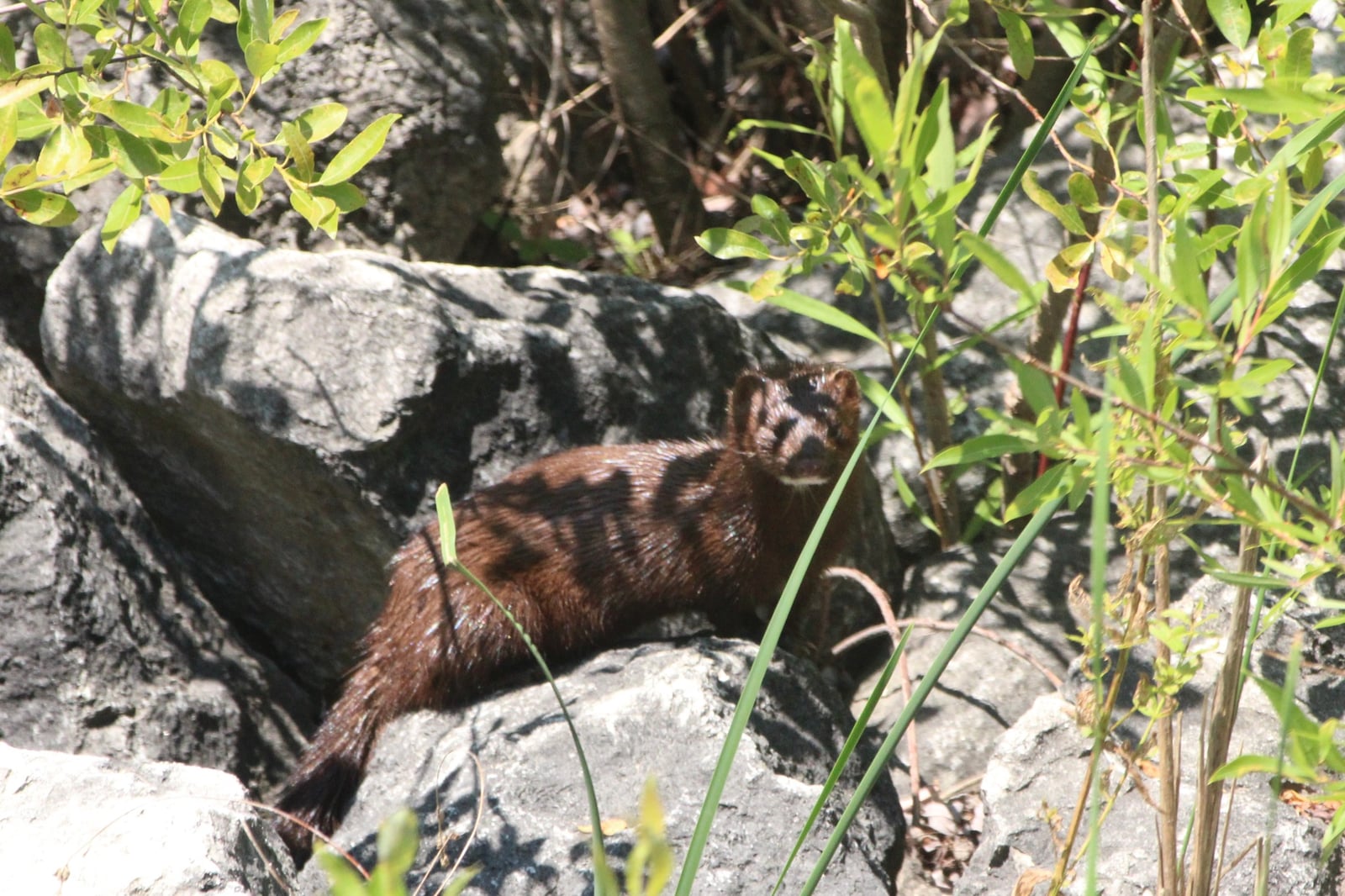
Georgia’s mink records lean toward the coast, led by Glynn County’s barrier islands, St. Simons and Jekyll, and the marshes around Fort Pulaski National Monument near Savannah, with a second cluster along the Chattahoochee around Atlanta. Salt marsh, creek, and river edge are exactly the shoreline the species needs to hunt along. NatureServe lists the mink as S5, secure, in Georgia, and it’s recorded frequently enough here to rank among the state’s more commonly reported mammals.
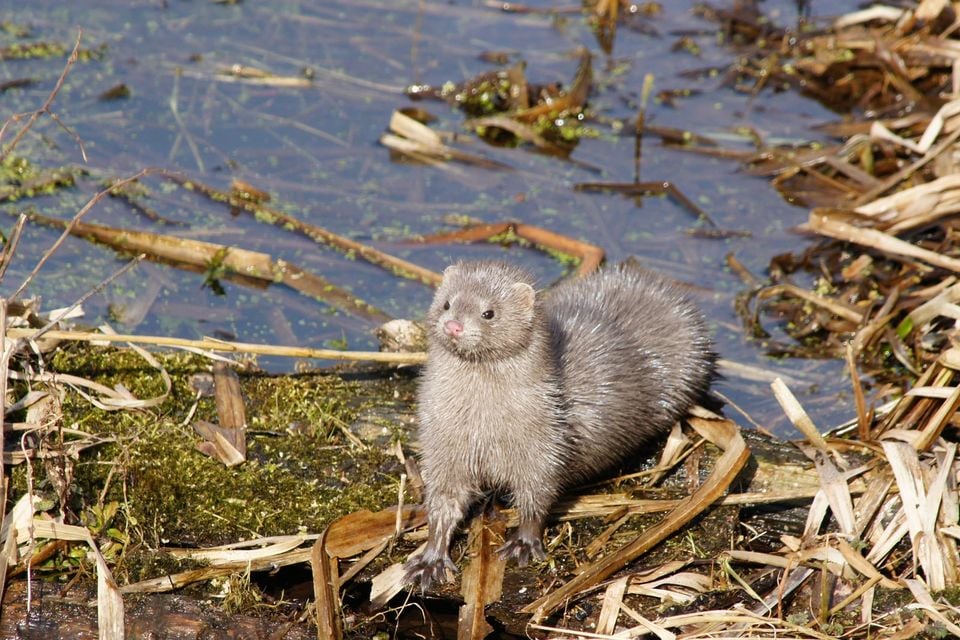
Georgia’s minks work marsh creeks and river edges for fish, crustaceans, frogs, rodents, and birds, swimming well enough to chase prey underwater and denning alone in bank burrows or driftwood tangles near the water. They’re solitary outside of breeding, and a single animal can range widely along a creek system.
Reports show two separate bumps, one in February and another in July, though records turn up in every month of the year. That pattern likely tracks breeding activity in late winter and a second burst of juvenile dispersal in summer rather than any true absence in between.
 Full species profile




