
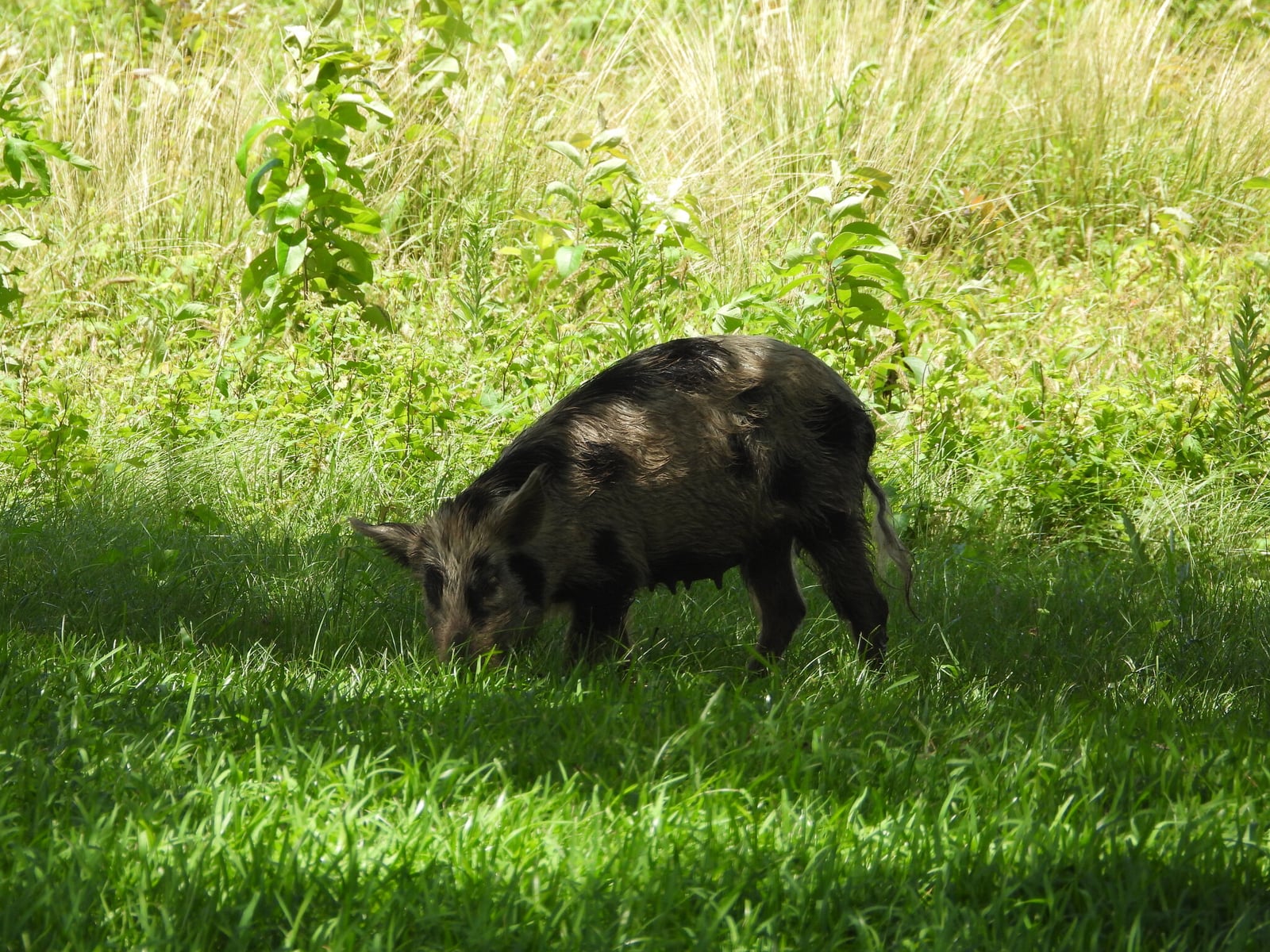
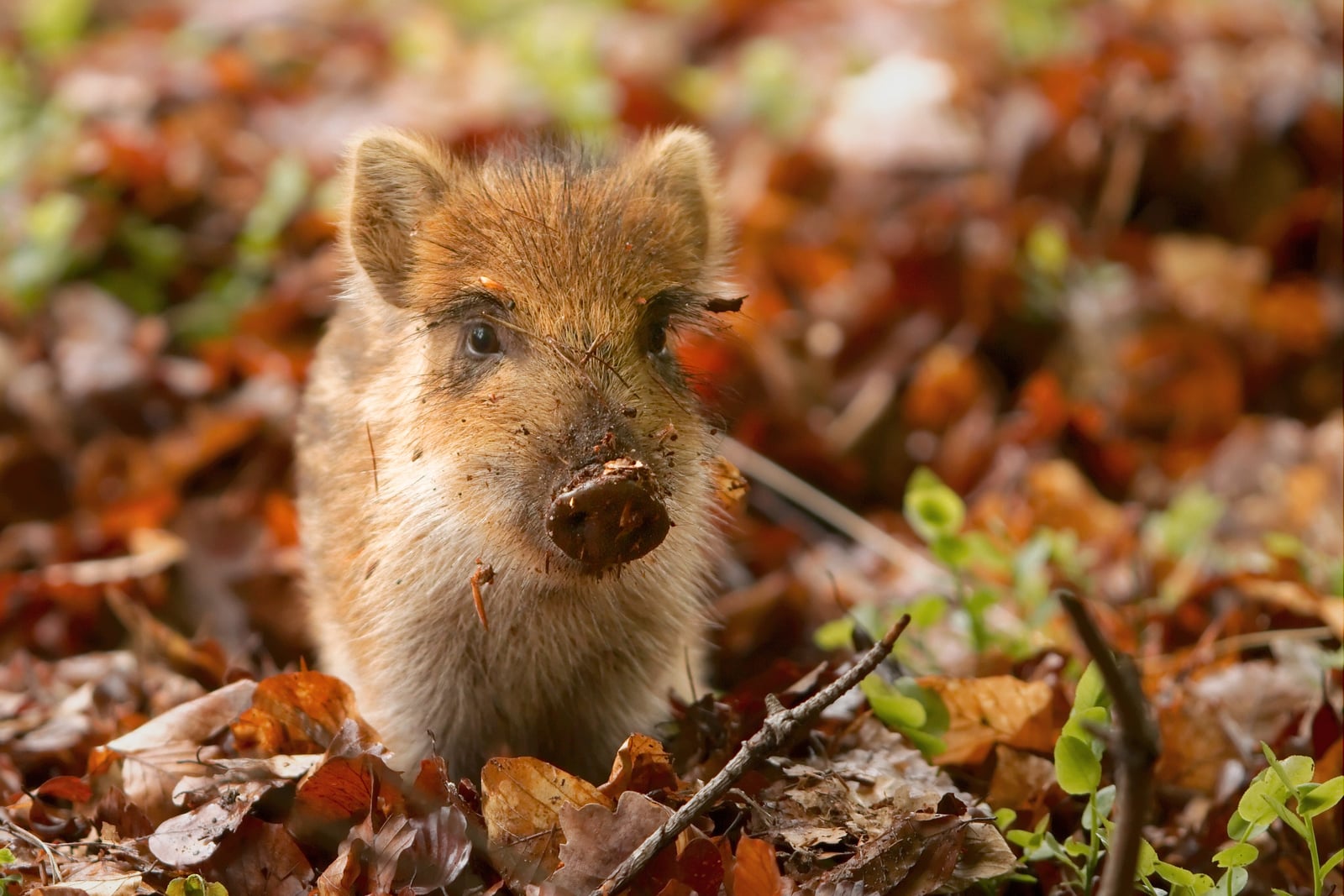
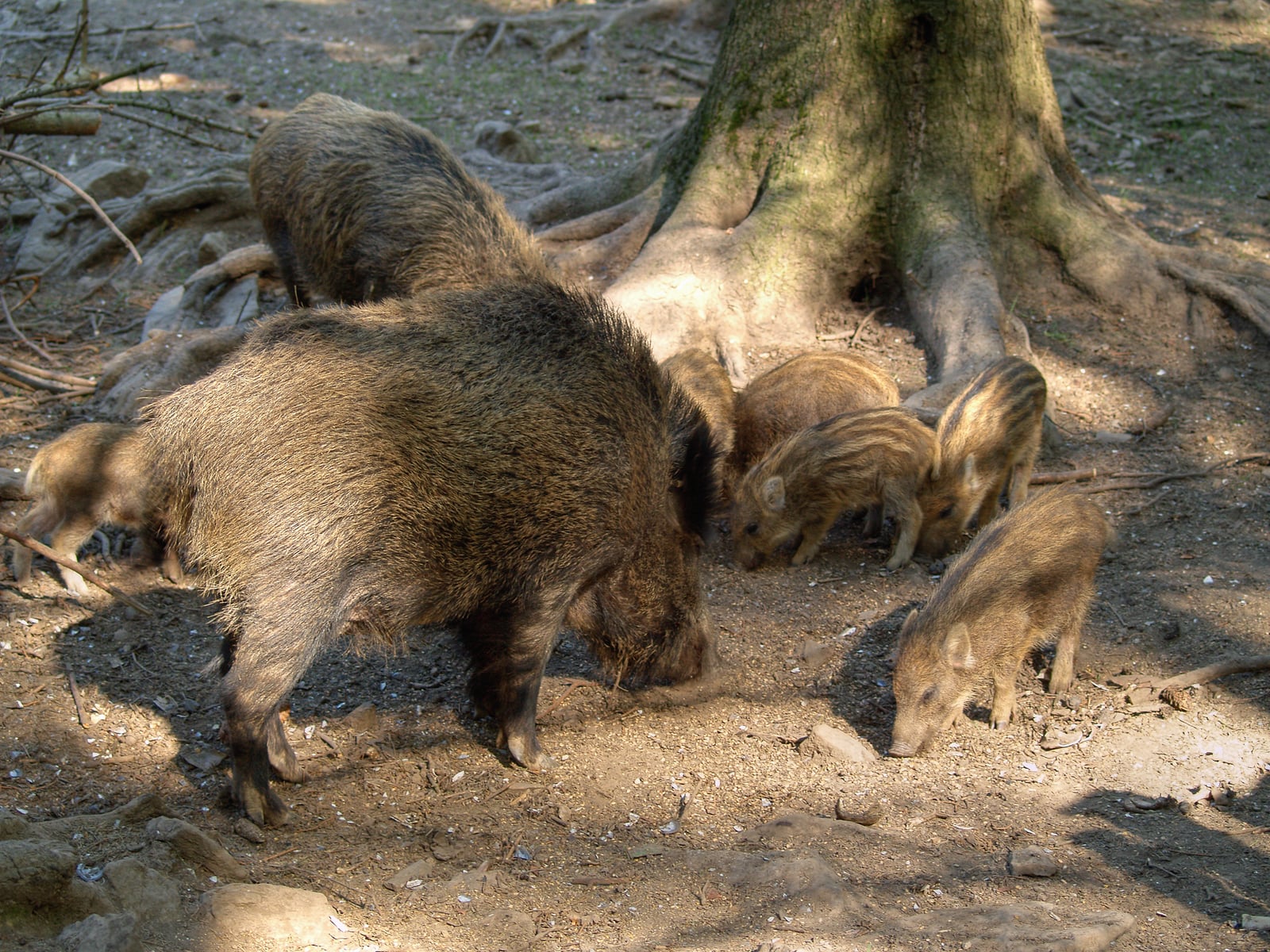
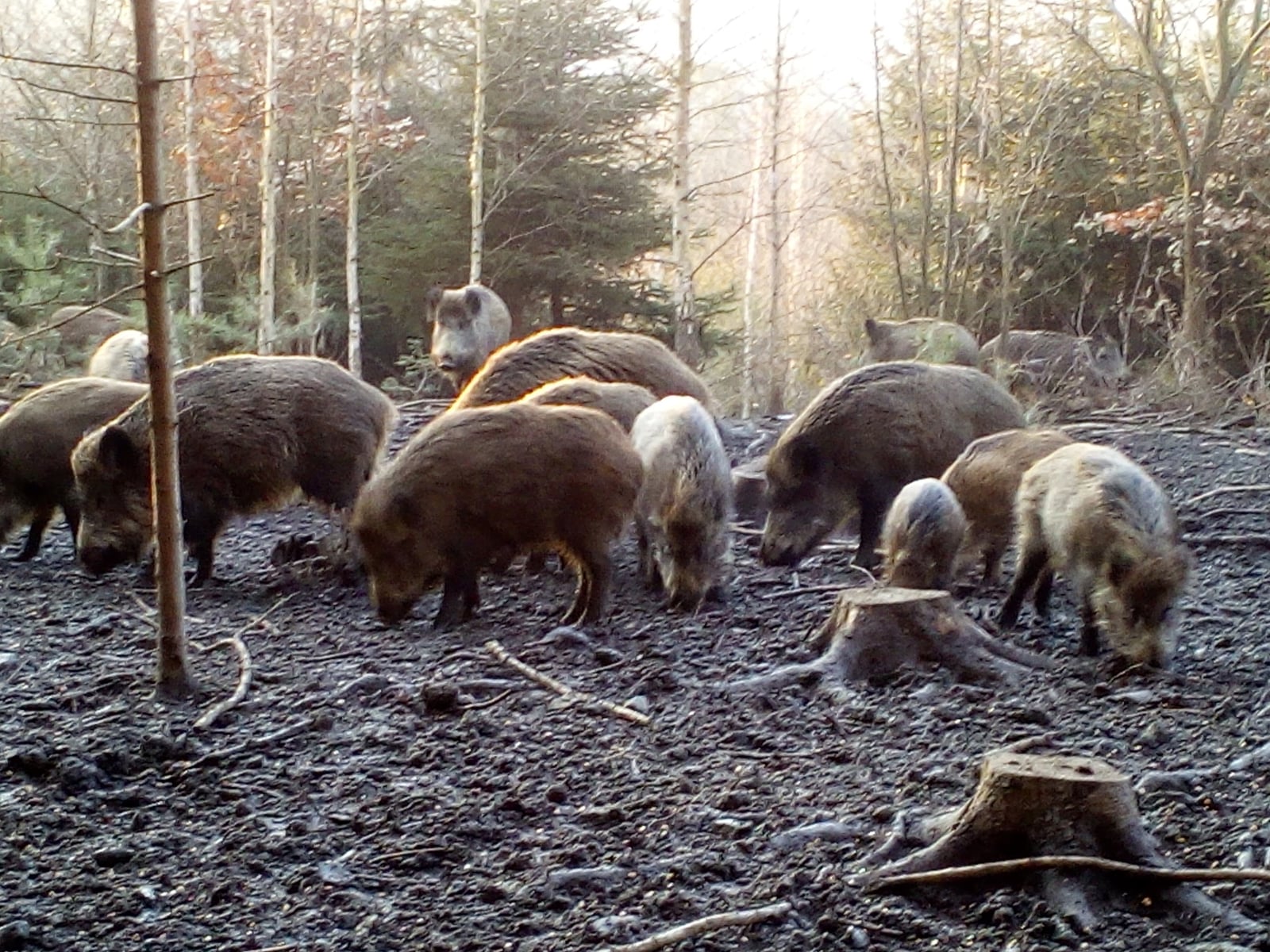
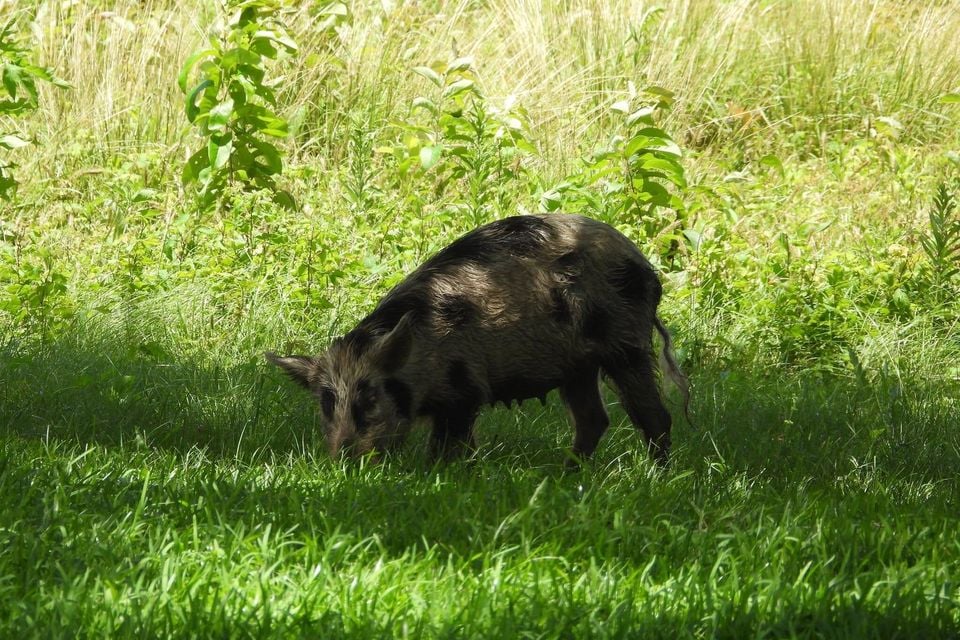
Wild boar records in Hawaii are heaviest on the Big Island of Hawaiʻi, especially around Hawaiʻi Volcanoes National Park and the forested slopes of Mauna Loa, along with the high-elevation rainforest of Hakalau Forest National Wildlife Refuge. These feral pigs, descended from stock Polynesian voyagers first brought to the islands centuries ago and later crossed with European and American domestic pigs, now root through native forest understory across all the main islands.
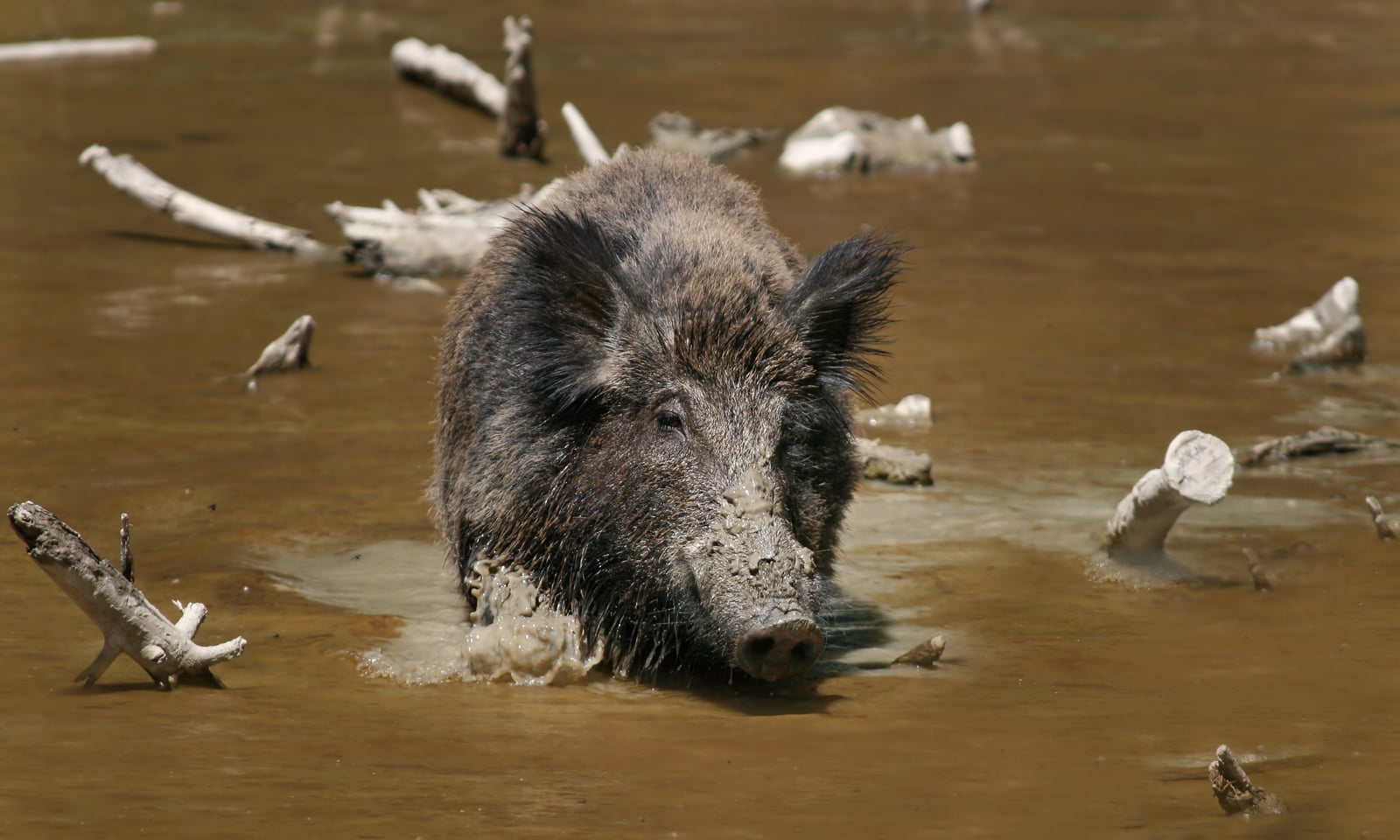
Feral pigs use their tough, flexible snouts to dig for roots, tubers, worms, and invertebrates, turning over huge patches of forest floor in the process. In Hawaiʻi Volcanoes National Park and Hakalau Forest, that rooting disturbs the native ferns and understory plants that evolved without any hoofed animal, and the wallows they dig in wet ground can spread invasive weeds and damage stream banks.
Records run through the year with no strong seasonal peak, though counts dip somewhat in the late summer months. The most recent confirmed sighting was in July 2026, and with 694 reports, this is one of the more frequently documented mammals in the state, reflecting both a wide feral population and active tracking by land managers in protected forest.
 Full species profile




