
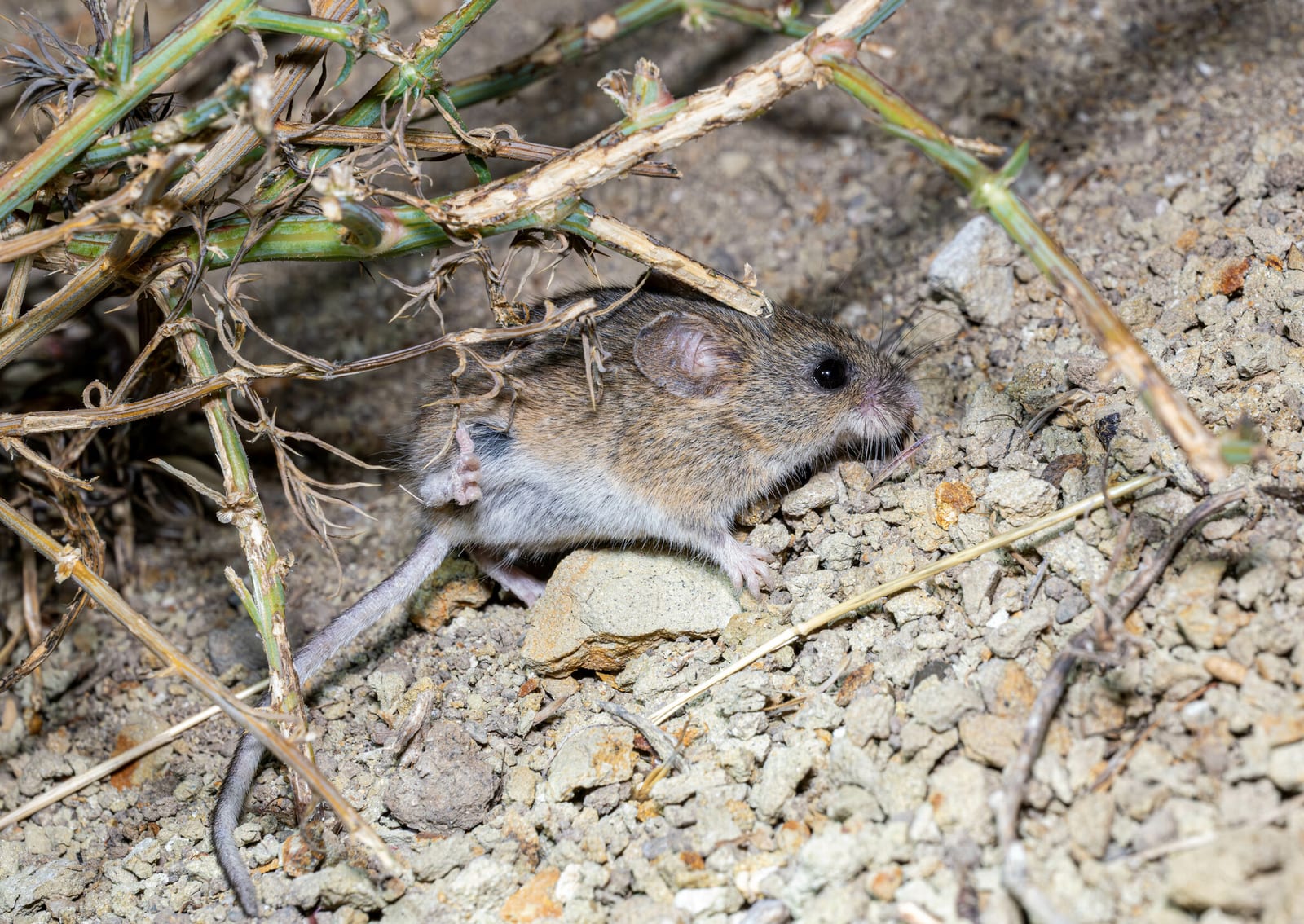
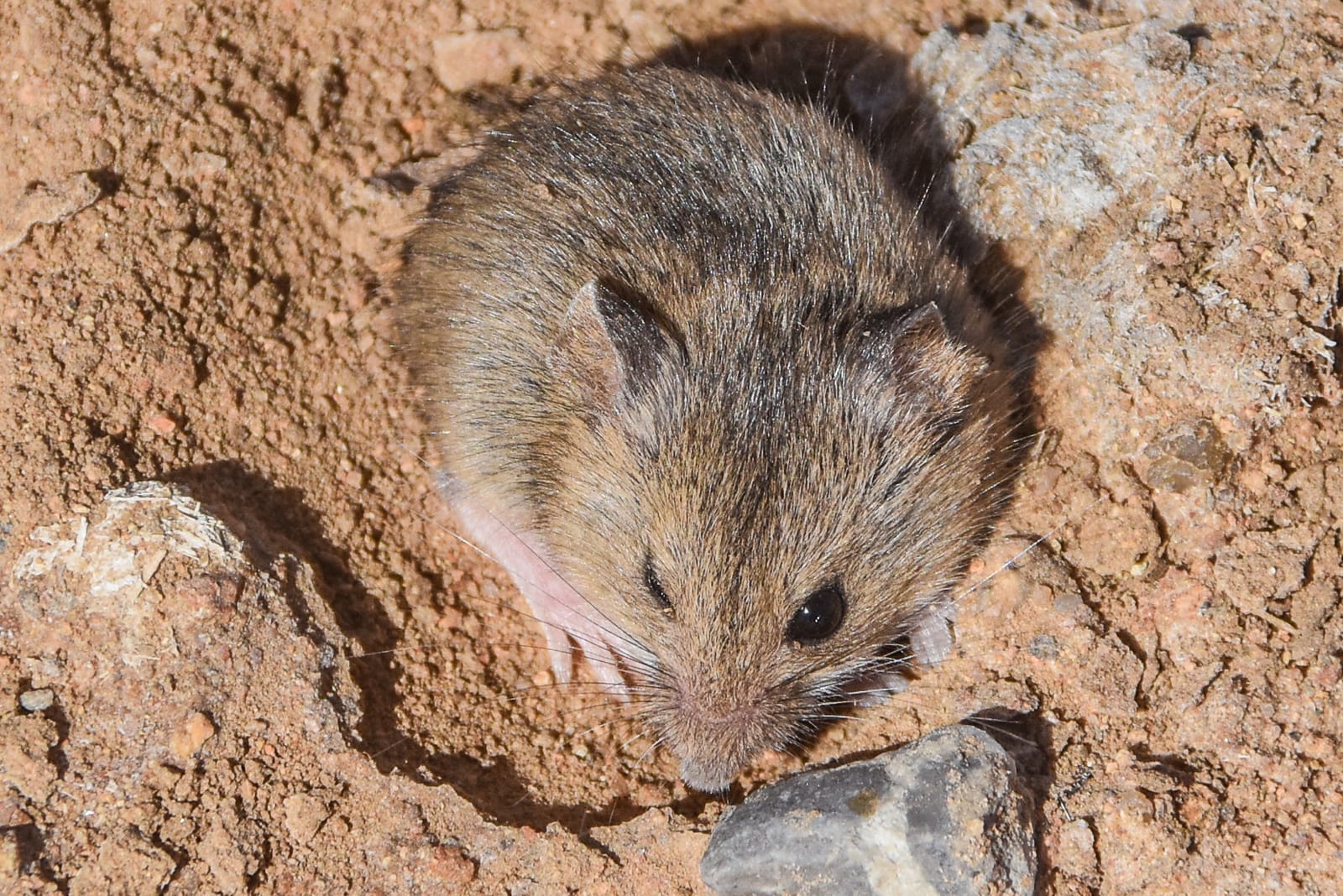
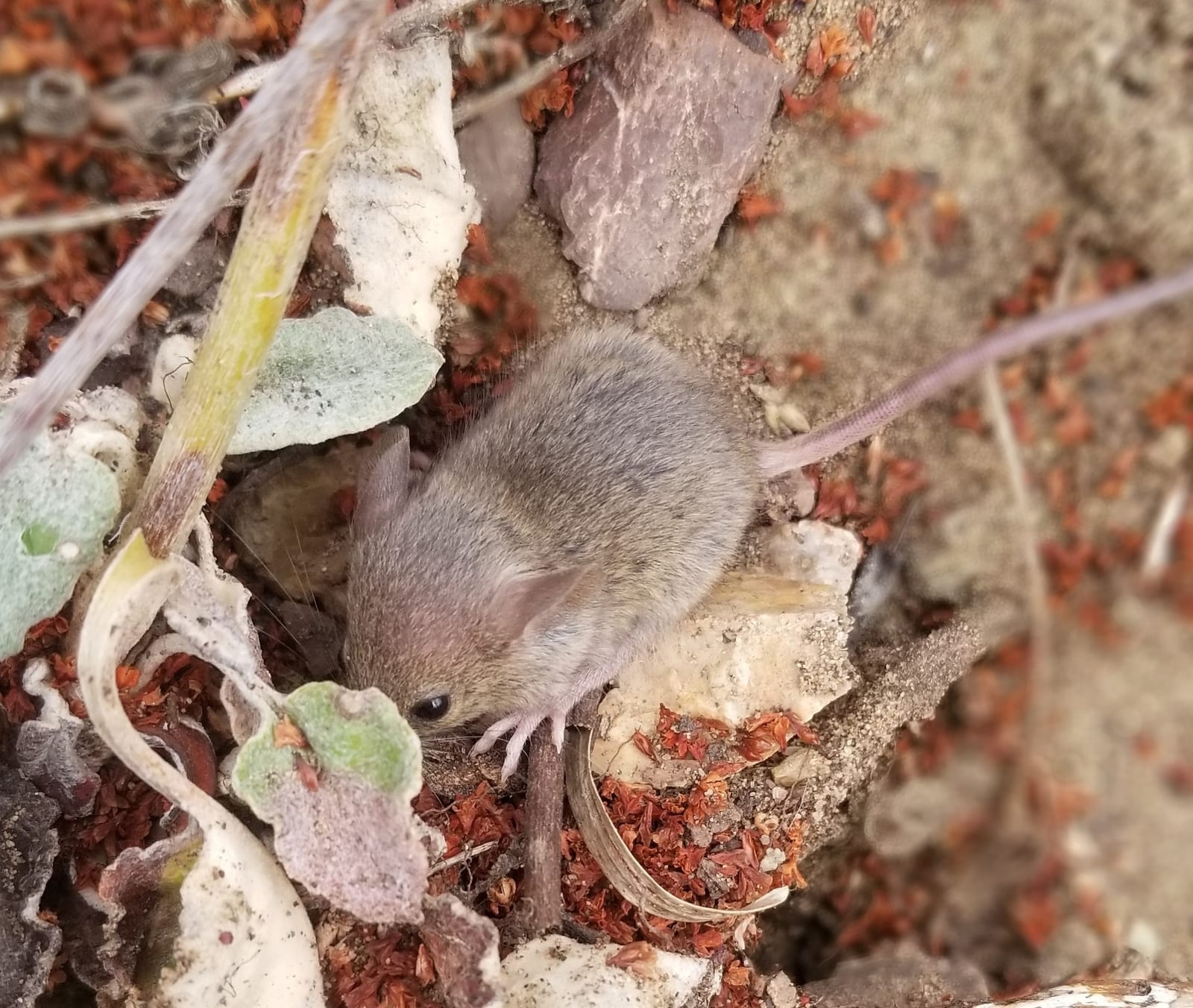
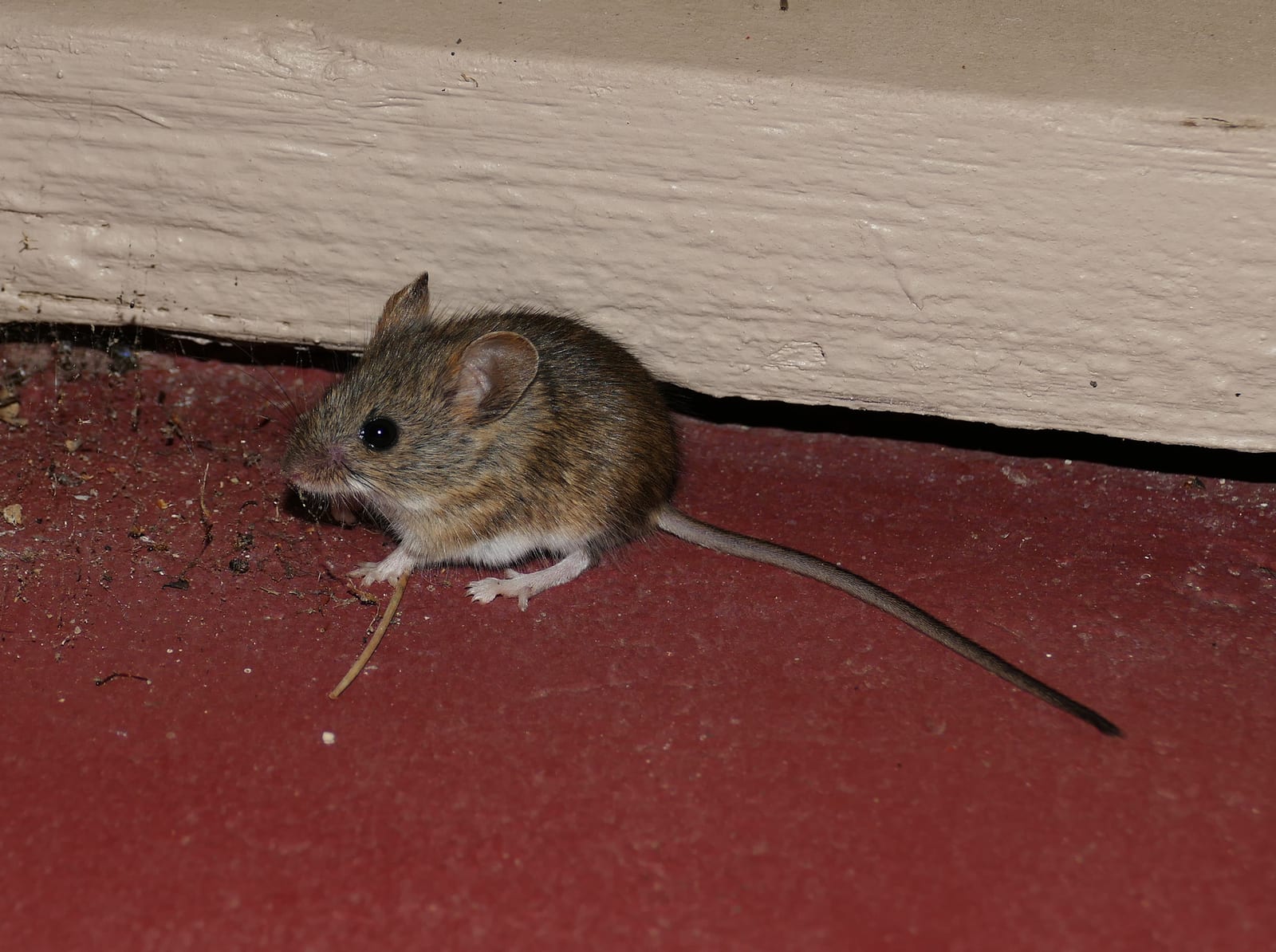
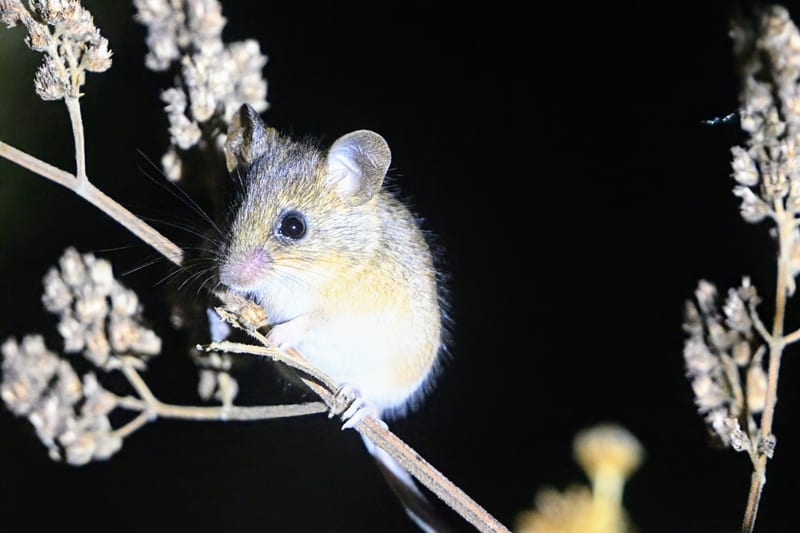
The western harvest mouse is a grass-threading seed specialist, small enough to vanish under a bent stem but widespread enough to tie together marsh edges, weedy fields, and dry western grasslands from the Pacific states into the Great Plains. Its common name is literal: this mouse climbs through standing vegetation, clips seeds, and moves through narrow runways where larger animals open paths through cover.
A Grooved-Tooth Mouse Built for Grass
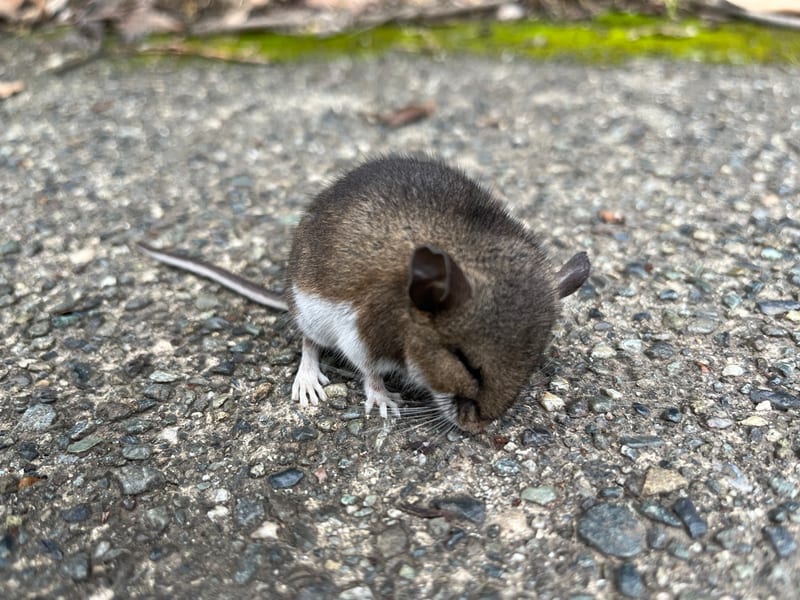
It isn’t a young deer mouse, though the two may share the same cover.
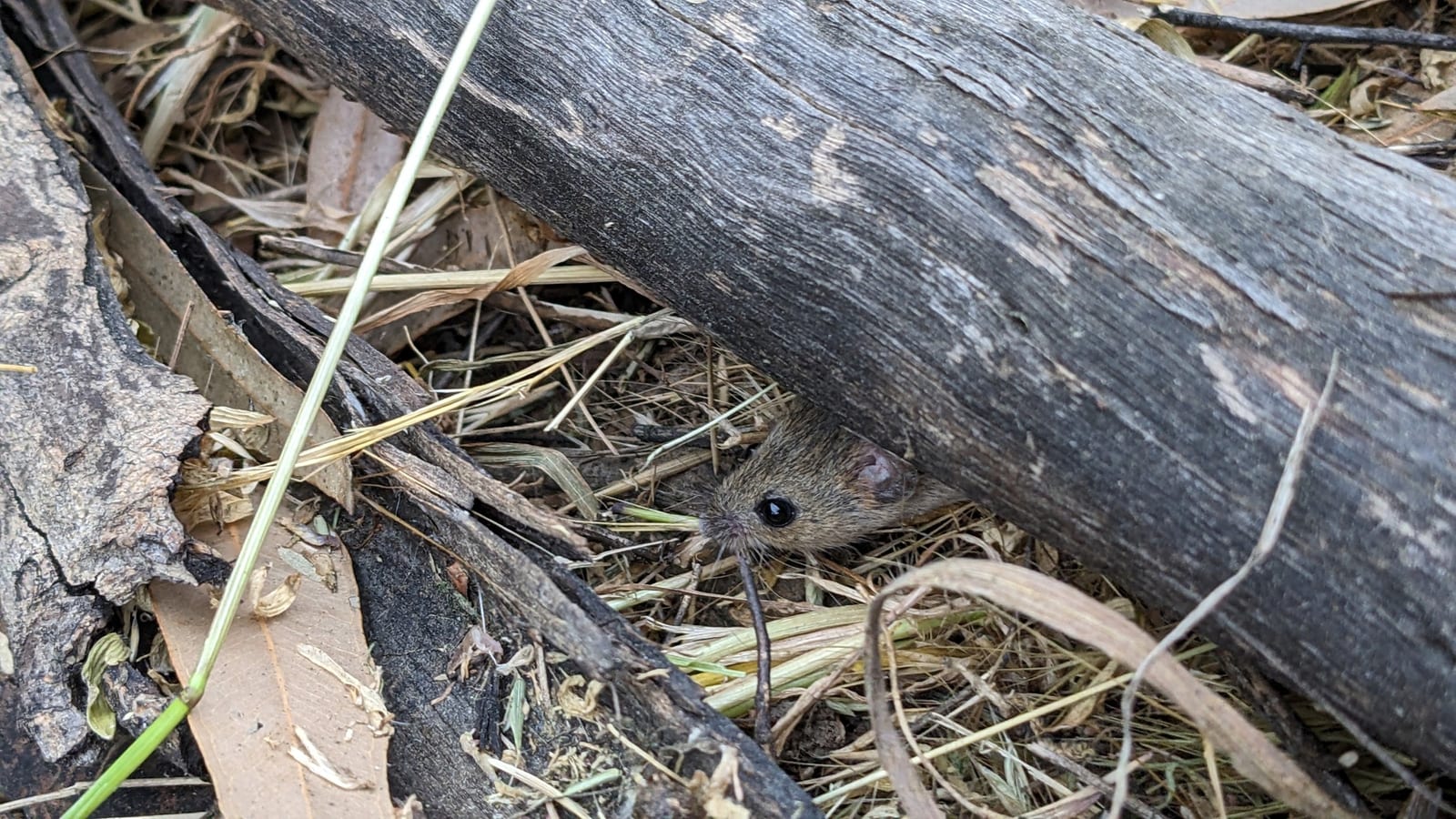
Adult western harvest mice are tiny, usually about 4.6 to 6.7 inches from nose to tail tip. They often weigh near 0.4 ounces. The body is slim, the ears are rounded, and the tail is long but not as boldly two-toned as the tail of many deer mice. Fur is brown to gray-brown above, paler below, often with buff along the sides. Some individuals show a faint darker line along the back, but that mark is variable and much less useful than overall build.
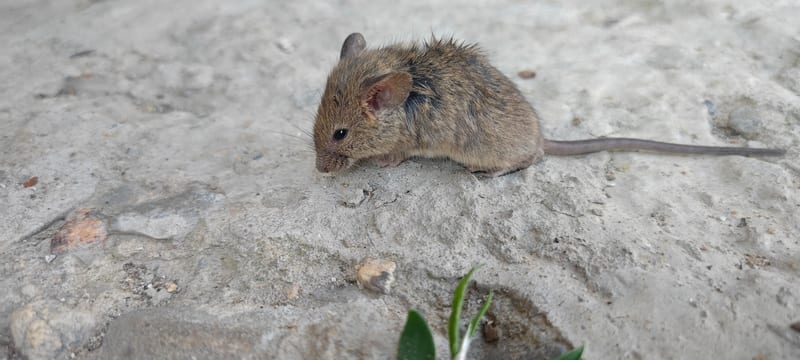
The field problem is scale. A western harvest mouse can look like a young western deer mouse, a small brush mouse, or a plain house mouse in a quick flashlight view. The genus Reithrodontomys is named for grooved upper incisors, a dental feature that separates harvest mice from Peromyscus and Mus, but that detail is not visible in an ordinary field sighting. With the animal on the ground, look for a very small, fine-faced mouse with buffy sides, a relatively long tail, and a habit of staying tight to grass, litter, or low stems.
Where It Persists in the West
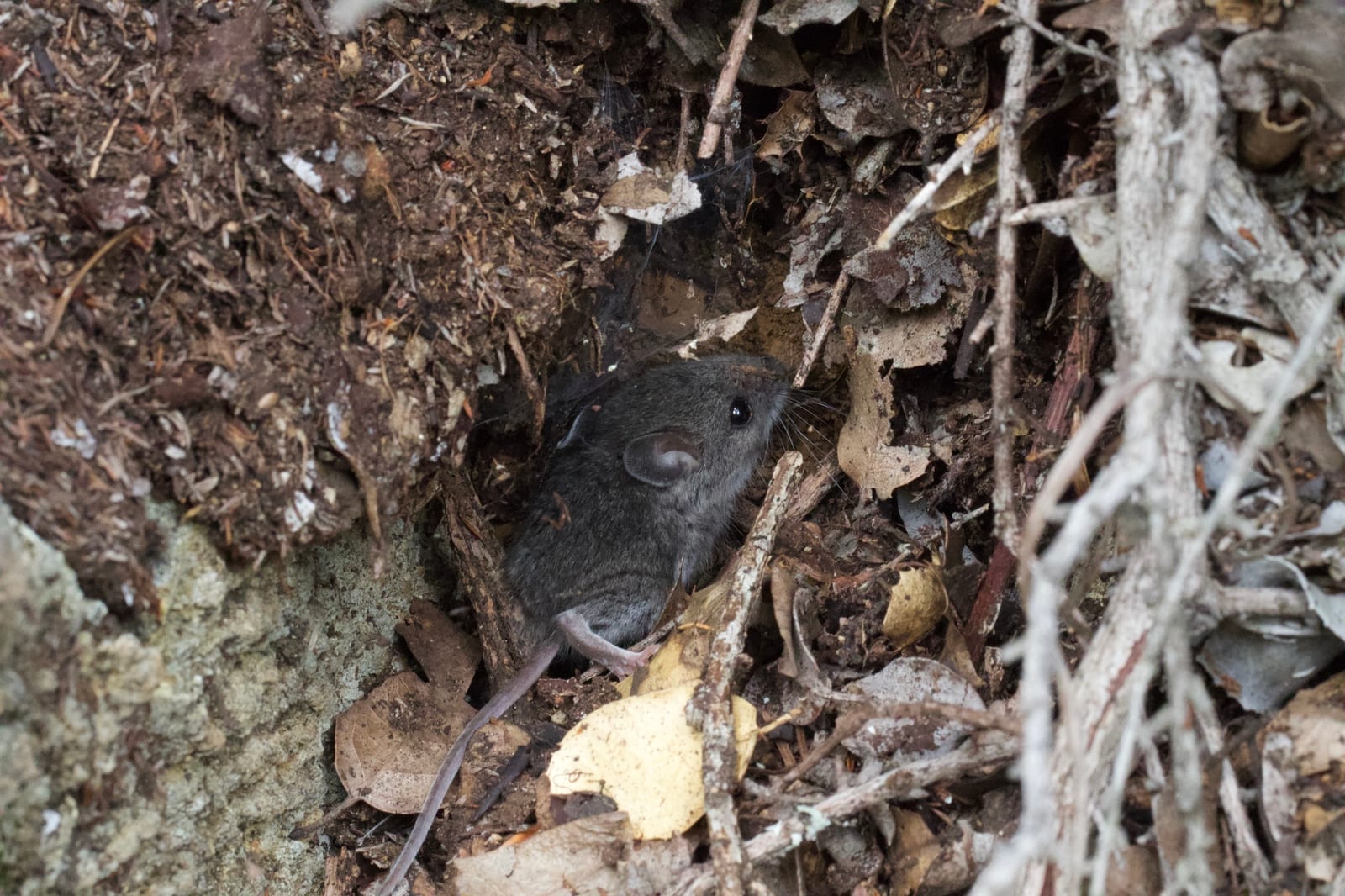
The species is native across much of the western and central United States, with recent records concentrated in California, New Mexico, Colorado, Kansas, Utah, North Dakota, Nevada, Arizona, Nebraska, and Texas, plus scattered records north and east into the interior Northwest and upper Midwest. That pattern fits a mouse of open cover rather than closed forest. It is not restricted to desert, and it is not simply a California or Southwest animal. Its strongest U.S. story is the broad belt of grassland, wet meadow, agricultural edge, and shrub-grass habitat that runs from the Pacific slope across interior basins and onto the Plains.
Dense low cover matters more than a single plant community. Western harvest mice use tall grass, sedges, weedy field margins, ditch edges, fencerows, marsh borders, disturbed openings, and brushy grass transitions. They avoid bare ground where a mouse must cross open space, and they fade from closed-canopy forest where seed heads and grass runways are scarce. Records span sea-level coastal and valley sites to high interior basins and foothills, showing how flexible the species can be when vegetation structure is right.
Runways, Seed Heads, and Night Cover
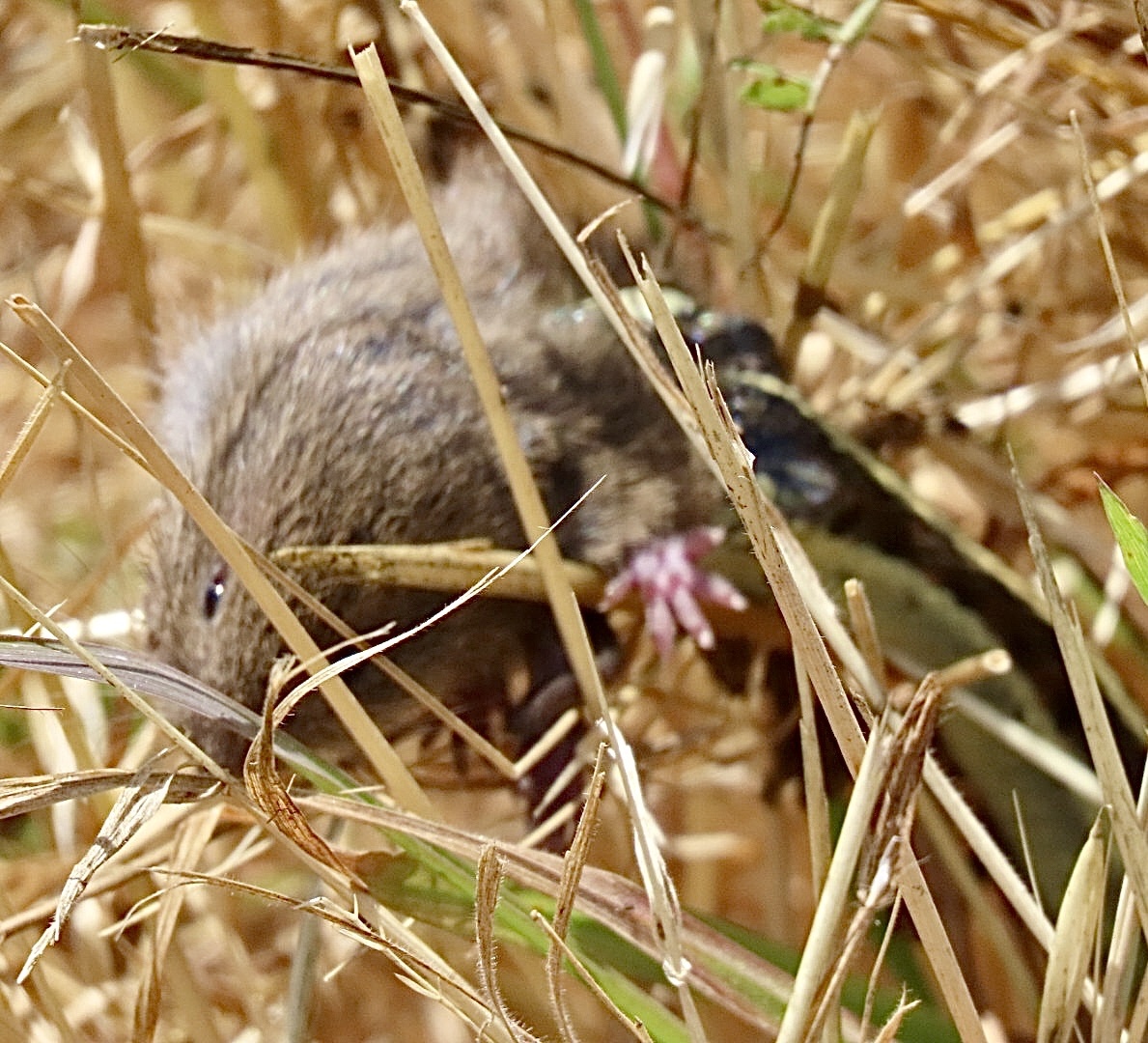
Western harvest mice spend much of their active life inside cover that hides them from owls, snakes, foxes, coyotes, weasels, and other predators. They use narrow ground runways through grass and litter, including trails made by other small mammals. They also climb readily, moving into seed heads and low stems to feed above the ground. That combination, runway travel below and stem use above, gives the animal access to food without forcing it into open space for long.
Seeds and green plant material form the core diet. Grass and forb seeds are especially important, with insects added when they are available. This is a low-level herbivore and occasional insect-eater, but it is also a prey base for a long list of predators. Barn owls, hawks, garter snakes, rattlesnakes, and mammalian carnivores all take small mice, and harvest mice are exactly the size class that converts a good seed year into food for hunters higher in the food web.
The species is usually described as nocturnal, but observations can skew toward daylight when people flush or photograph an animal from cover. Its ecology still points to darkness and concealment: small size, exposed seed heads, and open grassland all make night activity safer than daylight movement in many places.
Nests and Rapid Turnover
The western harvest mouse builds a round nest from shredded grasses and plant fibers. Nests may sit on the ground in dense vegetation, under logs or low shrubs, or slightly above ground in a protected tangle of stems. A lined spherical nest helps buffer a tiny mammal from cool nights and keeps young hidden in habitats that may lack deep burrows.
Its life history is fast. Gestation lasts about 23 to 24 days, litters usually contain two to six young, and females can produce multiple litters during a favorable season. Young develop quickly, and many individuals in wild populations do not survive long. That high-turnover strategy suits a mouse living under heavy predation pressure in habitats that change with rain, mowing, grazing, fire, and seasonal seed production.
Conservation in Working Landscapes
The IUCN rates the western harvest mouse as Least Concern, and the species remains widespread across much of its range. Its security comes from range size, reproductive speed, and an ability to use many kinds of open cover, including some agricultural edges and disturbed weedy habitats. It is not a license for complacency. Local populations can disappear where grasslands are converted to pavement, where wetlands are drained, or where repeated disturbance strips away the dense ground layer that lets the species move and nest.
The mouse is easy to overlook because it rarely announces itself. A field may hold western harvest mice for years while most people see only clipped seed heads, narrow tunnels through grass, or a quick brown shape in a flashlight beam. That hidden abundance is part of its ecological value. Where the ground layer stays thick and seed-rich, the western harvest mouse helps move plant energy into owls, snakes, and small carnivores, making it one of the quiet working mammals of western open country.




