

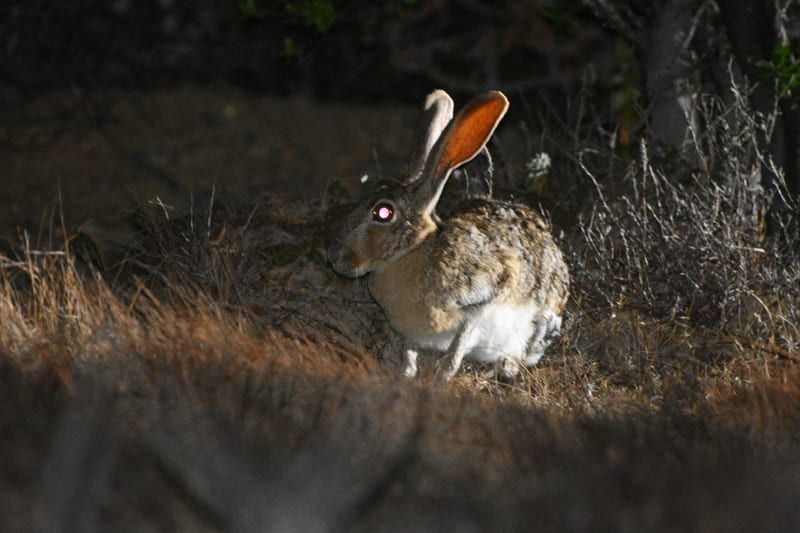
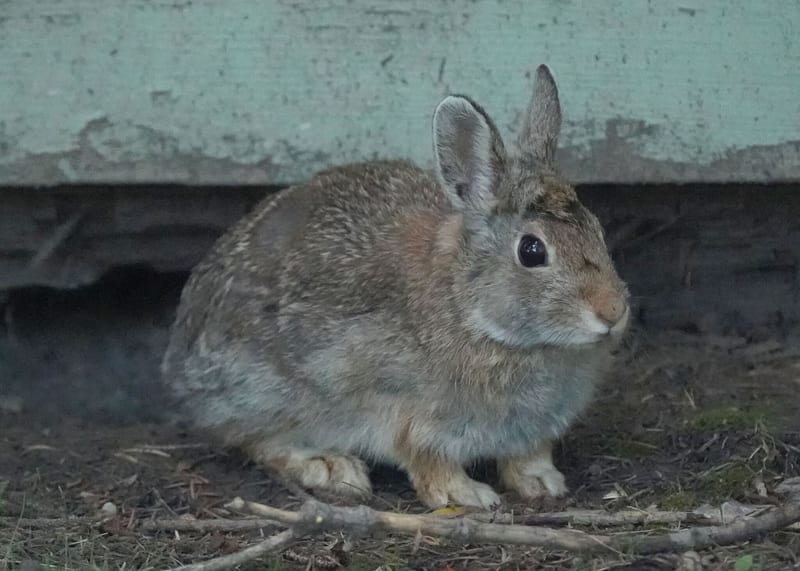
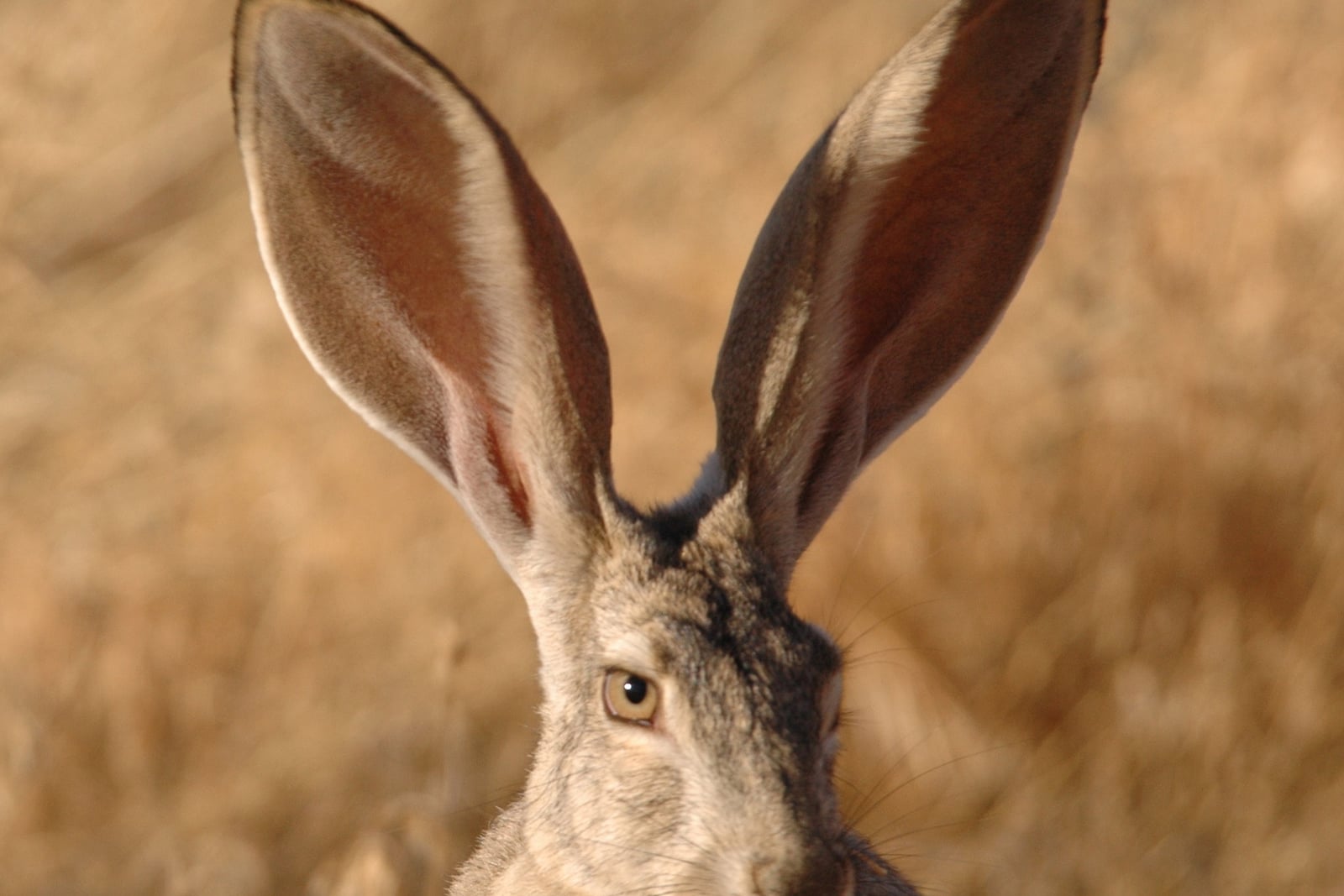
European Rabbit

Oryctolagus cuniculus

ENEndangered

Every domestic rabbit traces back to the European rabbit, but the wild animal has a much narrower story in North America than casual sighting maps suggest. In the United States it is an introduced species with scattered feral colonies, escaped pets, and a few long-running local populations, not a broadly established native rabbit. Most "wild rabbits" seen across the country are native cottontails or hares.

Range through the year

Where European Rabbit is seen

European Rabbit is recorded in 46 US states from 1,584 occurrence records, most heavily in Washington (259 records) and Oregon (243).

Current range1,584 records · 46 states
Alabama · 12 records · view state pageArizona · 20 records · view state pageArkansas · 5 recordsCalifornia · 242 records · view state pageColorado · 9 recordsConnecticut · 1 recordsDelawareDistrict of ColumbiaFlorida · 128 records · view state pageGeorgia · 21 records · view state pageIdaho · 63 records · view state pageIllinois · 10 records · view state pageIndiana · 9 records · view state pageIowa · 1 recordsKansasKentucky · 8 records · view state pageLouisiana · 9 records · view state pageMaine · 1 records · view state pageMaryland · 10 records · view state pageMassachusetts · 8 records · view state pageMichigan · 17 records · view state pageMinnesota · 2 recordsMississippi · 3 recordsMissouri · 6 records · view state pageMontana · 35 records · view state pageNebraska · 1 recordsNevada · 15 records · view state pageNew Hampshire · 3 recordsNew Jersey · 7 recordsNew Mexico · 5 recordsNew York · 30 records · view state pageNorth Carolina · 19 records · view state pageNorth DakotaOhio · 7 records · view state pageOklahoma · 8 records · view state pageOregon · 243 records · view state pagePennsylvania · 13 records · view state pageRhode Island · 2 recordsSouth Carolina · 10 records · view state pageSouth Dakota · 2 recordsTennessee · 8 recordsTexas · 113 records · view state pageUtah · 55 records · view state pageVermont · 1 recordsVirginia · 14 records · view state pageWashington · 259 records · view state pageWest Virginia · 8 recordsWisconsin · 3 recordsWyomingAlaska · 126 records · view state pageAKHawaii · 12 records · view state pageHIPuerto RicoPR
Occurrence data by state and month
European Rabbit – occurrence records by US state and month (1,584 total across 46 states)
StateJanFebMarAprMayJunJulAugSepOctNovDecYear
Washington87202343263842221776259
Oregon91318201928382323152017243
California181128231726211722161924242
Florida131415201399711269128
Alaska·2341818193118535126
Texas581023141041113825113
Idaho428961123971163
Utah124151185135··55
Montana32·114142341·35
New York11315236411230
Georgia2133211·1·2521
Arizona212421·1·12420
North Carolina22141·21213·19
Michigan··11432·321·17
Nevada··123·2·131215
Virginia2··14123·1··14
Pennsylvania···31212121·13
Alabama·1·3·2·3·1·212
Hawaii111212··121·12
Illinois·1·11124····10
Maryland1·1·2···23·110
South Carolina···12··312·110
Colorado2·121·12····9
Indiana··1111·113··9
Louisiana··11··22111·9
Kentucky··21···2··128
Massachusetts··111·221···8
Oklahoma··213·1··1··8
Tennessee1·2··2·1·11·8
West Virginia1·212··1··1·8
New Jersey···111·3···17
Ohio···11··1211·7
Missouri··1·1····22·6
Arkansas···21····11·5
New Mexico···1···1·3··5
Mississippi11······1···3
New Hampshire······111···3
Wisconsin···111······3
Minnesota···1······1·2
Rhode Island·······1···12
South Dakota·····11·····2
Connecticut······1·····1
Iowa···1········1
Maine·······1····1
Nebraska··········1·1
Vermont··········1·1

Based on 2,405 georeferenced US records, 2000-2026. Shading is observation density (where people record sightings), not true abundance. Alaska, Hawaii & Puerto Rico shown as insets.

Explore by state

European Rabbit across 30 states

Occurrence records, conservation status, and the places it turns up, state by state. Open a state for detail, or visit its full page.

  • WashingtonIntroducedCommon486 records

    State rankNot Applicable

    Notable placesSan Juan Islands National Monument · San Juan Island National Historical Park · Ross Lake National Recreation Area · Washington State Department of Natural Resources (WADNR) State Resource Management Area

    Countiesrecorded in 12

    Year-round in Washington, with recorded sightings peaking in July.

  • CaliforniaIntroducedOccasional390 records

    Notable placesChannel Islands National Park · San Gabriel Mountains National Monument · Santa Monica Mountains National Recreation Area · UCD Arboretum

    Countiesrecorded in 12

    Year-round in California, with no strong seasonal peak in observations.

  • OregonIntroducedCommon323 records

    Notable placesDeschutes National Forest · Lewis and Clark National Historical Park · Oregon Islands National Wildlife Refuge Wilderness Area · Winema National Forest

    Countiesrecorded in 12

    Year-round in Oregon, with recorded sightings peaking in June–August, with a smaller rise in April.

  • FloridaIntroducedCommon177 records

    Notable placesEstero Bay Preserve State Park

    Countiesrecorded in 12

    Year-round in Florida, with recorded sightings peaking in December–May, with a smaller rise in July.

  • AlaskaIntroducedOccasional170 records

    Notable placesPotter Marsh

    Countiesrecorded in 10

    Year-round in Alaska, with recorded sightings peaking in June–August.

  • TexasIntroducedOccasional169 records

    Notable placesMission San Juan Capistrano · Ray Roberts Lake State Park · Sheldon Lake State Park & Environmental Learning Center

    Countiesrecorded in 12

    Year-round in Texas, with recorded sightings peaking in April, with a smaller rise in September.

  • UtahIntroducedOccasional90 records

    Notable placesUinta National Forest · Wasatch National Forest · Lost Creek State Park · Wasatch Mountain State Park

    Countiesrecorded in 12

    Year-round in Utah, with recorded sightings peaking in April–May.

  • IdahoIntroducedOccasional87 records

    Notable placesWilson Springs Access Site

    Countiesrecorded in 13

    Year-round in Idaho, with recorded sightings peaking in June, with a smaller rise in September–October and March–April.

  • MichiganIntroducedRare57 records

    Notable placesGwinn State Forest Area · Shingleton State Foreset Area

    Countiesrecorded in 13

    Year-round in Michigan, with recorded sightings peaking in September–December, with a smaller rise in May–June.

  • New YorkIntroducedOccasional40 records

    Notable placesLong Island · Valley Stream State Park · Gateway National Recreation Area · Harriman State Park

    Countiesrecorded in 12

    Year-round in New York, with recorded sightings peaking in August–September, with a smaller rise in May.

  • MontanaIntroducedOccasional38 records

    State rankNot Applicable

    Notable placesKootenai National Forest · Chief Looking Glass Fishing Access Site · Flathead National Forest · Montana State Trust Lands

    Countiesrecorded in 13

    Year-round in Montana, with recorded sightings peaking in July.

  • GeorgiaIntroducedOccasional37 records

    Notable placesTybee Island · Chattahoochee National Forest

    Countiesrecorded in 13

    Year-round in Georgia, with recorded sightings peaking in September, with a smaller rise in December and March.

  • HawaiiIntroducedOccasional34 records

    Notable placesWailua River State Park · Keaiwa Heiau State Recreation Area · Offshore Island, Manana Island Seabird Sanctuary

    Countiesrecorded in 4

    Year-round in Hawaii, with recorded sightings peaking in February–April, with a smaller rise in June and October.

  • ArizonaIntroducedOccasional33 records

    Countiesrecorded in 4

    Year-round in Arizona, with recorded sightings peaking in April, with a smaller rise in December.

  • North CarolinaIntroducedOccasional26 records

    Notable placesNantahala National Forest

    Countiesrecorded in 12

    Year-round in North Carolina, with recorded sightings peaking in April, with a smaller rise in June and October–November.

  • NevadaIntroducedOccasional22 records

    Notable placesFloyd Lamb State Park · Great Basin National Park · Old Las Vegas Mormon Fort State Historic Park · Toiyabe National Forest

    Countiesrecorded in 4

    Year-round in Nevada, with recorded sightings peaking in February, with a smaller rise in April–July and October.

  • PennsylvaniaIntroducedOccasional20 records

    Countiesrecorded in 12

    Year-round in Pennsylvania, with recorded sightings peaking in April, with a smaller rise in June–July and October.

  • MassachusettsIntroducedRare17 records

    State rankNot Applicable

    Countiesrecorded in 7

    Year-round in Massachusetts, with recorded sightings peaking in May–July.

  • VirginiaIntroducedOccasional17 records

    Notable placesBlandy Experimental Station · Jefferson National Forest

    Countiesrecorded in 12

    Year-round in Virginia, with recorded sightings peaking in May, with a smaller rise in August.

  • AlabamaIntroducedOccasional14 records

    Countiesrecorded in 10

    Year-round in Alabama, with recorded sightings peaking in April, with a smaller rise in August.

  • IllinoisIntroducedOccasional14 records

    Countiesrecorded in 6

    Year-round in Illinois, with recorded sightings peaking in August, with a smaller rise in May.

  • LouisianaIntroducedOccasional14 records

    Countiesrecorded in 5

    Year-round in Louisiana, with recorded sightings peaking in April, with a smaller rise in July–August.

  • OklahomaIntroducedRare13 records

    Countiesrecorded in 6

    Year-round in Oklahoma, with recorded sightings peaking in May.

  • South CarolinaIntroducedOccasional13 records

    Countiesrecorded in 10

    Year-round in South Carolina, with recorded sightings peaking in April–May, with a smaller rise in August and October.

  • KentuckyIntroducedRare11 records

    Countiesrecorded in 3

    Sparse observation record in Kentucky; presence confirmed but timing of activity not well documented.

  • MissouriIntroducedRare11 records

    Notable placesCastlewood Sp

    Countiesrecorded in 7

    Sparse observation record in Missouri; presence confirmed but timing of activity not well documented.

  • IndianaIntroducedOccasional10 records

    Countiesrecorded in 9

    Sparse observation record in Indiana; presence confirmed but timing of activity not well documented.

  • MaineIntroducedRare10 records

    Countiesrecorded in 4

    Sparse observation record in Maine; presence confirmed but timing of activity not well documented.

  • MarylandIntroducedOccasional10 records

    Notable placesGreenbelt Park

    Countiesrecorded in 7

    Sparse observation record in Maryland; presence confirmed but timing of activity not well documented.

  • OhioIntroducedRare10 records

    Countiesrecorded in 8

    Sparse observation record in Ohio; presence confirmed but timing of activity not well documented.

IUCN Red List status

  1. LC
  2. NT
  3. VU
  4. EN
  5. CR
  6. EW
  7. EX

EN – Endangered

Very high risk of extinction in the wild.

SizeEuropean Rabbit beside a 1.8 m adult, drawn to scale
Created by potrace 1.16, written by Peter Selinger 2001-2019 Created by potrace 1.16, written by Peter Selinger 2001-2019
Body length
34–50 cm13 in–20 in
Weight
1–2.5 kg2.2–6 lb

Silhouettes drawn to scale against a 1.8 m5 ft 11 in adult.

Elevation

From 193 georeferenced records, the European Rabbit is recorded from sea levelsea level to 1,847 m6,060 ft, with half of sightings below 53 m174 ft.

Each band shows the share of georeferenced sightings that fall within it. Records cluster where people live and hike, so low, populated elevations are over-represented. Read this as observation density, not true abundance.

Observation peakApril34,235 records

Seasonality from research-grade observation dates across the US (34,235 records, all years). Reflects when the species is recorded, not a guarantee of presence.

Daily activity clockCathemeral– active in irregular bursts, day and night

1,379 european rabbit observations logged by hour of day. Activity is cathemeral (active in irregular bursts, day and night), peaking around 6 PM.

12 AM: 7 observations1 AM: 3 observations2 AM: 5 observations3 AM: 2 observations4 AM: 2 observations5 AM: 11 observations6 AM: 28 observations7 AM: 64 observations8 AM: 81 observations9 AM: 75 observations10 AM: 68 observations11 AM: 65 observations12 PM: 65 observations1 PM: 67 observations2 PM: 75 observations3 PM: 92 observations4 PM: 108 observations5 PM: 123 observations6 PM: 152 observations7 PM: 117 observations8 PM: 95 observations9 PM: 45 observations10 PM: 16 observations11 PM: 13 observations12 AM6 AM12 PM6 PM

Based on 1,379 records (all years). Reflects when people record sightings, not only when the animal is active.

Hourly observation counts: 12 AM 7, 1 AM 3, 2 AM 5, 3 AM 2, 4 AM 2, 5 AM 11, 6 AM 28, 7 AM 64, 8 AM 81, 9 AM 75, 10 AM 68, 11 AM 65, 12 PM 65, 1 PM 67, 2 PM 75, 3 PM 92, 4 PM 108, 5 PM 123, 6 PM 152, 7 PM 117, 8 PM 95, 9 PM 45, 10 PM 16, 11 PM 13.

Best encounter

Where and when to see an European Rabbit

Your best chance: Washington, in April, around dusk.

Where
WashingtonWA
When
April
Time
Around duskcathemeral
Trophic relationshipsFood web What a European Rabbit eats, and what eats it.
Eaten by6
BobcatLynx rufusDomestic CatFelis catusEurasian StoatMustela ermineaArgentine Black-and-white TeguSalvator merianaeRed FoxVulpes vulpesStone MartenMartes martes
This speciesEuropean Rabbit
Old Man's BeardClematis vitalbaChestnut RushJuncus castaneusSaltmeadow RushJuncus gerardiMoor RushJuncus stygiusThree-flower RushJuncus triglumisJointed RushJuncus articulatusBlunt-flowered RushJuncus subnodulosusCompact RushJuncus conglomeratus
Eats8

A sample of documented feeding relationships, filtered to species that also occur in the US. Diet and predators vary by region and season, and this is not a complete list, many animals eat, and are eaten by, more than what has been formally recorded here.

Life history

The European Rabbit (1–2.5 kg2.2–5.5 lb) is a herbivore that first breeds around 2 years, carries a 30-day gestation, and bears about 5.2 young per litter. Maximum recorded longevity is 13 years.

Life cycle

  1. Gestation30 days
  2. Birthlitter of 5.2 young
  3. Sexual maturity2 yr (female)
  4. Typical lifespan9 years
  5. Maximum recorded longevity13 years

Reproduction

Gestation
30days
Litter size
5.2youngaverage
Litters / year
4.42litters
Age at first breeding
2years

Diet composition

Herbivore

By foraging composition: 100% plant material.

  • Plant material100%

Most active at night.

Typical values for the species, not local measurements. Maximum longevity is the longest lifespan on record; most individuals live far less.

Commonly confused with

Animals people sometimes mistake for the european rabbit, and how to tell them apart.

Introduced, Feral, and Often Misread

European rabbits are native to the Iberian Peninsula and nearby southwestern Europe. Humans moved them widely for food, fur, sport, pets, and laboratory use, and the species now occurs on many islands and continents outside its native range. In places such as Australia, New Zealand, and some islands, introduced European rabbits became major ecological pests. In the continental United States, truly wild populations are far more limited.

The confusing part is the domestic connection. A loose pet rabbit, a small barn colony, or a municipal park colony may be recorded as European rabbit even when it isn’t part of a self-sustaining wild landscape population. That makes occurrence maps look broader than the animal’s real U.S. wild range. A factual North American account should treat it as introduced and local, with many records tied to people, farms, towns, islands, and escapes.
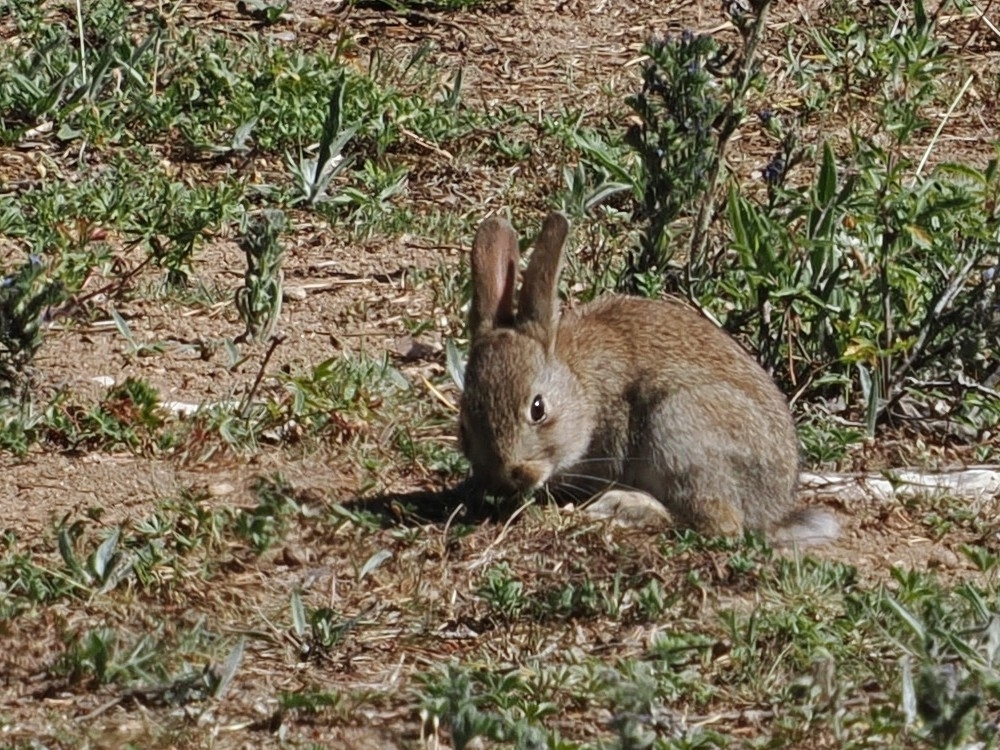
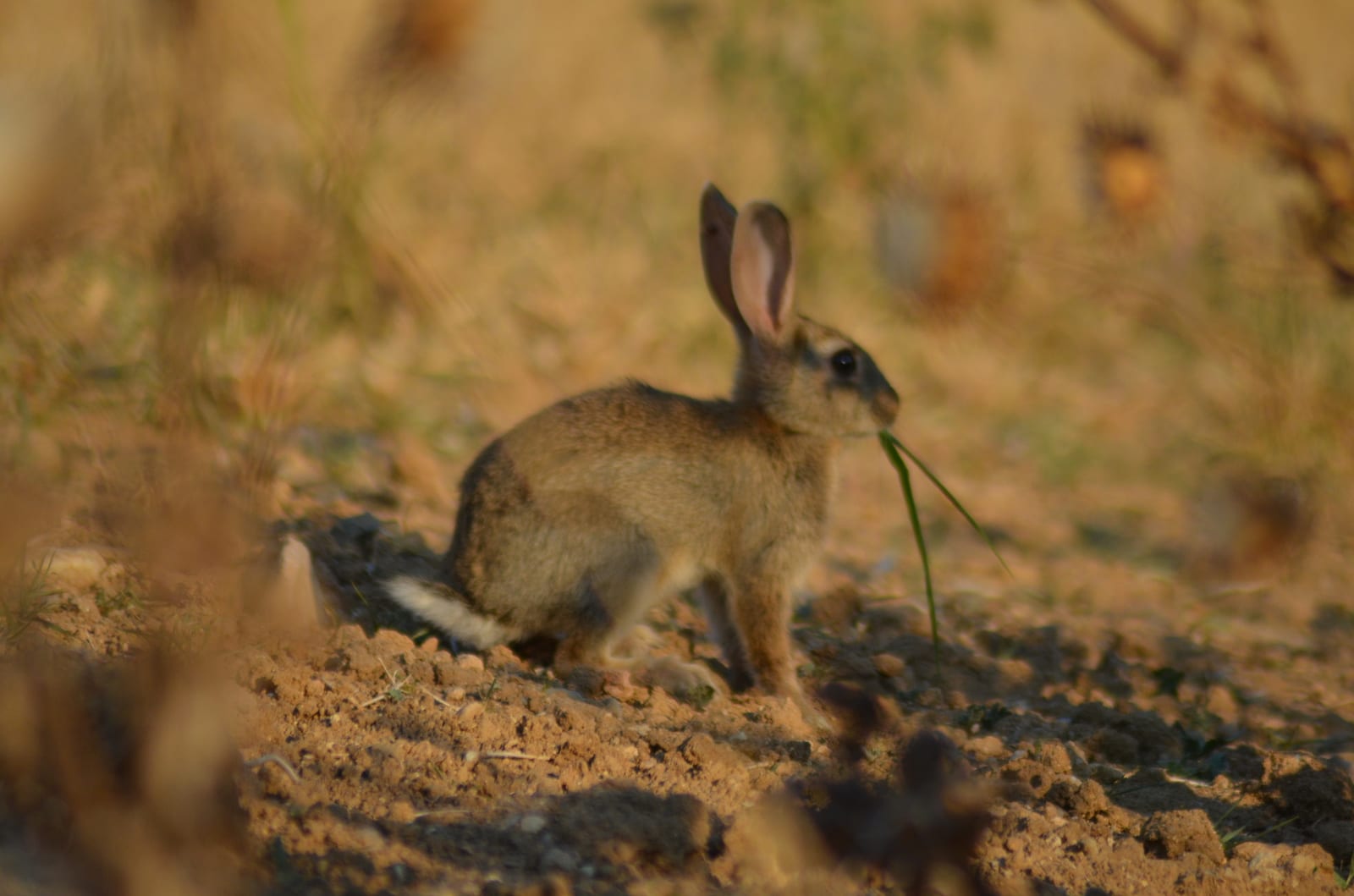
European rabbit standing in open ground near low vegetation
Feral European rabbits often remain close to short cover and burrow entrances. Photo: margitkildevang, CC0.

How to Recognize a European Rabbit

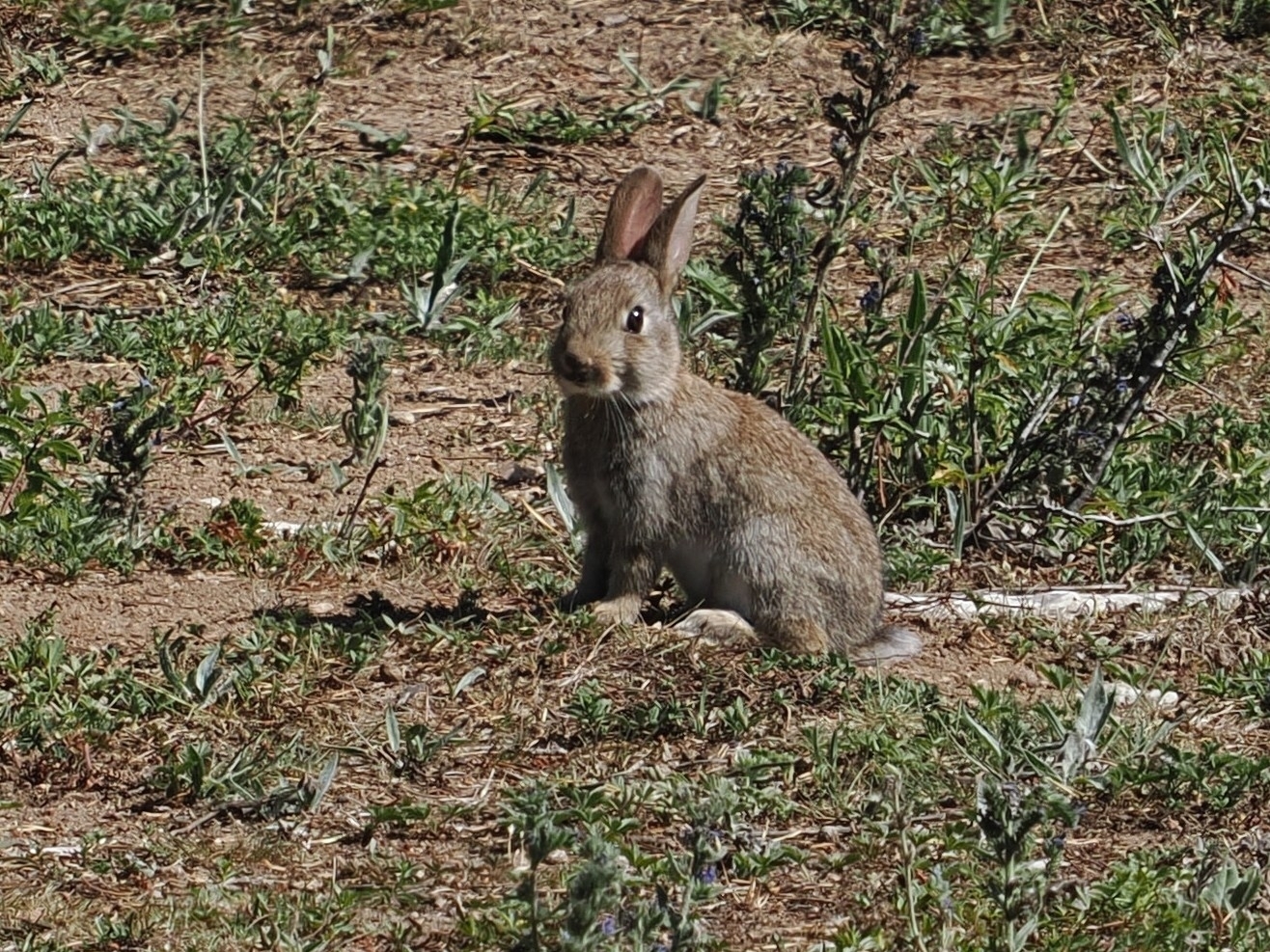
The European rabbit is compact, round-bodied, and shorter-legged than a jackrabbit. Adults are roughly housecat-sized, with gray-brown fur, a pale underside, dark eyes, and ears that look moderate rather than huge. Domestic ancestry adds variation: feral animals may show unusual white, black, spotted, or mixed coats, but wild-type gray-brown is common in established colonies.

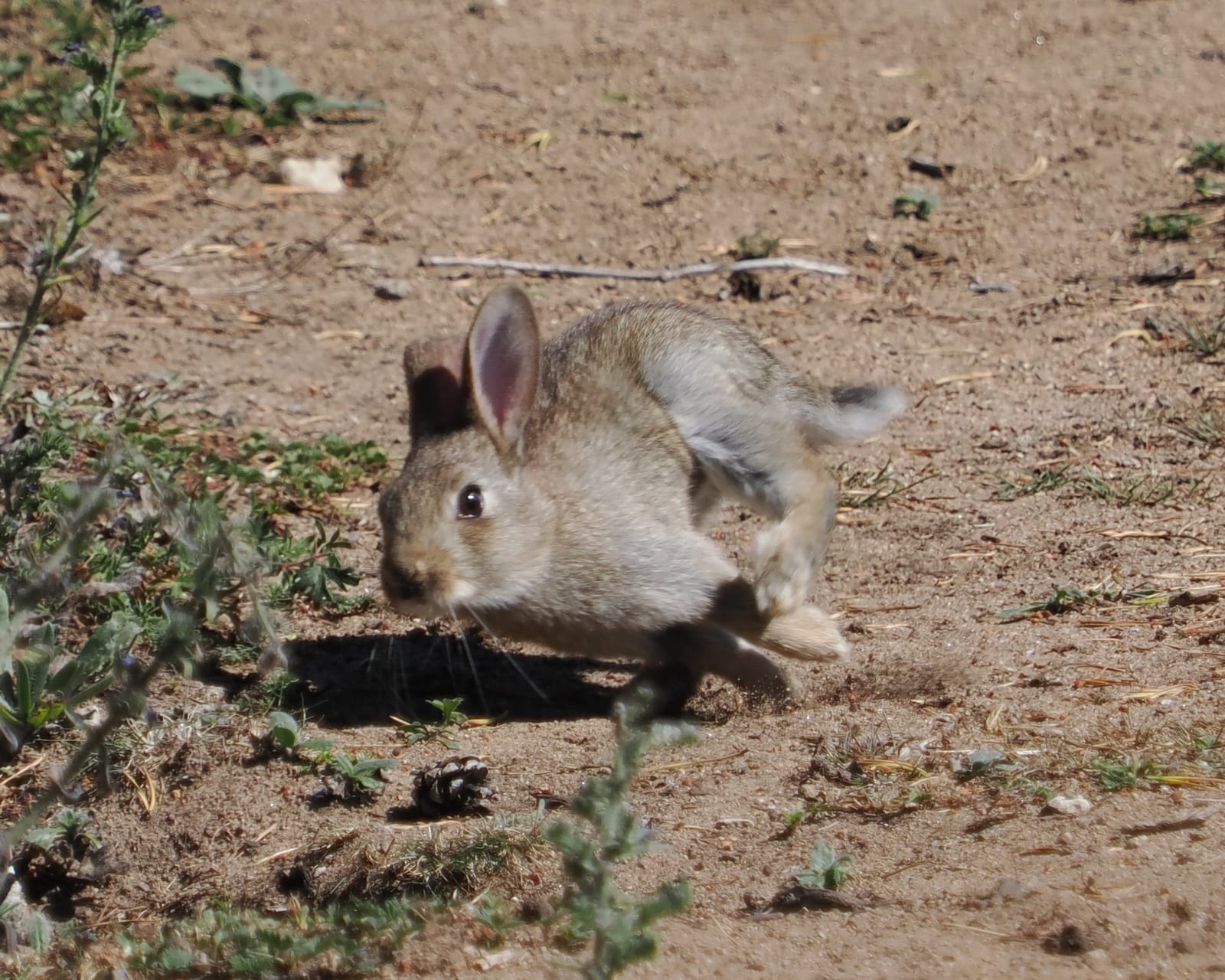
The tail flashes white underneath when the animal runs. Unlike a black-tailed jackrabbit, a European rabbit doesn’t look tall, rangy, or antelope-like. It usually bolts low and fast toward cover. Compared with a desert cottontail or mountain cottontail, it tends to look heavier through the shoulders and hips, with a more colonial habit around burrows.

Tracks and droppings can help around a colony, but they shouldn’t carry an identification alone. The most useful pattern is a group of stocky gray-brown rabbits repeatedly using short turf, disturbed soil, fence edges, or burrow openings near a settlement or farm. A lone rabbit crossing native desert, prairie, or woodland is more likely to be a native lagomorph unless the field marks clearly say otherwise.

Warrens, Lawns, Islands, and Local Colonies

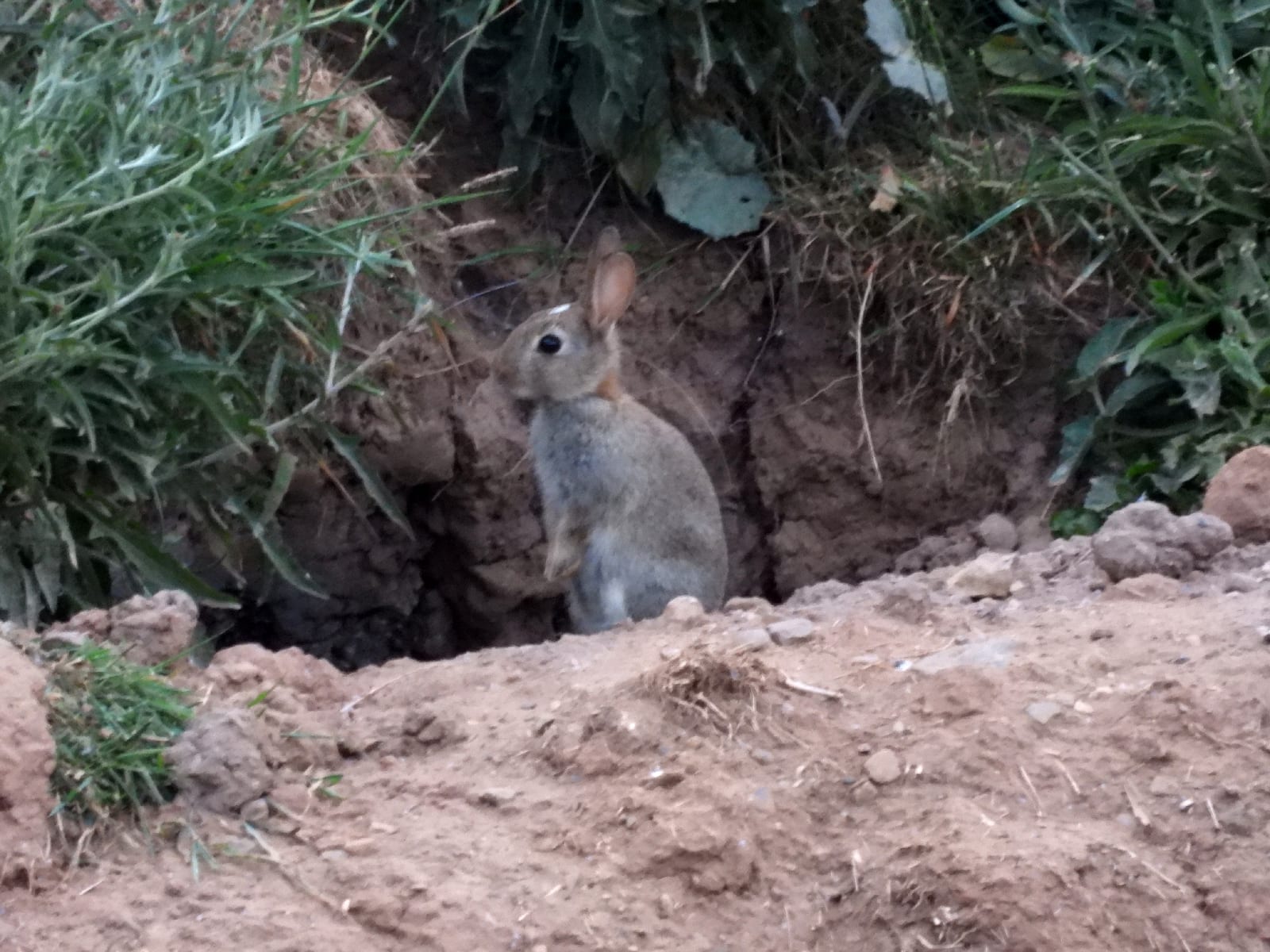
European rabbits are burrow builders. In their native range and in many introduced regions, they form warrens with multiple entrances, underground chambers, and well-used feeding paths radiating into short grass. That warren-centered life separates them from most North American cottontails, which use cover and shallow forms more than complex colonial burrow systems.

In North America, suitable feral habitat usually means short grass and reliable refuge close together. Old farms, cemeteries, city parks, vacant lots, coastal bluffs, islands, levees, airport margins, golf courses, and irrigated edges can all work when predators, winters, disease, and control efforts don’t wipe the colony out. The species doesn’t need wilderness. It needs low forage, diggable or sheltered ground, and enough rabbits to maintain a breeding group.

This is why the U.S. pattern is patchy. A few island or local colonies can persist for decades, while many mainland reports are short-lived escape events. Broad lists of states with records shouldn’t be read as a continuous wild distribution. The animal is introduced, local, and often commensal with human-altered landscapes.

Food, Activity, and Colony Behavior

European rabbits are herbivores that favor tender grasses, herbs, shoots, garden plants, clover, crop edges, and other low, nutritious vegetation. In dry or cold seasons they may gnaw bark, roots, and tougher plant parts, but the classic colony lives where short green growth is close to the burrow. Like other lagomorphs, they reingest nutrient-rich soft droppings as part of normal digestion.

Activity is strongest at dusk, night, and dawn. In exposed places rabbits feed close to cover, pause upright to scan, then retreat quickly if alarmed. Foot-thumping warns other rabbits near the warren. Scent marking, chases, grooming, and short vocalizations organize the social life of the colony.

European rabbits are more social than cottontails. A warren can include several adult females, adult males, young rabbits, and a dominance structure that determines access to nest sites and mates. That social system helps explain why colonies can grow quickly once established, but it also means a lone escaped pet isn’t the same ecological situation as a functioning wild warren.
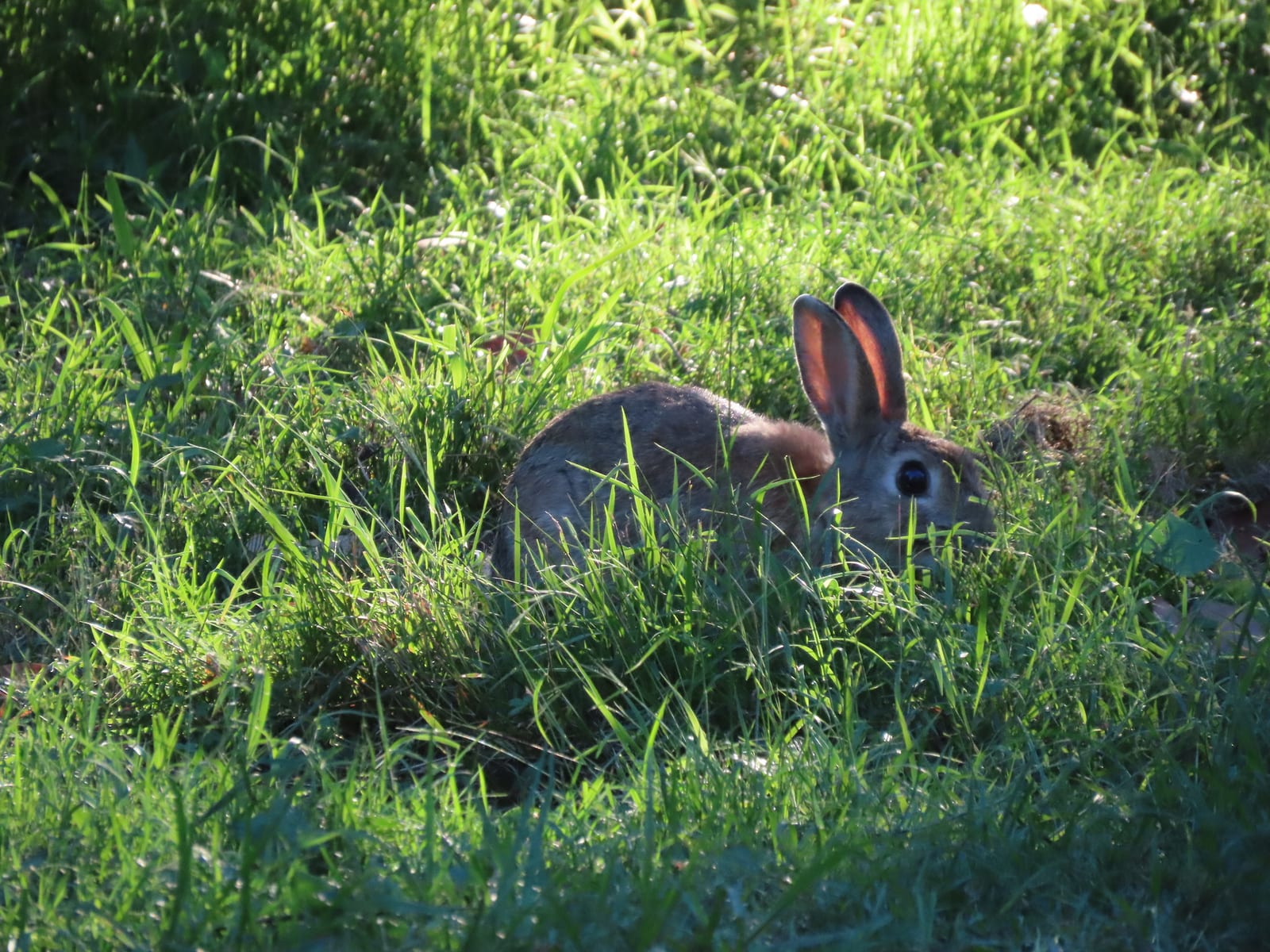
European rabbit feeding near a burrow mouth
Short turf near refuge is the classic European rabbit feeding setup. Photo: ian_mcallan, CC BY 4.0.

Breeding Fast, Staying Close

The reproductive capacity of the European rabbit is one reason it became so successful outside its native range. Gestation lasts about a month, litters often include several young, and females can produce multiple litters in a favorable year. Young are born blind and nearly naked in fur-lined nest chambers, then grow quickly and emerge from the burrow after only a few weeks.

That fast breeding doesn’t guarantee broad establishment. Small North American colonies face heavy predation from coyotes, bobcats, foxes, raptors, snakes, and domestic cats and dogs. Harsh winters, hot dry summers, disease, and local removal also keep many feral colonies from spreading far. Where the species becomes abundant, the colony is usually anchored by unusually favorable shelter and food.

Conservation Paradox

The European rabbit has one of the stranger conservation stories among familiar mammals. In its native Iberian range, disease, habitat change, hunting pressure, and other factors have reduced wild populations, with consequences for predators that depend on rabbits. Conservation concern in southwestern Europe is real.

Outside the native range, the same species can be a destructive invader. Introduced European rabbits have altered vegetation, accelerated erosion, competed with native herbivores, and damaged island ecosystems. That global invasive record shouldn’t be transferred uncritically to every U.S. record, but it explains why managers treat established colonies cautiously.

For U.S. readers, the practical natural-history point is simple: European rabbit isn’t the default wild rabbit. Native cottontails and jackrabbits fill that role across most of North America. European rabbits occur where people have introduced them, where feral colonies persist, or where domestic animals escape and survive. The species belongs in the North American atlas as an introduced animal with limited wild establishment, not as a broad-ranging native mammal.


Data & sources

The data and visualizations on this page draw on these open sources:

  • GBIFCC-BY 4.0occurrence records behind the range map, elevation, and record counts
  • iNaturalistCC0 / CC-BY / CC-BY-SAobservations, photos, and audio recordings
  • PhyloPicCC0 / CC-BY per itemthe to-scale silhouettesSteven Traver (Oryctolagus cuniculus) · Andrew A. Farke (human silhouette, CC-BY 3.0)
  • AnAge (HAGR)CC-BY 3.0longevity, maturity, and gestation figures
  • IUCN Red Listattributed factthe global conservation status
  • Global Biotic Interactions (GloBI)CC0 · public domainthe food web
  • Amniote Life-History DatabaseCC0 · public domainreproduction figures
  • EltonTraitsCC0 · public domaindiet and foraging-activity data


